Cost of early child care is unsustainable

Two recent articles (“In academia, a caste system for parents,” Page A1, Dec. 1; “Poor workers struggling with a child-care debt trap,” Page A1, Dec. 2) demonstrate that parents at every income level struggle to afford quality early care and education because of the high cost.

The responsibility of paying for K-12 public education falls on us all, regardless of whether we have children. But parents of young children bear nearly all of the expenses related to early care and education. Although these costs are high, data from Massachusetts suggest that they would be even higher if early educators were not, in effect, subsidizing our system by working for poverty wages.

The 2018 Massachusetts Early Care and Education Workforce Study found that nearly 30 percent of early educators receive at least two forms of public assistance to meet basic needs, such as housing. The compensation they received for their work in no way matched their professional credentials or their skills and responsibilities.

survey of early education available in Boston found that in 2017, there were almost 41,000 children age 5 or younger living in the city, with just 932 licensed providers of early childhood education offering 26,278 seats. Clearly, this isn’t

For innovative financing ideas, we can look to the US military, which identified the lack of quality options for child care as a military readiness issue. In the mid-1980s, the Department of Defense noted that many service members were abandoning the armed forces, citing a lack of education options for their young children. In response, Congress passed the Military Child Care Act of 1989, which caps fees for families based on income, with the military making up the difference. Teachers earn more than their civilian counterparts while also receiving annual raises and health care and retirement benefits.

Whatever we end up doing — and we must do something — will require financial investment from both the public and private sectors.

Anne Douglass

Boston

The writer is an associate professor at the University of Massachusetts Boston, where she also directs the bachelor’s and post-master’s certificate programs in early education and care.

SourceThe Boston Globe

Springfield’s Educare Facility Is State-Of-The-Art In Every Respect

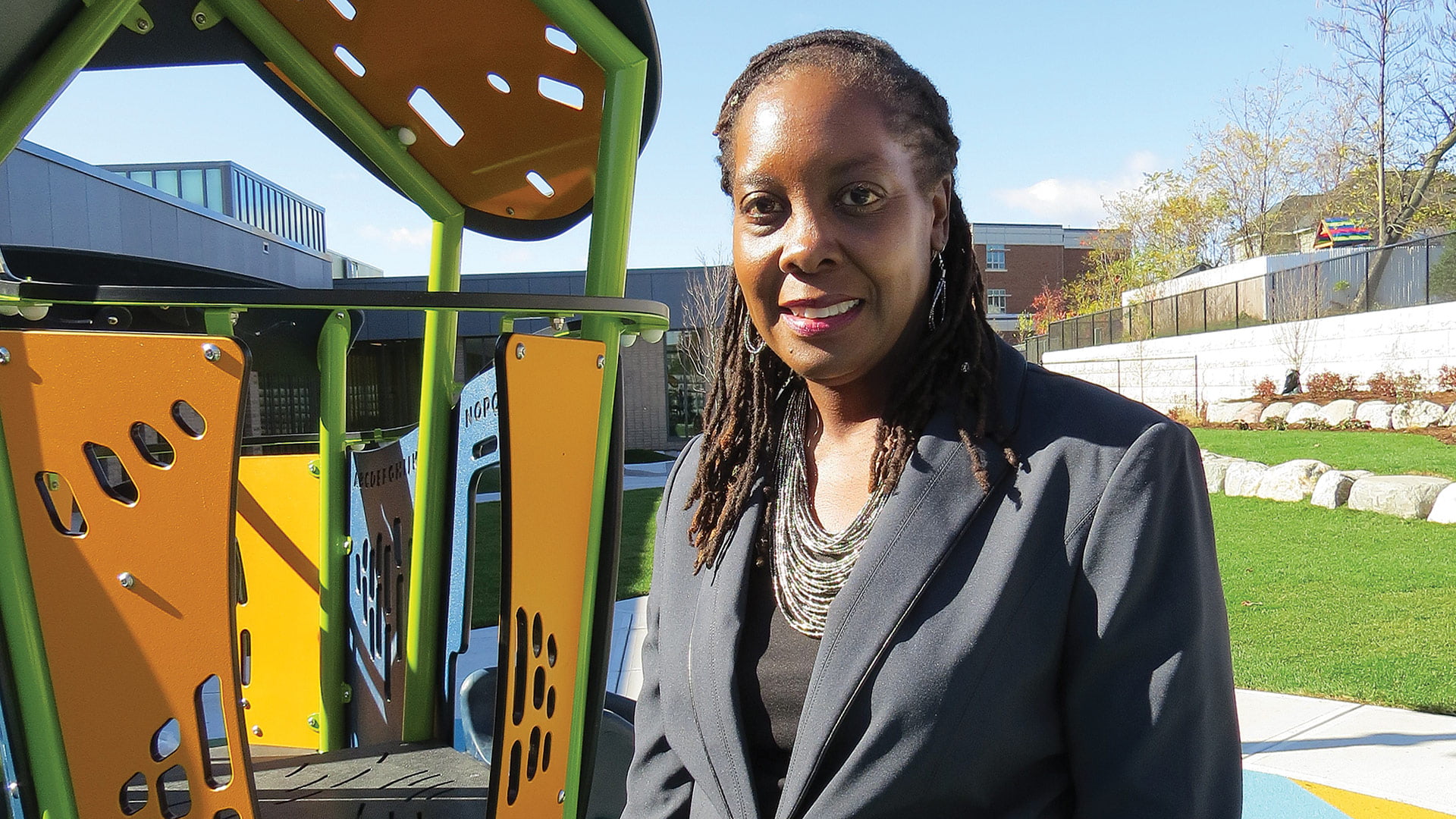
Nikki Burnett says Springfield’s Old Hill neighborhood and those surrounding it certainly need the gleaming new $14 million Educare facility constructed next door to the Elias Brookings Elementary School on Walnut Street.

More to the point, though, she told BusinessWest, they deserve this facility, which can only be described with that phrase state-of-the-art when it comes to everything from its programs to its play areas to its bathrooms.

“Mason Square, Old Hill, McKnight, Bay, all those neighborhoods … they’re so rich in history, so they’re rich in great success stories that have come out of here and are still coming out of here,” said Burnett, the recently named executive director of the 27,000-square-foot facility, who should know; she grew up there herself. “People like Ruth Carter, who just won an Oscar for the costume design in the movie Black Panther — she’s from Springfield.

“We have to celebrate those things, and we have to model those things for our children so they can see that they have greatness in them,” she went on. “One of the very important things about Educare is that it aligns potential with opportunity. I believe all children are born with immense potential, but many do not have the same opportunity to realize that, so Educare will give them that push — it will help readjust their trajectory.”

That’s why this area of the city, traditionally among the poorest neighborhoods in the state, deserves this Educare facility, just the 24th of its kind in the country and the only one in Massachusetts, she continued, adding quickly that this building, and the Educare model itself, were designed to show decision makers and society in general what all young children deserve and what has to be done so that they can all enjoy a similar experience.

Mary Walachy, executive director of the Irene E. and George A. Davis Foundation, which spearheaded efforts to bring the Educare facility to fruition, agreed.

“The message being sent here is that it costs money to do this work well,” she said. “It costs money to fund quality at the level that children in this community and others deserve, and we can’t expect outcomes that we want from children if the investment is not there at the front end.”

Considering those comments, Educare is certainly much more than a building, and those who visit it — and many will in the weeks and months to come — will come to understand that.

Indeed, the facility set to open later this year, supported by the Buffett Early Childhood Fund and to be operated in partnership with Holyoke Chicopee Springfield Head Start, is, for lack of a better term, a standard — or the new standard when it comes to early-childhood education.

And it is, as Burnett and Walachy noted, a model — hopefully to be emulated — that incorporates everything science says young children need to flourish. This includes data utilization, high-quality teaching practices (three teachers to a classroom instead of the traditional two), embedded professional development, and intensive family engagement.

All this and more will come together at the much-anticipated facility, which will provide 141 children up to age 5 (already enrolled at a Head Start facility in that neighborhood) and their families with a full-day, full-year program that Burnett projects will be a place to learn — and not just for the young children enrolled there.
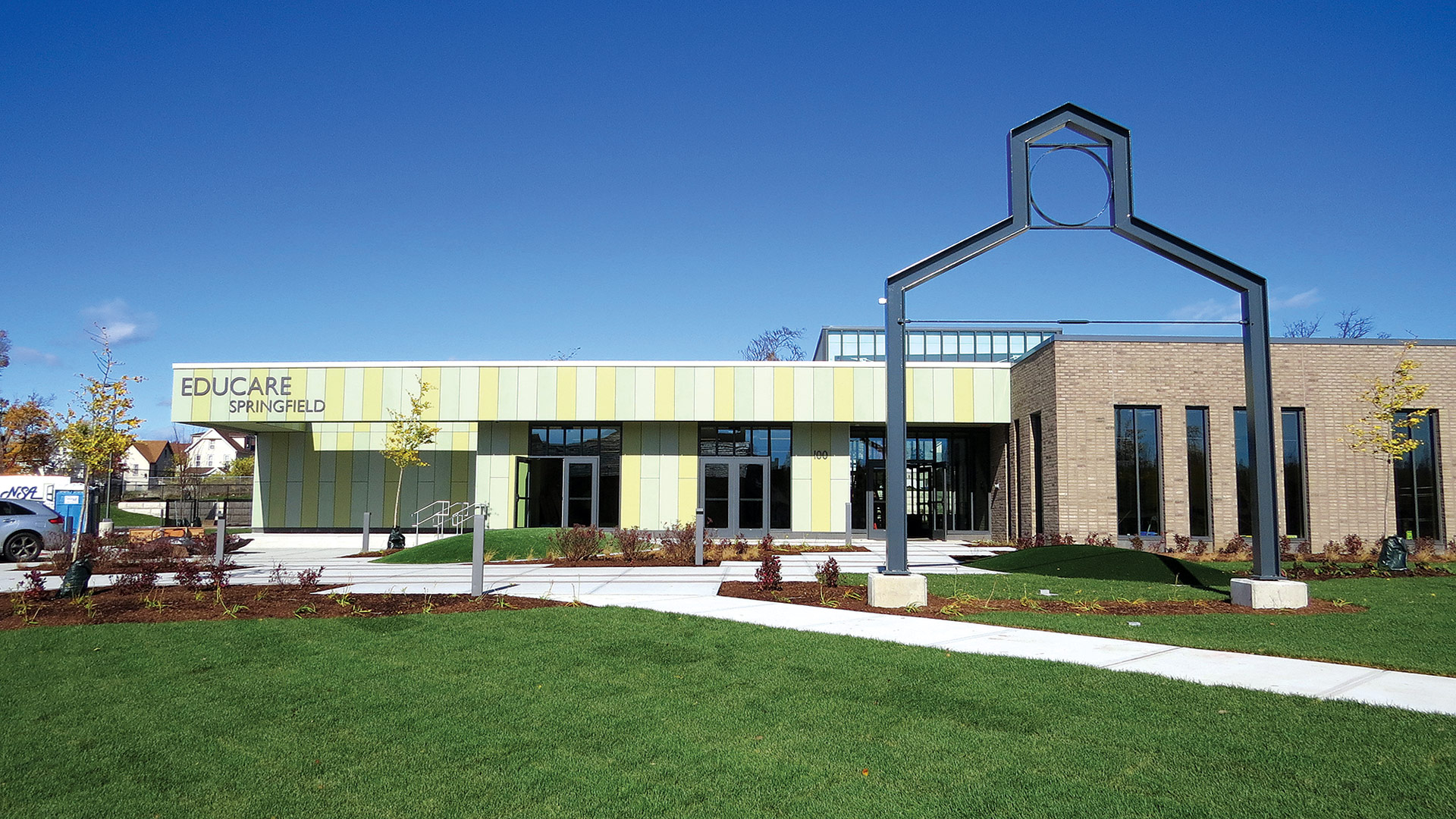
The Educare facility in Springfield is just one of 24 in the country and the only one in Massachusetts.

“Educare is going to be a demonstration site; we’re going to be able to bring in students of education, social work, counseling and therapy, and other areas from across the state and have them observe and learn our model,” she explained. “We understand that 141 children is not every child; however, what we learn here, we’re going to be able to send out — others can do what we’re doing. And on a policy level, it’s my hope that legislators can see the success of this and realize that, when they’re making out the budget, it needs to be funded so everyone can enjoy Educare quality.

“Educare is not going to be on every corner,” she went on. “But that doesn’t mean that the quality of Educare cannot be beneficial to all children.”

For this issue and its focus on education, BusinessWest toured the Educare facility and talked with Burnett and others about what this unique early-education center means for Springfield and especially those young people who walk through its doors.

New School of Thought

Janis Santos, the longtime director of Holyoke Chicopee Springfield Head Start, recalled that, when she toured the Educare facility recently as construction was winding down, she became quite emotional.

“I have to be honest, I started crying,” said Santos, honored roughly a year ago by BusinessWest as one of its Women of Impact for 2018. “One of the construction-crew members said, ‘why are you crying?’ and I said, ‘because I’m so happy.’

“Educare is going to be a demonstration site; we’re going to be able to bring in students of education, social work, counseling and therapy, and other areas from across the state and have them observe and learn our model.”

“This is a dream come true,” she went on, adding that the facility provides dramatic evidence of how far early-childhood education has come during her career — it was considered babysitting when she got her start — and how important it is to the overall development of young people.

Tears of joy have been a common emotional response among those who have toured the site, especially those involved in this initiative from the beginning, but there have been others as well. Indeed, Burnett told BusinessWest, when the staff members assigned to the Educare center visited the well-appointed teachers’ room, many of them started clapping.

These reactions provide ample evidence that the six-year journey to get the facility built and the doors open was certainly time and energy incredibly well-spent.

By now, most are familiar with the story of how an Educare facility — again, one of only 24 in the country — came to be in Springfield. It’s a story laced with serendipity and good fortune at a number of turns.

It begins back in 2014 when an early-childhood center on Katherine Street in Springfield closed down abruptly, leaving more than 100 children without classroom seats, said Walachy, adding that the Davis Foundation began looking at other options for early education in that building.

One of them was Educare, she went on, adding that officials with the Buffett Foundation and other agencies involved, as well as architects, came and looked at the property. They quickly determined that it was not up to the high standards for Educare centers.

“Their model is ‘make it a state-of-the-art, unbelievable building to send a strong message that this is what all kids deserve,’” said Walachy, adding that, after those inspections and being informed that a new facility would have to be built at a cost of more than $12 million, the Educare concept was essentially put on the shelf.

And it stayed there for the better part of two years until an anonymous donor from outside the Bay State who wanted to fund an Educare facility came into the picture.

“This individual pledged to pay for at least half the cost of building an Educare somewhere in the country, and she was willing to do it here in Springfield,” she said, adding that the donor has written checks totaling more than $9 million for both the construction and operation of the facility.

With this commitment, those involved went about raising the balance of the needed funds — the Davis Foundation and another donor committed $2 million each, and state grants as well as New Market Tax Credits were secured, bringing the total raised to more than $20 million — and then clearing what became another significant hurdle, finding a site on which to build.

Indeed, the Educare model is for these facilities to be built adjacent to elementary schools, and in Springfield, that proved a challenging mandate. But the tornado that ravaged the city, and especially the Old Hill area, in 2011, forcing the construction of a new Brookings School, actually provided an answer.

Indeed, land adjacent to the new school owned by Springfield College was heavily damaged by the tornado, making redevelopment a difficult proposition. Thus, the college became an important partner in the project by donating the needed land.

But while it’s been a long, hard fight to get this far, the journey is far from over, said both Burnett and Walachy, noting that another $500,000 must be raised to fund an endowment that will help cover operating expenses at the school.

And raising that money is just one of many responsibilities within Burnett’s lengthy job description, a list that also includes everything from becoming an expert on the Educare model to attending regular meetings of Educare facility directors — there’s one in New Orleans later this year, for example.

At the moment, one of the duties assuming much of her time is acting as a tour guide. She even joked that she hasn’t mastered the art of walking backward while talking with tour participants, but she’s working on it. To date, tours have been given to city officials, funders and potential funders, hired staff members, like those aforementioned teachers, and, yes, members of the media.

BusinessWest took its own tour, one that featured a number of stops, because items pointed out are certainly not typical of those found in traditional early-education centers.

“I literally cannot wait to see the children in there — that will be a special moment.”

Starting with what Burnett and others called the “outside-in” of the building’s design, which, as that phrase indicates, works to bring the outside environment into the school to provide continuity and the sense that the school is part of the larger world. Thus, green, grass-like carpeting was put down in the entranceways, and green carpet prevails pretty much throughout the facility. Meanwhile, the brick façade on the exterior is continued inside the building.

Throughout the building, there are generous amounts of light and state-of-the-art facilities throughout, from the well-equipped play areas inside and out to the two sinks in each of the classrooms — one for food preparation, the other for hand washing — to the restrooms designed especially for small people.

In addition, each classroom is equipped with small viewing areas with one-way mirrors so that so-called ‘master teachers’ and others can see and evaluate what’s happening.

In all, there are 12 classrooms, seven for infants and toddlers and five for preschool. As noted earlier, they will be places of learning, and not just for the students.

Model of Excellence

Returning to that emotional tour of the Educare facility she took a few weeks ago, Santos said that, as joyous and uplifting as it was, she’s looking forward to the next one even more.

“I literally cannot wait to see the children in there — that will be a special moment,” she told BusinessWest, putting almost a half-century of work in early childhood behind those words.

She can’t wait because students will be learning and playing in a facility that really was only a dream a few years ago — a dream that came true.

It’s a facility that those students truly need, but as Burnett and all the others we spoke said, it’s one they deserve — one that all students deserve.
SourceBusiness West

YWCA unveils Under One Roof project

The YWCA cut the ribbon for its “Under One Roof” project on Friday, showing off the extension of its building, containing residential housing and after school programming.

SourceSouth Coast Today

Some Boston neighborhoods face severe shortage of child care — and it’s unaffordable almost everywhere

The chasm between supply and potential demand for child care is so wide across much of Boston that in some neighborhoods, there aren’t enough seats for roughly half the children, according to a new report from the Boston Opportunity Agenda.

Only about one in four children under the age of 5 has access to high-quality programs, as defined under state and national standards, the report found. That shortage is most pronounced in Roslindale, West Roxbury, and Hyde Park, which lack high-quality slots for nine out of every 10 children, the report found.

The report from the Boston Opportunity Agenda, a public/private partnership focused on education, provides what child care advocates say is the first detailed picture of some of the most vexing challenges in the city’s early education and care programs.

“One of the biggest problems Boston has tried to solve is, how many children are we trying to serve? In some communities, they don’t even know, and are blaming each other” for gaps and surpluses, said Amy O’Leary, a director at Strategies for Children, a Massachusetts organization that advocates for high-quality early education programs.

The report found child-care shortages are most acute for children aged 2 and younger, with the biggest squeeze in East Boston, where there are only enough slots for 1 in 10 infants. The richest supply, researchers said, is in the Back Bay and Beacon Hill, where the gap is less than half that size.

Early education programs are somewhat easier to find for children between 3 and 5 years old because of preschool and public kindergarten easing the care crunch. While gaps still exist in some Boston neighborhoods, the report found that there is actually a surplus of about 1,233 slots citywide.

But one problem is inescapable: the high cost of care. Federal guidelines define affordable care as care that costs no more than 10 percent of a family’s income. By that standard, the average cost of infant care is unaffordable for all neighborhoods in Boston, the report said. The percentage of income spent on child care in the Back Bay and Beacon Hill is just over 10 percent, compared with over 55 percent of the median family income in Roxbury and nearly 40 percent in East Boston.

“Child care in Boston affects everyone, no matter where you live, no matter your income bracket, no matter what you look like. It is not affordable for anybody, and it’s difficult to access,” said Kristin McSwain, executive director of the Boston Opportunity Agenda.

The organization’s researchers pooled local, state, and federal information from 2017, the most recent available, including census data, the number of child-care programs in each ZIP code, and the number of slots in each program. The data included family-based and center-based care, as well as programs in Boston Public Schools, and in charter, independent, and parochial schools.

But the researchers acknowledged they weren’t able to pinpoint how many parents in each neighborhood actually want care for their children, or how many who stay at home would return to the workforce if high quality, affordable care were an option.

Eyoda Williams, a 45-year-old Dorchester mother of six children, understands those complex, chaotic equations. When her son, now 11, needed care, she would scramble to get her older children ready for school, then trek from Dorchester to a center with an opening in Brighton that cost $300 weekly, then head on to Newton for work.

“Having kids is expensive,” said Williams, a personal trainer and fitness instructor. She just secured a hard-to-find preschool slot for her youngest child, who is 3 and has special needs. Before that, she’d relied on child care at the YMCA in Hyde Park, where Williams works part time.

“I wouldn’t be able to be here without that,” Williams said. “By the grace of God, it’s working.”

A recent survey by the City of Boston found that more than one-quarter of stay-at-home parents, the vast majority of them women, couldn’t work because they lacked day care. Nearly 60 percent of those parents cited cost as the biggest obstacle, and also found that parents of children under 2 had the hardest time finding available slots.

The challenges facing child-care providers are also daunting. They say they struggle to keep quality workers and provide decent wages, without making the cost of care unaffordable for families.

The size of the quality gap remains tough to gauge precisely. McSwain, who directed the report, said up to 30 percent of the programs in the city don’t even seek state accreditation because it’s so complicated and expensive. Programs that don’t accept state subsidies aren’t required to seek accreditation.

“So that’s 30 percent that we can’t say anything about their quality,” McSwain said. “They may be really high-quality, and we may be 30 percent better off than we think we are.”

Bill Eddy, executive director of the Massachusetts Association of Early Education and Care, the industry’s trade association, said many programs are high-quality, and the $80 million invested by lawmakers over the last several years to boost low-paid workers’ wages has helped retain more — and better  employees.

“The key to quality is having a workforce that is consistent,” Eddy said.

Dr. Michael Yogman, a Cambridge pediatrician who chairs the child mental health task force for the state chapter of the American Academy of Pediatrics, said such stable relationships in day care is critical for children’s development.

“The quality of the teacher is probably the most important thing,” he said. “Those kids will do better in kindergarten, and be more literate in third grade, assuming the quality programs continue.”

The report made several recommendations, including a call to create stronger partnerships among providers, the city, and various agencies and nonprofits. Those partnerships would be able to collect more detailed data that could more finely pinpoint actual demand by neighborhoods.

It also suggested businesses work more closely with providers to subsidize some slots for employees’ children. This, the report said, could create consistent care options for workers, while also providing steadier revenue for child-care facilities.


Kay Lazar can be reached at kay.lazar@globe.com Follow her on Twitter @GlobeKayLazar.

SourceThe Boston Globe

From the Ground Up: Improving Child Care and Early Learning Facilities

Increasingly, discoveries in neuroscience show that a child’s earliest years
are crucial to their social, emotional, physical, and cognitive development,
and that the settings in which they learn, play, and grow have an enormous
impact on their future development. High-quality and developmentally
appropriate environments promote healthy behaviors, independence, and
social-emotional skills in young children. Yet, too often, the conversation
about child care quality focuses on workforce and curriculum, and rarely
does it include the physical environment in which children are cared for.


Nearly 15 million children under age 6 live in households in which all parents
work, leaving these children in need of high-quality child care.1 The physical
infrastructure of these spaces has been long neglected, and parents
are forced to place their children in substandard settings. It is critical to
recognize that high-quality environments lead to better outcomes for young
children and that the nation’s children cannot wait for greater investments in
early learning infrastructure that supports their development.


To support city- and local-level officials in addressing their child care facility-related challenges, this catalog provides examples of federal-, state-, and
local-level models across government, philanthropy, and public-private
partnerships.

SourceBipartisan Policy Center

Honoring Mel King

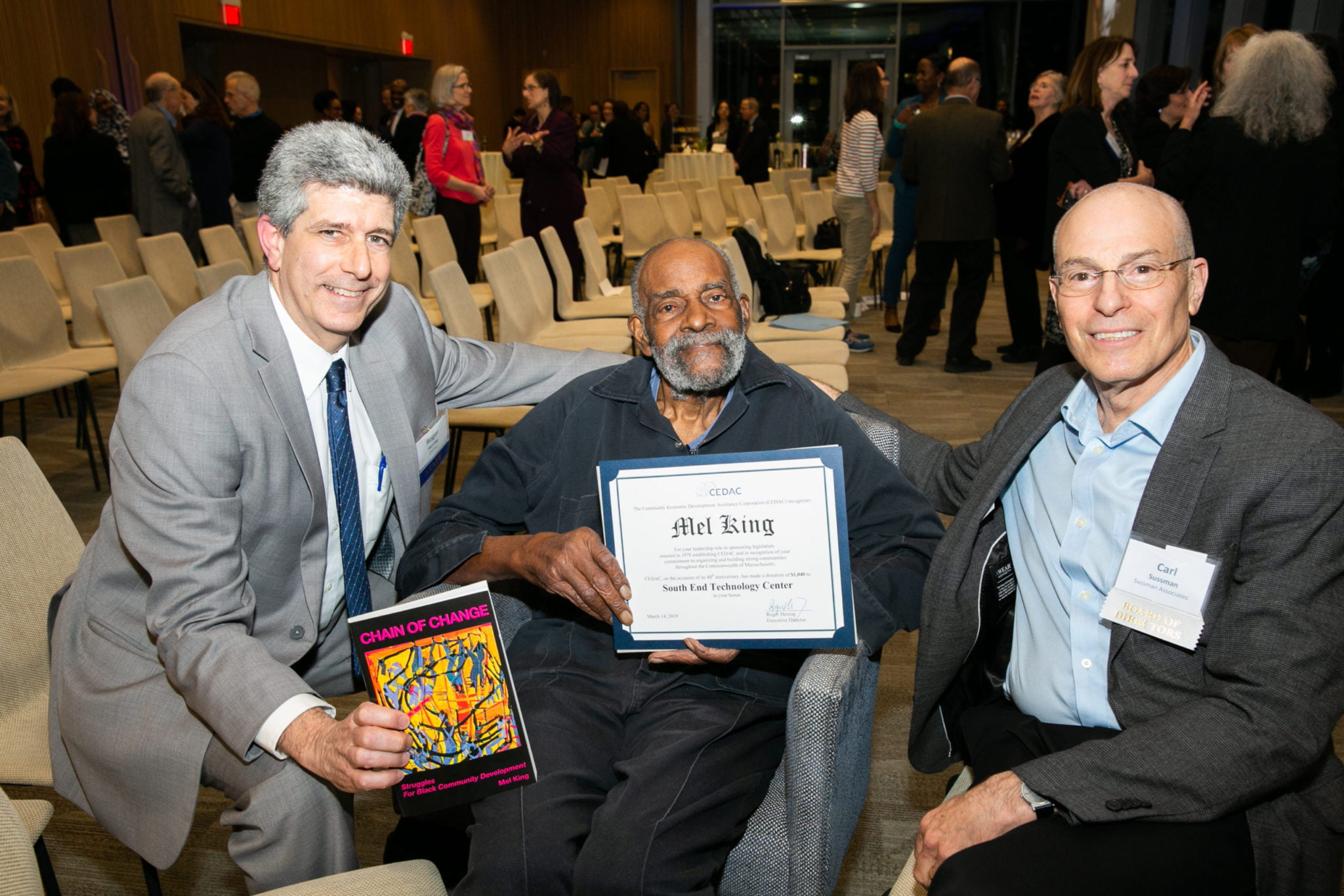
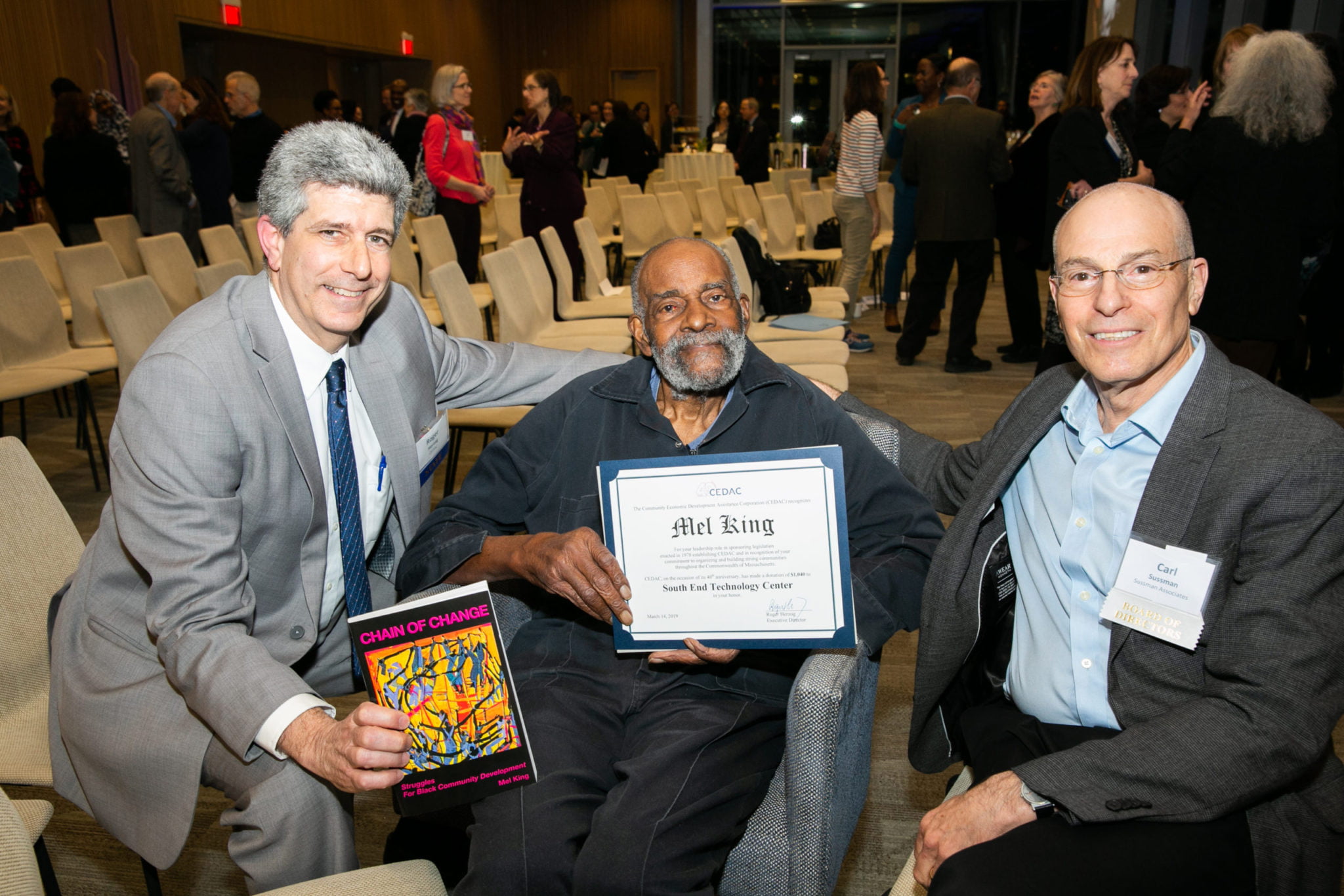
On March 14th 2019, the Community Economic Development Assistance Corporation (CEDAC) honored Mel King at its 40th anniversary celebration at the MIT Samberg Conference Center. King — a community organizer, former State Representative, and Adjunct Professor at the Department of Urban Studies and Planning — crafted the state legislation that created CEDAC in 1978. CEDAC is a community development financial institution providing financing and technical assistance to community-based and other non-profit community development organizations in Massachusetts. In addition to Mel King, CEDAC was joined by DUSP Professors Emeriti, Langley Keyes and Tunney Lee, both of whom promoted and led state and local community development activities, including the visioning and creation of CEDAC.

The event’s main program was modeled on DUSP’s ‘lightning talks,’ three-minute presentations that communicate research and work in layperson language to promote sharing and collaboration across groups. The presentations focused on affordable housing preservation; supportive housing; and early education facility development. Speaker teams, composed of current and former CEDAC staff members as well as community partners, addressed the 40 years of engagement and evolution with these fields, future challenges, and the synergistic relationship for non-profits and the communities they represented. Many CEDAC staff members and leadership are DUSP alumni/ae, including Sara Barcan (MCP ’94), Janelle Chan (MCP ’07), and Roger Herzog (MCP ’87).

“Mel King provided the inspiration and vision for the community development movement, with his experiences 40 years ago fighting for community control of development. Mel’s role as an elected official in helping to create a state infrastructure to support community development, including CEDAC, was instrumental,” said Herzog, Executive Director of CEDAC. “The Massachusetts system serves as a national model of community development, and we are honored to have the opportunity to celebrate his contributions as we mark our 40th anniversary.”

The venue for the 40th anniversary event at MIT speaks to the Institute’s role as the space where the idea for a public/private agency that provides technical expertise to non-profit community development organizations was first discussed during the weekly sessions that King hosted for 25 years while teaching at DUSP and leading the MIT Community Fellows Program. These weekly sessions were called the Wednesday Morning Breakfast Group where King cooked breakfast and led discussions between community activists, planners, and students. A regular participant of the sessions, MIT doctoral student, Carl Sussman, became the founding Executive Director of CEDAC and later played a pivotal role launching and leading its affiliated organization, the Children’s Investment Fund, one of the few community development finance institutions across the nation focused exclusively on meeting the physical capital needs of early care and education programs.

The MIT Community Innovators Lab (CoLab), founded in 2007, is the direct MIT descendant of the Community Fellows Program. CoLab facilitates the interchange of knowledge/resources between MIT students and faculty with community organizations, to build practicable models of economic democracy and self-determination. CoLab’s Mel King Community Fellows Program (MKCF), provides participants with an opportunity to examine innovative approaches to development using markets as an arena for pursuing social justice.

“The CoLab’s Mel King Community Fellows Program embodies Mel King’s approach to planning and community development through his championing of cities and the communities that comprise those cities,” said Dayna Cunningham, Executive Director of CoLab and MIT Sloan Alumna (MBA ’04). “The MKCF honors Mel’s legacy by gathering current and future leaders of community-based work and providing them with the space to collaborate, learn, and refine their efforts for a range of social justice pursuits.”

In the 40 years since CEDAC was created, the organization has committed over $402 million in early stage project financing, and has helped to fund the creation or preservation of nearly 50,000 affordable housing units across the Commonwealth. Additionally, CEDAC manages a number of supportive housing bond programs on behalf of the state’s Department of Housing and Community Development (DHCD), with commitments of more than $490 million over the past thirty years. These bond programs include the Housing Innovations Fund (HIF), the Facilities Consolidation Fund (FCF), and the Community Based Housing (CBH) program.

To learn more about CEDAC’s mission and current projects, click here.

»

SourceMIT Urban Planning News

CEDAC Honors Community Leader Mel King

The Community Economic Development Assistance Corporation (CEDAC) honored former State Representative Mel King at its 40th anniversary celebration, held on March 14 at the Massachusetts Institute of Technology’s (MIT) Samberg Conference Center. King, a legendary community organizer, crafted the state legislation that created CEDAC in 1978. CEDAC is a community development financial institution that provides early stage financing and technical assistance to community-based and other non-profit organizations engaged in effective community development in Massachusetts.

“Mel King provided the inspiration and vision for the community development movement, with his experiences 40 years ago fighting for community control of development. Mel’s role as an elected official in helping to create a state infrastructure to support community development, including CEDAC, was instrumental. This Massachusetts system serves as a national model of community development, and we are honored to have the opportunity to celebrate his contributions as we mark our 40th anniversary,” said Roger Herzog, CEDAC’s executive director.

At the event, representatives from the state’s community development sector provided lightning talks on CEDAC’s three key program areas: affordable housing preservation; supportive housing; and the Children’s Investment Fund. Participants in the program included former CEDAC and Children’s Investment Fund staff members Vince O’Donnell, Charleen Regan, and Mav Pardee; current CEDAC staff members Bill Brauner, Sara Barcan, and Theresa Jordan; and non-profit community partners Leslie Reid of Madison Park Development Corporation, Lisette Le of Vietnamese American Initiative for Development (VietAID), and Gail Fortes of YWCA Southeastern Massachusetts. Governor Charlie Baker offered congratulatory remarks by video.

As a state representative, King sponsored the legislation that was signed by Governor Michael Dukakis and led to CEDAC’s creation in 1978. The venue for the 40th anniversary event at MIT was fitting, since the idea for a public/private agency that provides technical expertise to non-profit community development organizations was first discussed in weekly sessions that King hosted while teaching at MIT’s Department of Urban Planning and Studies and leading the Community Fellows Program there.

In the 40 years since CEDAC was created, the organization has committed over $402 million in early stage project financing, and has helped to fund the creation or preservation of nearly 50,000 affordable housing units across the Commonwealth. Additionally, CEDAC manages a number of supportive housing bond programs on behalf of the state’s Department of Housing and Community Development (DHCD), with commitments of more than $490 million over the past thirty years. These bond programs include the Housing Innovations Fund (HIF), the Facilities Consolidation Fund (FCF), and the Community Based Housing (CBH) program.

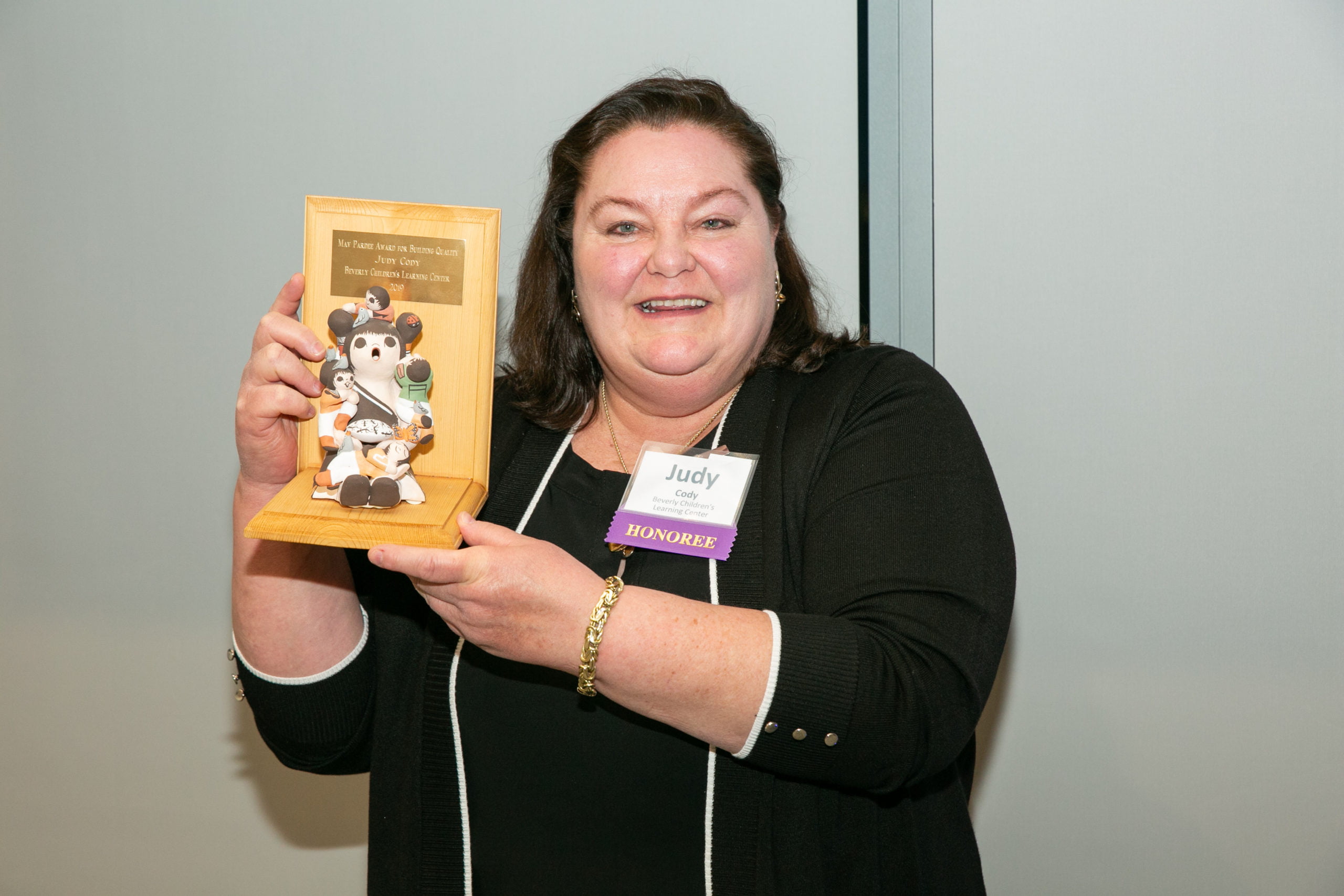
At the same event, the Children’s Investment Fund, an affiliate of CEDAC, presented Judy Cody, executive director of the Beverly Children’s Learning Center (BCLC), with the Mav Pardee Award for Building Quality. The award, which recognizes organizations or individuals working to address the need for physical environments that support high-quality early education, is named after Pardee, who was the Fund’s former program manager. Cody oversaw BCLC’s expansion to a new 16,000 square foot facility that provides safe and affordable early education and care for nearly 160 children in the North Shore region.

“BCLC was one of the first child care facilities to open that utilized grant funding from the Early Education and Out of School Time (EEOST) Capital Fund, and that is because of the tenacity and dedication that Judy Cody demonstrates as executive director,” said Theresa Jordan, Director of Children’s Facilities Finance. “Children’s Investment Fund is proud to honor Judy with the Mav Pardee Award for creating a high-quality early learning environment for low-income children.”

Since it was established in 1990, Children’s Investment Fund has committed $55 million in project financing and state bond resources, and supported the creation or improvement of more than 30,000 child care slots. EEOST is administered by the Massachusetts Department of Early Education and Care in partnership with CEDAC and the Children’s Investment Fund, and it offers child care providers capital resources to develop high-quality early learning facilities.

CEDAC is a Massachusetts community development financial institution that provides predevelopment and acquisition lending along with technical expertise for community-based and other non-profit organizations engaged in effective community development in Massachusetts. CEDAC’s work supports two key building blocks of community development: affordable housing and early education and care. CEDAC is also active in state and national housing preservation policy research and development and is widely recognized as a leader in the non-profit community development industry. For additional information on CEDAC and its current projects, please visit www.cedac.org.

»

SourceSouth End News

Beverly Children’s Learning Center executive director honored

The Children’s Investment Fund, an affiliate of the Community Economic Development Assistance Corporation (CEDAC), presented Judy Cody, executive director of Beverly Children’s Learning Center (BCLC), with the Mav Pardee Award for Building Quality at CEDAC’s 40th anniversary celebration held on March 14 at the Massachusetts Institute of Technology (MIT).

The award recognizes organizations or individuals working to address the need for physical environments that support high-quality early education. Cody oversaw BCLC’s expansion to a new 16,000-square-foot facility that provides safe and affordable early education and care for nearly 250 children each year on the North Shore. At the same event, former State Rep. Mel King was honored.

King, a legendary community organizer, crafted the state legislation that created CEDAC in 1978. CEDAC is a community development financial institution that provides early stage financing and technical assistance to community-based and other non-profit organizations engaged in effective community development in Massachusetts.

In 2015, Cody led the first-ever capital campaign for Beverly Children’s Learning Center, raising over $2 million for a new state-of-the-art early education and childcare center in Beverly.

The campaign included $1 million grant funding from the Early Education and Out of School Time (EEOST) Capital Fund. EEOST is administered by the Department of Early Education and Care in coordination with CEDAC and the Children’s Investment Fund.

“BCLC was one of the first child care facilities to open that utilized grant funding from the Early Education and Out of School Time (EEOST) Capital Fund, and that is because of the tenacity and dedication that Judy Cody demonstrates as executive director,” said Theresa Jordan, Director of Children’s Facilities Finance at Children’s Investment Fund. “Children’s Investment Fund is proud to honor Judy with the Mav Pardee Award for creating a high-quality early learning environment.”

Founded in 1973, BCLC has served over 10,000 children and families in the Beverly area. Their new space has allowed them to dramatically improve their programs and services, providing individual environments conducive to high quality care, learning and security while allowing opportunities for intentional interaction among the different age groups they serve (newborn through early teen).

To maximize the impact of their new space, BCLC, under Cody’s leadership, will complete this spring the second phase of improvements with a new 25,000-square-foot natural outdoor learning play scape. The play scape includes a large array of natural interactive features designed to encourage more physical activity and creative play, including sensory gardens, mud kitchens, climbing hills and water stations.

BCLC will host a ribbon cutting for the play scape from 9:30 to 10:30 a.m. on Thursday, May 16. For more information, visit www.bclckids.org or email info@bclckids.org.

»

SourceWicked Local

Child care is infrastructure. We should treat it that way

OPINION — Millions of American parents dropped their children off at a child care facility this morning. Chances are many of those facilities don’t meet basic health and safety standards. Though we know the quality of a facility, whether a formal center or a family home care site, is directly linked to a child’s development and well-being, we also know most places are far from optimal.

This is yet another way America’s child care system is failing families today.

Recent findings have been dire. A series of surveys conducted in 2013 and 2014 by the Department of Health and Human Services’ inspector general found that 96 percent of child care programs inspected across 10 states had at least one potentially hazardous condition, such as broken or unlocked gates, water damage, or chemicals within reach of children.

In Massachusetts, a statewide study commissioned by the Children’s Investment Fund found excessive levels of carbon dioxide in child care facilities as well as insufficient ventilation systems and furnishings containing formaldehyde. Moreover, 80 percent of programs lacked classroom sinks, which can negatively affect children’s hygienic practices and infection control. Exposure to lead and other toxins has detrimental impacts on young children, yet only eight states and New York City require child care facilities to test their drinking water for lead.

Working parents, already faced with the challenges of finding and paying for high-quality child care, are frequently forced to accept a poor-quality facility because it’s the only option they have. One parent told us during a recent meeting that dropping her children off at a child care center is like “bungee jumping.” She’s right: for many, it is a leap of faith.

The country is finally having a serious conversation about how best to care for children during their first five years before they enter school. What is missing from that conversation, however, is an acknowledgement of the abysmal conditions of many of our child care facilities and a commitment to fixing the problem. Parents should be able to leave their children in child care with the understanding that they are in safe and healthy learning environments that support their development — and this is just not happening.

Luckily for these families, some states are starting to recognize the link between quality of facilities and quality of care. The Preschool Development Birth Through Five grant competition is one new opportunity for states to consider the needs of early learning programs — including facilities — to improve overall quality in their state. Over half of states address early learning facilities in their grant applications, and eight — Alaska, Connecticut, Delaware, Hawaii, Montana, New Hampshire, New York and Oregon — indicate that they will specifically assess facility-related needs through the 2019 grant funding.

As these states begin to identify problems with child care infrastructure, the time to raise federal awareness of the need for increased investments in child care facilities is now. The issue is especially relevant as discussions of the need to strengthen the nation’s aging infrastructure take place. Child care is an essential part of communities, allowing parents to participate in the labor force and supporting economic growth. In fact, the Committee for Economic Development found that in 2016 the child care industry in the United States produced revenue totaling $47.2 billion, with additional spillover revenue of $52.1 billion in other industries.

The Bipartisan Policy Center, working with more than 40 stakeholders across multiple sectors, developed the Early Learning Facilities Policy Framework. This framework identifies several principles that should guide policy and investments in child care facilities, including the critical importance of child care facilities to communities themselves and the national economy.

Congress must recognize that investments in child care facilities are investments in the nation’s infrastructure. To support children’s development, child care facilities need to move beyond the bare minimum — beyond “good enough” — and focus on components that can help children thrive.

The evidence is clear: child care programs across the country are facing a problem. Providers, especially those who run small center-based programs or family child care, do not have the financial resources to update, rehabilitate or expand their facilities. Furthermore, the profit margin for most child care programs is minimal at best, leaving very little room for providers to take on debt.

To move beyond the culture of low expectations, child care providers need more support. As Congress considers the entirety of the educational system from birth to post-college training, it should consider the physical assets that underlie that system. Just as our bridges and roads are crumbling, so too are our child care options. Child care facilities are a vital part of America’s communities. Let’s stop ignoring them.

Linda K. Smith is director of BPC’s Early Childhood Initiative and was a key architect of the military child care system.

Sarah Tracey is a senior policy analyst at BPC.

The Bipartisan Policy Center is a Washington, D.C.-based think tank that actively promotes bipartisanship. BPC works to address the key challenges facing the nation through policy solutions that are the product of informed deliberations by former elected and appointed officials, business and labor leaders, and academics and advocates from both ends of the political spectrum. BPC is currently focused on health, energy, national security, the economy, financial regulatory reform, housing, immigration, infrastructure, and governance. Website | Twitter | Facebook

SourceRoll Call

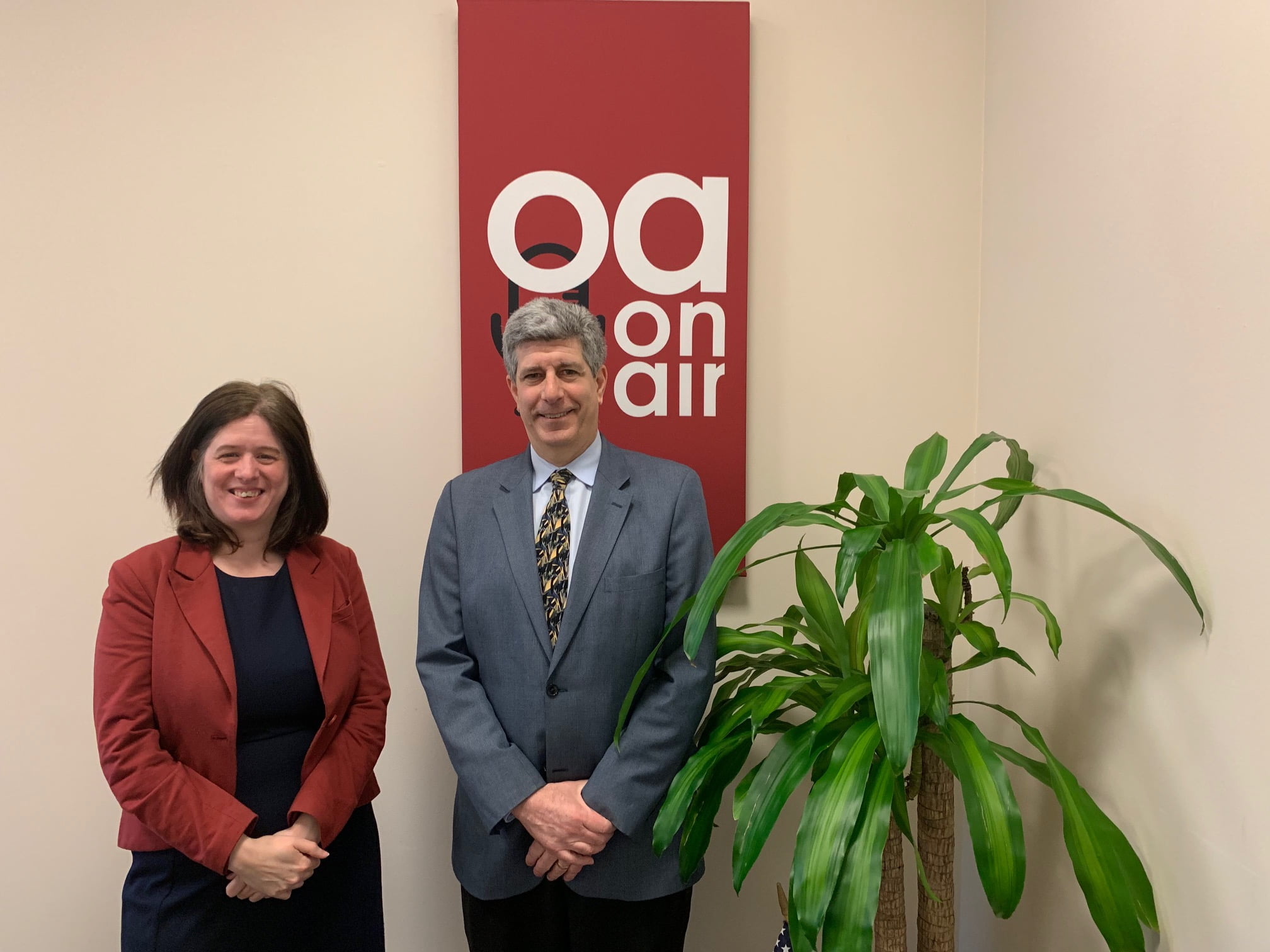
Roger Herzog Discusses CEDAC’s 40th Anniversary in OA On Air Podcast

This week, Suzanne sits down with Roger Herzog, the executive director of the Community Economic Development Assistance Corporation (CEDAC), about the organization’s 40th anniversary and why they are honoring former State Representative Mel King.

»

SourceOA On Air