For 40 Years, CEDAC Has Catalyzed Positive Change

For 40 Years, CEDAC Has Catalyzed Positive Change

Early-Stage Assistance Has Helped Build Housing, Transform Communities

By Roger Herzog

Special to Banker & Tradesman

In 1978, then- state representative Mel King introduced legislation that created the Community Economic Development Assistance Corporation (CEDAC), the nation’s first state agency designed to provide technical assistance to the burgeoning non-profit community development movement.  The idea of such an agency grew out of the Wednesday Morning Breakfast Group meetings convened by Mel at MIT with community activists and planners.  In Boston, the Group’s primary focus was the desire to establish community control over the redevelopment of acres of land in the heart of neighborhoods in the southwest area of the city that the state had taken by eminent domain for an inner belt highway.  The highway was stopped through community activism and by 1978, it had become clear that there was a need for an agency like CEDAC.

In the 40 years since we were established by an act of the legislature, Massachusetts and the community development sector have changed tremendously. And so has CEDAC.  We started as an economic development organization that provided technical assistance to community-based non-profits focused on small business development and job creation. But as the Commonwealth’s economy changed, we’ve evolved into a community development financial institution that provides early stage financing and technical assistance to non-profits seeking to produce and preserve affordable housing and non-profit early education facilities, through our affiliate, Children’s Investment Fund.

While it’s not easy to sum up 40 years of community development work, with its complications and challenges, the best way to share our accomplishments is to look at a sample of some of the non-profit development projects we’ve assisted:

Preserving affordable housing – the Chapman Arms story: since the early 1980s, CEDAC has fought to preserve the long-term affordability of subsidized multifamily housing, which is threatened by the time-limited use restrictions used as part of federal and state financing programs in the 1960s and 1970s.  In 2009, the state passed an affordable housing preservation law, Chapter 40T, which provided the Commonwealth with new tools to monitor and address this expiring use challenge. One of the key tools is purchase rights that allow the Commonwealth’s Department of Housing and Community Development (DHCD) or its designee to acquire and preserve expiring affordable housing projects if an owner proposes to sell a building.  In 2011, Chapman Arms, in Cambridge’s Harvard Square, became the first major project whose affordability was preserved through the use of Chapter 40T’s purchase rights. CEDAC delivered technical assistance to DHCD and its non-profit designee, Homeowner’s Rehab Inc., as well as a rapid commitment and closing on acquisition financing to preserve this mixed income 50-unit property.

Revitalizing neighborhoods – Northampton’s Live 155: Last year, Way Finders, a community development corporation (CDC) focused on Western Massachusetts, opened Live 155 in Northampton.  The mixed-use, mixed-income, new construction development of 70 apartments has helped to transform an important neighborhood in that city, a gateway into the downtown district.  CEDAC provided $2.6 million in early stage acquisition and predevelopment funding for that project, and similarly provided financing for Lumber Yard Apartments, a project by the Valley CDC across the street. These two projects have spurred significant public investment from the city, the state, and private partners.  This is only one recent example of the effective role of CEDAC’s early stage assistance that supports community non-profits’ transformative efforts.  Boston’s Jackson Square (where the original neighborhood battle against highway construction was waged) and Worcester’s Kilby-Gardner-Hammond are also examples where we’ve worked with community partners to reinvigorate those neighborhoods.

Supporting equitable transit-oriented development – the Residences at Fairmount Station: Late last year, Southwest Boston CDC and their development partner Traggorth Companies opened the Residences at Fairmount Station in Hyde Park, a 27-unit affordable housing development.  The Residences represent equitable transit-oriented development – affordable housing built near the MBTA’s new Fairmount Corridor commuter rail line.  Locations near transit offer opportunities for increased development density, and CEDAC and its financing partners provided $1.2 million in acquisition and predevelopment financing to ensure that low and moderate income residents can access these desirable locations.

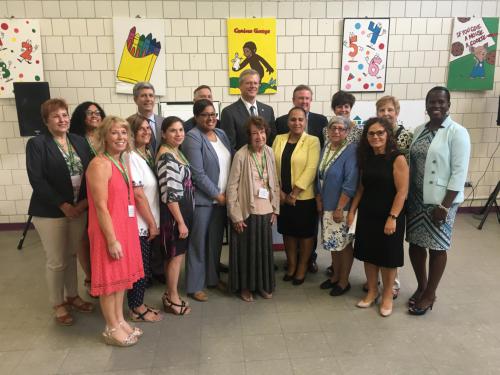
CEDAC is celebrating our 40th anniversary at an event this March and we will honor Mel King for both his vision and his belief in the power of people to strengthen their communities.  In the four decades since he introduced that legislation, Massachusetts has evolved into a national model of community development, in large part because of the institutional framework he helped to create.  It’s gratifying for us to look at the innovative projects above and recognize we are carrying on an important legacy.

Roger Herzog is the executive director of the Community Economic Development Assistance Corporation.


BT_Reprint_Herzog_031119

»

SourceBanker & Tradesman

Designing Home & Hope: Pairing Housing and Early Childhood Education Facilities — Case Studies from Boston and Seattle

Theresa Jordan, Director of Children’s Facilities Finance of CEDAC’s affiliate Children’s Investment Fund, was pleased to be a panelist for the Enterprise Community Partners webinar in February entitled “Designing Home & Hope: Pairing Housing and Early Childhood Education Facilities — Case Studies from Boston and Seattle.” Enterprise published the Home & Hope report in 2018 to document the development process and considerations for co-locating housing and early education and care. Over 70 participants from across the country joined the webinar.

Check out the recorded webinar online.

»

SourceEnterprise Community Partners

EduCare Springfield prepares to open state-of-the-art early childhood center

The biggest development in education in Western Massachusetts this year is aimed at the tiniest learners – children from birth to 5 years old.

Educare Springfield – a $14 million, nationally recognized early childhood center under construction in the Old Hill neighborhood, one of the poorest in the city – will open this fall, serving 141 children and their families who will be selected from the region’s Head Start program.

The Davis Foundation, an early childhood education advocate, is the lead partner in pushing for the new center, which will be one of 25 Educare centers operating in 15 states – plus one in Washington, D.C. and another in the Winnebago nation – supported by the Buffett Early Childhood Fund.

EduCare Springfield – rising on Hickory Street adjacent to the Elias Brookings School on land donated by Springfield College – was financed with a $9 million contribution from an anonymous out-of-state donor. Holyoke, Chicopee, Springfield HeadStart, a federally funded program, will operate the new center.

The anonymous donation – which John Davis says made him believe in miracles – paved the way for Springfield to land the program that has been a model for best practices in early childhood development. The Davis Foundation has made advocacy for quality early childhood education its mission in its quest to help insure that city children are ready to read by 4th grade.

Currently, only 33 percent of city children read at grade level by 4th grade, compared to peers in suburban schools, Davis said at a recent educational summit in Springfield sponsored by the Urban League.

“Urban kids can perform at high levels, but we need to do a lot for work to get them there. And, we can do it,” Davis said.

Janis Santos, executive director of the HeadStart, says the new center is a “dream come true.”

Santos, who has spent her 45-year career in early childhood education, says the EduCare model recognizes that the ages from birth to 5 years old are the most critical to a child’s development and that early educators need to be well-trained and well-compensated.

The new center also recognizes that parent involvement is “the backbone for success,” Santos adds.

When Susie Buffett, daughter of billionaire philanthropist Warren Buffett, created the first EduCare center in 2000, there was no vision for a national network to provide a higher- level education for infants, toddlers and preschoolers, according to Michael Burke, the Chicago-based vice president of the Buffett Early Childhood Foundation.

“What science was telling us is that there is a critical need for high-quality early childhood education,” Burke said during a telephone interview. “It takes more than a loving teacher to change the trajectory of a disadvantaged child.”

The 27,000-square-foot, state-of-the-art EduCare Springfield facility is being designed – like others in the network – to be a model for the high-impact educational practices aimed at preparing children for long-term academic success.

The goals of those practices are to improve kindergarten readiness; promote higher vocabulary skills; enrich social emotional skills; improve behavior’ reduce high school drop-out rates and promote long- term career and college success.

EduCare will be a lab school, of sorts, sharing its resources with other early childhood educators about the best methods to help children become successful learners.

There are four components to the continuous-improvement EduCare model, Burke explained: the use of data to inform instruction; ongoing coaching of teachers, support for families whose children attend EduCare and a series of professional development training sessions for teachers and staff.

“We can’t build an EduCare on every corner,” Burke said. “But the ones that we have can become real showrooms, a place where children, families and the staff walk in and say, ‘Wow, this is important.'”

When visiting Springfield, Burke said he was impressed with the local collaboration and commitment to early childhood education. “We’re glad to be operating in Springfield, rather than Boston,” he said.

In the next few weeks and months, EduCare will be building a website and writing a job descriptions for an executive director with a master’s degree, who will be an EduCare employee, and a school director with a master’s degree, who will be a HeadStart employee.

In addition to the benefits EduCare will bring to children and families in need, it will also have a huge positive economic impact on the region and the neighborhood where it is located.

The EduCare site is located in the Old Hill neighborhood that was severely impacted by the June 1, 2011 tornado. Investments in the neighborhood after the tornado included the construction of a $28 million dollar Brookings School, nearby parks and street improvements.

SourceMassLive

BPC Releases Policy Framework on Early Childhood Facilities

The Bipartisan Policy Center today released the Early Learning Facilities Policy Framework, which calls attention to the need for increased investment in early childhood facilities. The policy framework recognizes that the quality of the physical buildings and spaces where children learn, play, and grow are a fundamental part of their development and learning.

There are over 129,000 center-based early care and education programs serving nearly 7 million children nationwide and another 1 million in-home providers who care for 2.7 million children. Although research on facility quality is scant, one investigation across 10 states conducted by the federal Department of Health and Human Service’s Office of the Inspector General found that 96 percent of child care facilities had at least one health or safety violation. Similarly, both Massachusetts and Rhode Island have conducted statewide assessments which have found issues around air quality, cleanliness, and outdoor safety. The Environmental Protection Agency found that approximately 500,000 child care facilities are not even regulated for lead in drinking water.

This new policy framework, a joint effort of BPC and 20 other organizations, articulates the major principles critical to policy development for early learning facility investments. “Investments in early learning facilities—both center-based and home-based care—are an investment in communities themselves, and support children, parents, and businesses alike,” said Linda Smith, Director of BPC’s Early Childhood Initiative.

“The physical infrastructure of early learning environments has been neglected, and each sector—federal, local, and state government along with the faith, business, and philanthropic communities—can play a distinct role in supporting quality improvement efforts,” said Nicole Barcliff, Policy Director at Local Initiatives Support Corporation.

As part of moving this work forward, BPC is exploring how Opportunity Zones, a new economic development incentive created as part of the 2017 tax law, can be used as a vehicle for investing in early learning facilities, especially in these designated under-resourced areas. The goal is to ensure that the nation’s children are being cared for in early learning facilities that exceed basic standards and are effectively promoting their health, safety, and development.

Learn more about BPC’s work on Early Learning Facilities

»

SourceBipartisan Policy Center

Commonwealth Committed to Early Childhood Education

FUNDING FOR YOUNG CHILDREN
Early Childhood Education an Important Component of Community Development

Reprinted from November 5, 2018

High-quality child care facilities benefit children, their families and society. Facilities with lots of natural light, access to play indoors and outdoors, and space that supports teacher planning and encourages parental involvement are essential to fostering children’s health and well-being, especially for children living in low-income neighborhoods. Over time, policy makers, philanthropists and other public/private financing agencies are increasingly recognizing the importance of early childhood education (ECE) and out-of-school time (OST) facilities to community development.

The most recent – and perhaps most significant – acknowledgement of the role high-quality child care plays in strengthening communities comes from the federal government. In June, the U.S. Department of Treasury’s Community Development Financial Institutions (CDFI) Fund certified the Children’s Investment Fund (CIF), an affiliate of the Community Economic Development Assistance Corporation (CEDAC), as a CDFI. This is important because CDFIs invest in neighborhoods that other financial institutions are unwilling to and expand economic opportunities in those communities by providing organizations with access to financing and technical assistance.

The certification allows CIF to apply for federal funding to offer low-cost lending capital for ECE and OST facility improvements throughout the commonwealth. We were excited to learn in September that the CDFI Fund awarded us a $300,000 financial assistance grant, one of 302 community development financial institutions to receive a total of $202.2 million in awards this year. Those resources will help expand both financial and technical assistance to child care providers from Boston to Pittsfield.

CIF has invested $56 million in support of 565 capital projects that improved learning environments for 30,500 children.

The Children’s Investment Fund is one of a very few organizations across the country with a primary focus on developing child care facilities that has received this certification. We have also become a national leader in integrating child care within community development, in large part because Massachusetts has shown a tremendous amount of vision in this area.

This past spring, Gov. Charlie Baker and state legislators signed the Housing Bond Bill, which reauthorized the Early Education and Out of School Time (EEOST) Capital Fund, a bond program created in 2013 that provides capital funds for child care providers planning to renovate or build new child care facilities. CIF co-manages EEOST with CEDAC and the Massachusetts Department of Early Education and Care (EEC). Baker in August announced the most recent awards through the fund – four providers each received $1 million.

Among the recipients were Holyoke Chicopee Springfield Head Start Inc., which is constructing a high-quality early learning center based on the nationally recognized Educare model to serve 141 infants, toddlers and preschoolers from low-income families within Springfield. The Educare model helps children from birth to age 5 grow up safe, healthy and eager to learn. With more than 20 completed projects across the country, Educare prepares children for success and also helps parents develop skills to champion their child’s education.

Educare Springfield, the first in Massachusetts, is the result of collaboration between city and state partners, the region’s philanthropic community, and Holyoke Chicopee Springfield Head Start, which worked tirelessly to bring Educare to Western Massachusetts.

At a recent groundbreaking ceremony, Lt. Gov. Karyn Polito noted the strong connection between the impact of this new facility and the city’s overall efforts to revitalize this distressed urban neighborhood through public and private investments. It underscored how early education – like housing – is an important component of community development. The 2019 EEOST Capital Fund funding round is now underway.

Since it was established in 1991, CIF has invested $56 million in support of 565 capital projects that improved learning environments for 30,500 children. Our comprehensive technical assistance, training and financing model has strengthened nonprofit community-based child care providers in urban neighborhoods like Dorchester, suburban areas like Beverly and rural towns like Granby. In 2017 alone, more than 3,300 children throughout the commonwealth were served in facilities assisted by CIF. Almost all of these children (93 percent) were from low-income households; 80 percent were children of color; 45 percent were English Language Learners; and 13 percent were children with special needs.

As important as CIF’s role is in supporting child care providers, it has been elevated by certification and funding from the federal government. Funding from the CDFI Fund, EEOST and the philanthropic community give us more opportunities to increase lending to the provider community. As our understanding grows of how early education and care strengthens local communities, it’s good to know that public and private resources are available for smart and impactful investments.

Roger Herzog is the executive director of the Community Economic Development Assistance Corporation. Theresa Jordan is director of Children’s Facilities Finance for the Children’s Investment Fund.

Commonwealth Committed to Early Childhood Education

»

SourceBanker & Tradesman

Early Childhood Initiative Early Learning Facilities Policy Framework

»

SourceBipartisan Policy Center

Horizons for Homeless Children and WaterMark Development, Inc Break Ground on New Horizons Center

State-of-the-Art building will provide critical social and early education services to homeless children and their families

Roxbury, MA – September 21, 2018 – Horizons for Homeless Children, a nonprofit organization dedicated to improving the lives of young homeless children and their families, and WaterMark Development, Inc. today broke ground on the new Horizons’ Center, a 140,000-square-foot social services center in Roxbury.

The center, located at 1785 Columbus Ave., is the first-of-its-kind in Massachusetts and will improve the education, health and well-being of the city’s homeless families by providing on-site early education programs as well as access to a variety of social services to help parents navigate the many complexities of homelessness.

“We are very excited to expand our reach and provide services to more children and their families through the additional space and resources in the new center,” said Kate Barrand, CEO of Horizons for Homeless Children. “We are grateful to WaterMark for partnering with Horizons on the new building, as well as the many donors who are making it possible for us to change the trajectory of our city’s homeless families.”

In addition to serving as the headquarters for Horizons and the location of their new 35,000-square-foot Early Education Center serving 225 children (ages two months to five years), the building will house the Department of Children and Families regional office, the national offices of YouthBuild USA, the Boston office of Room to Grow and a new restaurant concept owned by the local Abreu family.

The unique public/private joint venture between Horizons and WaterMark Development features the collaborative design efforts of studioMLA Architects and Embarc Studio and will be built by Commodore Builders.   The project is a significant investment in the Roxbury community, providing valuable new services and bringing approximately 400 new jobs to the Jackson Square area. The Horizons Center is scheduled to open its doors in 2020.

Funding for this project is made possible through a unique combination of private gifts, new markets tax credits and construction financing provided by a bank consortium led by Eastern Bank and including Boston Private, The Life Initiative and Boston Community Capital. New Markets Tax Credit funding for the project was provided by MassDevelopment, Rose Urban Green Fund, Massachusetts Housing Investment Corporation (MHIC), The Community Builders, Building America CDE, Partners for the Common Good, and Northern Trust.  Additional funding was provided by Children’s Investment Fund, an affiliate of CEDAC.

About Horizons for Homeless Children
Horizons for Homeless Children is a nonprofit organization dedicated to improving the lives of young homeless children and their families. Horizons provides high quality early education, comprehensive family support services, opportunities for play, and statewide advocacy work. Today, Horizons serves more than 1,600 young homeless children each week in Massachusetts through three early education centers and more than 90 shelter-based Playspaces. For more information about Horizons for Homeless Children, please visit: www.horizonschildren.org.

About WaterMark Development, Inc.

For nearly 30 years WaterMark Development, Inc. has worked to restore Jamaica Plain and its surrounding area. By focusing on important historic buildings and forgotten or contaminated sites, we improve our neighborhood.  With great attention paid to the accurate historic renovation of notable buildings, combined with the cutting edge building techniques and time honored craftsmanship, our diligence has made a lasting impression on the community. WaterMark is a full service developer and builder involved from the site acquisition, to neighborhood permitting process through the conclusion of each building project. WaterMark ensures best practices along every step of the process creating good will in every community in which we work.

SourceHorizons for Homeless Children

Educare Springfield: Early education takes a giant step forward

On Monday, civic partners gathered in the city of Springfield and broke ground on what will be a $14 million Educare Center, a school that will open next year and provide “a full-day and full-year program for up to 141 children from birth to age five each year,” MassLive.com reports.

As we’ve blogged, Springfield’s educators and philanthropists have called this Educare project a “dream come true,” one that promises to provide the city’s children with increased access to a high-quality early education program.

Educare “began in Chicago in 2000,” public radio station WAMC reports. It’s a research-based model that has four core features: “data utilization, embedded professional development, high-quality teaching practices, and intensive family engagement,” according to Educare’s website.

“Among the innovations at Educare,” WAMC adds, “is the placement of teachers with the same children from the time they enroll as infants up to age 3. Parents are required to participate in school activities, home visitations, and regular parent-teacher conferences.”

Several years of rigorous evaluation shows that when children leave Educare for elementary school, the majority are academically, socially and emotionally prepared for kindergarten.”

There are “23 Educare schools in 15 states,” including California, Florida, Maine, Michigan, Washington, D.C., and Wisconsin. “Educare Springfield will be the first in Massachusetts.”

Springfield is putting the Educare Center in its Old Hill neighborhood, the home of many children who live in poverty. The neighborhood suffered considerable damage from the 2011 tornado that struck the Springfield area.

At the ground-breaking ceremony, Lieutenant Governor Karyn Polito pointed to the economic significance of the Educare Center, praising Springfield for “rebuilding this neighborhood” and noting that the school will serve children who are born in Springfield and grow up to become part of the city’s workforce, MassLive reports.

Springfield Mayor Domenic Sarno added, “Educare is a significant investment here in the city of Springfield and it’s another public and private partnership, with everybody working together for the same goal for our children.”

There are many members of this public/private partnership including: the Davis Foundation, which provided fundraising support and overall leadership for the project; Springfield College, which donated land; and the state of Massachusetts, which provided both a $1 million facilities grant to help finance construction as well as infrastructure funding from the MassWorks program at the Massachusetts Executive Office of Housing and Economic Development. Among the other partners are the Children’s Development Fund, the Mass Mutual Fund, Capital One Commercial Banking; and a number of anonymous donors. (The full list is on the City of Springfield’s website.)

Educare Springfield will be operated in partnership with Holyoke Chicopee Springfield Head Start. All Educare sites build upon strong partnerships with Head Start, and this one is no different. HCS Head Start Executive director Janis Santos spoke at Monday’s groundbreaking and shared her extensive conversations with other Head Start colleagues nationally who have partnered with Educare.

“They all told me, ‘It’s a lot of work, but it’s worth it,’” she said.

The center will also serve as a learning laboratory “for best practices” as well as “an essential resource for Springfield College, Springfield Technical Community College, Springfield Public Schools, and the early education community across the state for training and providing professional development for future teachers, social workers, evaluation and research.”

It’s an ambitious project with a great deal of promise that could transform children’s lives. As Tom Weber, the commissioner of the Department of Early Education and Care, explained to WAMC, “despite the success the state has seen with rising test scores and graduation rates in the last 25 years, it still has one of the largest achievement gaps in the country.”

“We have to take risks,” Weber added. “It is worth taking risks. If the solutions were obvious to us, we would have solved these problems already, so we have to be daring.”

Stay tuned. We hope to share more about Educare Springfield as the project develops. The center is scheduled to open in late 2019.

SourceEye on Early Education

Space matters: Massachusetts invests in improving early education buildings and facilities

This summer, Massachusetts awarded $4 million in grants to help early education and after-school programs improve their physical spaces. The money comes from the Early Education and Care and Out of School Time (EEOST) Capital Fund, which was created by the state Legislature.

As we’ve blogged before, engaging classrooms, lively safe playgrounds, and well-designed bathrooms are some of the key features that create nurturing environments for young children.

But programs often can’t afford the costs of badly needed construction and renovations. That’s why these capital improvement funds are so important.

In a statement, Governor Charlie Baker said, “Renovating and repairing facilities helps achieve our goal of improving the quality of early education and care.”

Massachusetts’ Secretary of Education James Peyser said. “We know that building deficiencies impact the quality of teaching and learning in early childhood and out-of-school time facilities. These grants were created to help non-profit providers serving children living in low-income communities improve their facilities.”

Administered by the Children’s Investment Fund, an affiliate of CEDAC (the Community Economic Development Assistance Corporation), the grant funds were given to four organizations:

Citizens for Citizens, Fall River, $1 million

The funds will pay for “playground improvements, window replacements, and critical safety and security upgrades to an existing Head Start program in a 118-year-old building,” according to the Children’s Investment Fund.

Crispus Attucks Children’s Center, Dorchester, $1 million

The center “will replace the HVAC system and make building envelope upgrades. It also plans to improve the design of its infant area and reconfigure toddler classrooms.

Elizabeth Stone House, Roxbury, $1 million

The funds will be used to build “a 5-story multi-service building which will include 32 units of affordable housing and a licensed early childhood education (ECE) program serving 51 children.”

Holyoke-Chicopee-Springfield Head Start, Springfield, $1 million

Head Start officials plan to build “an Educare model facility for 141 ECE children.”

All four organizations “serve publicly subsidized families, have demonstrated financial need, and have secured additional funding to pay for a portion of their project costs,” the statement from Governor Baker’s office explains.

The benefits of these efforts will be substantial. As Lieutenant Governor Karyn Polito explained, “High-quality programs help young children develop healthy learning habits, which is good for the community and for our Commonwealth as a whole.”

And as Tom Weber, commissioner of the Department of Early Education and Care, adds, “We are pleased to make these awards as this public investment in building construction and renovation of early education programs will benefit children, local communities, and the state for years to come.”

SourceEye on Early Education

Ground broken for low-income childcare program in Springfield

Ground was broken Monday for a new childcare program in Springfield that will serve low-income families.

According to a news release sent to 22News, the Educare Springfield will serve 141 children with a full-day, year-round program.

The release said the program will target the children’s education needs as well as other needs their families may have.

The 26,000 square-foot program will be built in the Old Hill Neighborhood near the Elias Brookings Elementary School.

Educare Springfield is scheduled to open by the fall of 2019.

The new facility will create 110 construction jobs, 46 existing Head Start jobs, and another 10 jobs within two years after opening.

The program has already received two separate $1 million grants, one from the Department of Early Education and Care and one from the Baker-Polito Administration.

The program will be the 25th Educare Learning Network in the country, and the first one in the state of Massachusetts.

SourceWWLP