MassHousing Finances New Hyde Park Affordable Housing

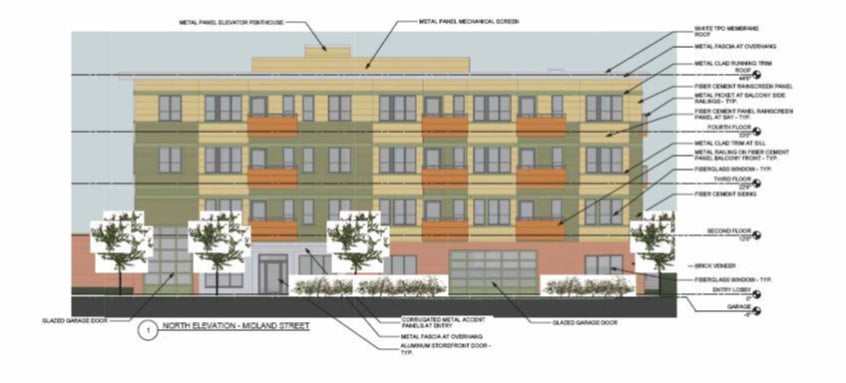
MassHousing has closed on $2.1 million in financing to the Traggorth Cos. and the Southwest Boston Community Development Corporation (SWBCDC) for the construction of the 27-unit Residences at Fairmount Station in Hyde Park.

All 27 apartments will be affordable to low- and moderate-income households. MassHousing is providing a $1.8 million permanent loan and $300,000 through the agency’s $100 million Workforce Housing Initiative.

“This transaction typifies many of the housing challenges MassHousing is addressing for Massachusetts residents with a range of incomes,” MassHousing Executive Director Tim Sullivan said in a statement. “The Residences at Fairmount will provide brand new, affordable apartments for lower- and moderate-income households as well as working families while also transforming an underdeveloped parcel into an attractive housing resource for Hyde Park residents. We were very pleased to collaborate with the Traggorth Cos., the Southwest Boston Community Development Corp., the city of Boston and the Baker-Polito Administration to help develop this important new housing.”

Of the 27 units, six will be for low-income households earning at or below 30 percent of the area median income ($31,020 for a family of four) supported a federal Section 8 Housing Assistance Payment Contract; five will be for households with incomes at or below 50 percent of AMI ($51,700 for a family of four); 13 will be for households with incomes at or low 60 percent AMI ($62,040 for a family of four) and three will be workforce housing units for households earning at or below 80 percent AMI ($78,150 for a family of four).

“Southwest Boston CDC is grateful to MassHousing and all of our partners for helping us to create urgently needed affordable housing for Hyde Park families, and to transform this formerly disconnected and underused site into a vital part of the residential neighborhood and commercial district,” SWBCDC Executive Director Erica Schwarz said in a statement.

In addition to the MassHousing financing the project is also receiving financing from the city of Boston, the Massachusetts Department of Housing and Community Development and financing from the allocation of Low-Income Housing Tax Credits.

The Residences at Fairmount will include one studio unit, three one-bedroom units, 18 two-bedroom units and five three-bedroom units, as well as a community room, green space and outdoor play area. The new housing will be transit-oriented and located across from a Commuter Rail stop.

http://www.bankerandtradesman.com/2017/09/masshousing-finances-new-hyde-park-affordable-housing/?utm_campaign=Daily&utm_source=hs_email&utm_medium=email&utm_content=56377046&_hsenc=p2ANqtz-8MHPgZedlFRJIWUSKsEW_s6_xyj1_7udfRQwraqvEv-Xzp0rXM_NEp_lYoQehao-vpxcuQ5RDj6xHGpXpewCkU-F86xg&_hsmi=56377046

SourceBanker & Tradesman

$1.1M announced for Head Start in Webster

Federal, state and local officials converged on a vacant School Street building Thursday to celebrate its future as an early childhood education facility, and the infusion of more than $1 million toward the effort.

Lt. Gov. Karyn Polito announced $600,000 in state funding for the project, while U.S. Rep. James McGovern, D-Worcester, revealed a $500,000 commitment from the federal Administration for Children and Families.

The Worcester Community Action Council aims to repurpose the former senior center at 116 School St. into a Head Start facility, for an estimated $1.7 million.

Ever since the roof of a Head Start program in Oxford collapsed under extreme winter conditions in 2015, dozens of Webster children have had to use a Head Start program in Southbridge.

Head Start is a program of the U.S. Department of Health and Human Services that provides early childhood education, health, nutrition and parent involvement services to low-income children and families.

In early 2015, the WCAC shut down its Head Start program in Oxford when the roof was deemed dangerous because of exceptional winter weather. WCAC officials said busing children from surrounding towns to Southbridge is a considerable expense to the organization, and an inconvenience to families.

WCAC negotiated a 25-year lease, with a five-year extension, with Webster. But the two-story brick building will need to be rehabbed.

In addition to Webster, Ms. Polito said she was highlighting $4.1 million in capital grants for the modernization of spaces for early education programs in Boston, Belchertown, North Adams and New Bedford.

The state funding is from the early education and out-of-school time capital fund, which has provided up to $45 million in general obligation bond funding during five years, for grants to group and school-age child care facilities that are licensed by the state Department of Early Education and Care. The money is to renovate, improve or acquire and construct new program facilities for nonprofit corporations and organizations that serve low-income families.

The lieutenant governor said early educators are as important as the buildings that house the programs.

She said that under the leadership of state education secretary James Peyser, who was also in attendance, she and Gov. Charles D. Baker were pleased to provide a 6 percent rate increase to early educators across the state, the largest rate hike for subsidized early education programs in 10 years, Ms. Polito said.

“We need talented, caring people to choose the line of work as early educators to be on the team to make a difference for the children,” she said, noting that subsidized programs support approximately 56,000 children daily in Massachusetts.

Mr. McGovern thanked the WCAC for serving the most vulnerable people in a large chunk of his congressional district.

Mr. McGovern noted that the federal funding hadn’t been confirmed until 1 p.m. Thursday. He said he made yet another plea earlier in the day, and joked that he would have been embarrassed to show up in Webster empty-handed.

“I couldn’t be happier because I believe in all that is going to occur in this building,” he said.

State Sen. Ryan C. Fattman, R-Webster, who often reads to children in Head Start in Southbridge, said that transforming the facility from a senior center to a Head Start facility symbolized a changing of the guard and shifting of generations. Mr. Fattman nodded to the children of the program positioned to his right and said that if America doesn’t invest in their future, their future will be in question.

WCAC Executive Director Jill Dagilis thanked state Rep. Joseph McKenna, R-Webster, for his dedication to Webster families and the WCAC program. She said he opened many doors and kept the priority for funding the project on everyone’s radar. As a result, the WCAC gave Mr. McKenna its community action award earlier this year.

Mr. McKenna called the effort “one of those rare projects where everyone comes together and pulls in the same direction.”

The project calls for construction of four classrooms, a reception area and office spaces, installation of a new sprinkler system, elevator, flooring and lighting. Improvements will be made to the kitchen, restrooms and electrical system, alongside accessibility upgrades and the installation of a playground.

The building will serve 71 low-income children and 15 staff members.

It was originally designed as a private school built in the 1950s, with a renovation in 1979 to serve as the senior center, which has since moved.

The new Head Start’s anticipated opening is fall 2018.

Currently, 31 Webster children are enrolled in the half-day program, and the 10 children enrolled in the full-time program from Webster are bused daily to WCAC’s site in Southbridge.

There are an additional 30 children from Webster on the agency’s waiting list for Head Start.

The winter snowfall of 2015 was a FEMA-designated disaster. The roof collapse displaced 87 children and 15 staff in Oxford.

A Webster mother, Delilah Charest, whose children are 7 and 4, said she continued to take her children to Head Start in Southbridge when the Oxford facility closed because “it’s done a lot for my family,” she said.

Ms. Charest credited WCAC for allowing her to get training and get back to full-time work while her children were in the program. She said it also helped her son with a speech problem.

Ms. Charest said she is happy that the program will be closer to home.

Another Webster mother, Nicole Swift, said she has a 4-year-old child with ADHD in the Southbridge Head Start. She said she believes in the program because of its understanding teachers who are helpful with her daughter’s behavioral problems.

Ms. Dagilis, the executive director, also thanked Webster Selectman Randall V. Becker and his wife, Donna, for kicking off the private fundraising campaign by pledging $200,000, the largest individual donation in the agency’s history.

http://www.telegram.com/news/20170831/11m-announced-for-head-start-in-webster

SourceWorcester Telegram

Baker-Polito Administration Awards $72 Million to Create, Rehabilitate and Preserve Nearly 2,000 Housing Units

BOSTON – Today, Governor Charlie Baker announced $72 million in housing subsidy funds and additional state and federal tax credits to 25 projects in 17 communities for the creation, rehabilitation, and preservation of 1,970 housing units across the Commonwealth, including 402 units reserved for very low-income families and families making the transition out of homelessness, building on the Baker-Polito Administration’s commitment to increasing the production and preservation of affordable housing for all residents.

“Safe and affordable housing is a cornerstone to the success of our Commonwealth’s families, including access to job opportunities for many of our most vulnerable populations,” said Governor Charlie Baker. “Through our combined efforts and investments to date, over 5,200 affordable housing units are being created, preserved or rehabilitated to support the growth of Massachusetts, our workforce, communities and families.”

The administration is awarding over $72 million in housing subsidy funds, including federal HOME funds and state capital funds. Additionally, the Department of Housing and Community Development is awarding more than $28 million in state and federal low-income housing tax credits, which will generate more than $180 million in equity for these projects. The awards will create or preserve 1,978 rental units, including 1,698 affordable units, in 25 projects across the state. Three projects will reserve units for individuals with disabilities, two are transit-oriented developments and three projects will include Single-Room Occupancy (SRO) units, including a building dedicated to youth aging out of foster care.

“Massachusetts is strongest when all of our families and residents have access to opportunities to thrive,” said Lieutenant Governor Karyn Polito.“Today’s awards will support affordable housing options for families in communities across the Commonwealth’s, regardless of income or zip code, including projects with housing for low-income or formerly homeless families, individuals with disabilities, veterans and the elderly.”

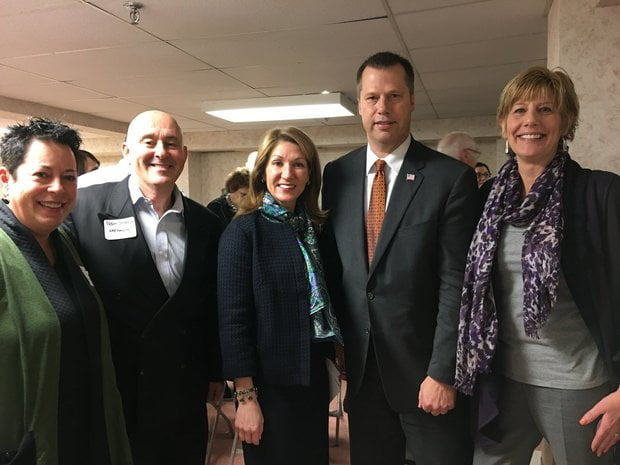
Governor Baker joined Boston Mayor Marty Walsh, Housing and Economic Development Secretary Jay Ash, Housing and Community Development Undersecretary Chrystal Kornegay and MassHousing Executive Director Tim Sullivan to make the funding announcement at Olmsted Green in Mattapan. Olmsted Green is a 38-acre, existing mixed-income housing community on the former site of the Boston State Hospital.

“Today was a big day for housing here in Boston and across the Commonwealth. Not only did we break ground on mixed-income housing units today, we were given the support to continue our work in creating affordable homes for those in this thriving city and create more construction jobs in our neighborhoods,” said Mayor Walsh. “I want to thank the Governor for making these funds available and for supporting important projects like Olmsted Green in Boston.”

Lena New Boston’s efforts are one piece of the larger redevelopment of the former Boston State Hospital into a mix of housing, community and green space. The site includes the Mass Audubon’s Boston Nature Center and Wildlife Sanctuary, which sits on 67 acres. While the site sat vacant after the hospital’s closure in 1979, the past decade has seen the complete transformation of the space, bringing significant affordable and mixed-income housing to the Mattapan neighborhood, with rental and home-ownership opportunities for residents.

The Lena Park Community Development Corporation and New Boston Fund, together known as Lena New Boston LLC, are currently completing a 41-unit affordable, home-ownership development, with previous support from MassHousing’s Workforce Housing Initiative, a joint initiative with DHCD. Lena New Boston will also build an additional 100 units of mixed-income rental housing in the next phase of the development with support from today’s awards.

“Today’s announcement of significant investments in affordable housing represents a key part of the administration’s inclusive strategy to support families and residents, and meet the needs of every community in Massachusetts,” said Housing and Economic Development Secretary Jay Ash. “Creating and preserving housing for families across the income spectrum will allow us to build and retain a skilled workforce across the state, and give our residents access to more opportunities.”

“Our administration is committed to supporting projects that support our most vulnerable communities, from very low-income families, to seniors, veterans and individuals with disabilities,” said Housing and Community Development Undersecretary Chrystal Kornegay. “Affordable housing is a strong tool for community development, and our investments using the Low Income Housing Tax Credit reflect those priorities.”

The 2017 affordable rental housing award round reflects the Baker-Polito Administration’s ongoing commitment to substantially invest in housing across the Commonwealth. In April, Governor Baker filed a housing bond bill seeking $1.287 billion in additional capital authorization to advance the administration’s commitment to affordable housing. In May 2016, the administration unveiled a five-year capital budget plan that includes a $1.1 billion commitment to increasing housing production, an 18% funding increase over previous funding levels. The $1.1 billion capital commitment provides for significant expansions in state support for mixed-income housing production, public housing modernization, and affordable housing preservation.

Since 2015 the Baker-Polito Administration has provided direct funding to create and preserve over 5,200 units of affordable housing across Massachusetts.

In addition, the administration and MassHousing have previously committed $100 million to support the construction of 1,000 new workforce housing units. To date, the Workforce Housing Initiative has advanced the development of 1,317 housing units across a range of incomes, including 387 workforce housing units.

2017 Awardees

Mechanic Mill is a mixed-income historic rehabilitation project located in Attleboro. The project sponsor is WinnDevelopment. When completed, Mechanic Mill will offer 91 total units, with 56 affordable, including 10 units reserved for households earning less than 30 percent of area median income (AMI). All 91 units will be reserved for persons who are at least 55 years old.

Burbank Gardens is a preservation project of an existing 52-unit development located in Boston’s Fenway neighborhood. Fenway Community Development Corporation, with assistance from DHCD, MassHousing, and the City of Boston, will rehabilitate and preserve the existing property and restrict 39 of the 52 units for rental to low and moderate-income tenants.

Cote Village is a 76-unit new construction project in Dorchester sponsored by Caribbean Integration Community Development and the Planning Office for Urban Affairs of the Archdiocese of Boston. The City of Boston also will provide substantial support to the project. When completed, Cote Village will include 56 affordable units, including eight units reserved for formerly homeless individuals or families, and several units reserved for persons with disabilities.

General Heath Square Apartments is a 47-unit new construction project in Boston’s Jamaica Plain neighborhood. The sponsor is the non-profit Jamaica Plain Neighborhood Development Corporation. The city of Boston also will provide substantial support to the project. When completed, this transit-oriented project will include 40 affordable units, including 20 units reserved for households earning less than 30 percent of AMI.

Olmsted Green Mixed-Income is a 100‑unit mixed-income new construction project in Boston to be built on the site of the former Boston State Hospital. Previously, the state and the City of Boston have helped finance over 500 units on the former hospital site. Sponsored by the New Boston Fund, the completed project will offer 40 affordable rental units, including 16 units for households earning less than 30 percent of AMI and several units for persons with disabilities. Sixty units within the project will be made available as workforce and market-rate rental units. The City of Boston also will provide funding for this project.

Talbot Commons Phase 1 is a new construction/rehabilitation project located in Boston’s Codman Square neighborhood. The sponsor is the non-profit Codman Square Neighborhood Development Corporation. The City of Boston also will provide significant support to Talbot Commons. The completed project will offer 40 affordable family units, including nine units reserved for households earning less than 30 percent of AMI.

The Clarion is a new construction mixed-income family housing project to be built on Blue Hill Avenue in Boston. The sponsor is the non-profit The Community Builders (TCB).  The City of Boston also will provide significant support to The Clarion. The site is located near major transit and retail opportunities and will offer 39 total units. Twenty seven units will be affordable, including seven units reserved for households earning less than 30 percent of AMI.  Several affordable units also will be reserved for persons with disabilities.

Washington Westminster House in Boston is a new construction project sponsored by the non-profit Elizabeth Stone House. The 32-unit project will provide affordable housing as well as support services for at-risk and homeless families. All 32 units will be reserved for households with incomes below 30 percent of AMI. The City of Boston also will provide funds to Washington Westminster House.

Wilshire Westminster in Boston is a scattered-site preservation project sponsored by the non-profit Urban Edge to rehabilitate existing properties consisting of 99 total units for families. Eighty-nine of the rehabilitated units will be affordable, including 10 units reserved for households earning less than 30 percent of AMI.

JAS Consolidation is a scattered-site preservation and production project located in Cambridge and sponsored by the non-profit Just-A-Start Inc. The 112-unit consolidation project includes multiple properties located between Kendall Square and East Cambridge. Several of the properties, including St. Patrick’s Church, were destroyed in a massive fire in December 2016. The fire-impacted properties will be demolished and replaced with new, affordable housing, including 12 units reserved for households earning less than 30 percent AMI. Other properties included in the consolidation will be rehabilitated with support from DHCD and from the City of Cambridge.

MacArthur Terrace in Chicopee is a preservation project, an existing large-scale family development sponsored by Dimeo Properties. The City of Chicopee also will provide support to the project.  When completed, MacArthur Terrace will offer 222 total units, with 182 affordable units, including 44 units for households earning less than 30 percent of AMI.

Brownstone Gardens in Easthampton is a preservation project sponsored by Carr Property Management. Originally financed through MassHousing’s Chapter 13A program, the property will be rehabilitated with subsidy funds from DHCD and assistance from MassHousing.  When completed, Brownstone Gardens will offer 132 total units, with 107 affordable units, including 33 units reserved for households earning less than 30 percent of AMI.

Bostwick Gardens in Great Barrington is a new construction/rehabilitation project for seniors sponsored by Berkshire Housing Development Corporation.  The completed project will offer 31 new affordable units for seniors as well as 29 rehabilitated units in an existing building. Eighteen of the total units will be reserved for individuals or couples earning less than 30 percent of AMI.  The non-profit Berkshire Housing Development Corporation will make certain services for seniors available on-site and also will help senior residents access off-site services.

98 Essex in Haverhill is a new construction family housing project sponsored by Affordable Housing and Services Collaborative, Inc. The City of Haverhill also will provide funds to 98 Essex.  When completed, the project will feature 62 total units, all of which are affordable, with seven units reserved for households earning less than 30 percent of AMI.

The Gerson Building in Haverhill is a new construction project sponsored by the non-profit Coalition for a Better Acre.  The City of Haverhill also will provide funds to the Gerson Building. The completed project will offer 44 units for families as well as a preference for households that include veterans.  All 44 units will be affordable, with eight units reserved for households earning less than 30 percent of AMI.

Holyoke Farms Apartments is a large-scale family preservation project located in Holyoke. The sponsor is Maloney Properties, Inc. The City of Holyoke also will provide funds in support of the rehabilitation.  When completed, Holyoke Farms will offer 229 family housing units, with 191 affordable units, including eight units reserved for households earning below 30 percent of AMI and 12 new construction units.

Carter School in Leominster is a historic rehabilitation project sponsored by the non-profit NewVue Communities. The sponsor will rehabilitate a vacant and fire-damaged school building into 39 family housing units. All units will be affordable, including 16 units affordable to households earning less than 30 percent of AMI.  The City of Leominster also will provide funds to the project.

Willis Street Apartments in New Bedford is a new construction project sponsored by the non-profit Women’s Development Corporation. The project will consist of 30 affordable single-room occupancy (SRO) units, and the sponsor will offer a veteran’s preference for each unit.  All units will be affordable, including 23 units reserved for individuals earning less than 30 percent of AMI.

Transitional and Supportive Housing is a scattered-site project located in North Adams and Adams and sponsored by the non-profit Louison House. The sponsor currently operates the only comprehensive shelter program for homeless families in northern Berkshire County. The Transitional and Supportive Housing project will consist of the rehabilitation of 22 family shelter units destroyed by fire as well as the construction of five new permanent housing units for homeless families. All units will be affordable to households earning less than 30 percent of AMI, and the sponsor will provide extensive services to resident families.

King Pine is a large-scale family preservation project located in Orange. The sponsor is The Schochet Companies. The sponsor will rehabilitate this project and extend restrictions on rental rates well into the future. The completed project will offer 234 affordable units, including 24 units affordable to households earning less than 30 percent of AMI.

Cape Cod Village is a new construction project in Orleans. The sponsor is the non-profit Cape Cod Village, Inc. When completed, the project will offer 15 affordable housing units and services to persons with disabilities, including autism. DHCD will support Cape Cod Village with subsidy funds, and seven communities on Cape Cod have committed Community Preservation Act or other local funds to the project.

Harbor and Lafayette Homes is a preservation project consisting of two properties, which are single-room occupancy (SRO) buildings, located in Salem. The project sponsor is the non-profit North Shore Community Development Coalition. The City of Salem also will provide funds to the project. When rehabilitation work has been completed, Harbor and Lafayette Homes will offer 27 SRO units. Twenty-six units will be affordable, including seven units reserved for individuals earning less than 30 percent of AMI.  The property located at Harbor Street will provide housing and services to youth aging out of foster care.

The Residences at Salisbury Square is a new construction and adaptive re-use project in Salisbury.  The sponsor is the non-profit YWCA of Greater Newburyport in partnership with L. D. Russo. When completed, the project will offer 42 total units, all of which will be affordable, with 16 units further restricted for rental to households earning less than 30 percent of AMI.

Chestnut Crossing is a 104-unit preservation project located in downtown Springfield.  Formerly owned by the YMCA of Springfield, the project now is owned by the non-profit Home City Housing. Home City Housing will rehabilitate the project as single-room occupancy (SRO) units with kitchenettes and baths. The City of Springfield also will provide funds in support of Chestnut Crossing. Seventy-nine of the completed SROs will be affordable, including 26 SROs affordable to individuals earning less than 30 percent of AMI.

Moseley Apartments in Westfield involves the historic rehabilitation of a vacant school building into affordable housing for families. The sponsor is the non-profit Domus; Moseley Apartments will be the sponsor’s second school re-use project in Westfield. When completed, Moseley Apartments will offer 23 affordable units, including six units affordable to households earning less than 30 percent of AMI.

http://www.mass.gov/governor/press-office/press-releases/fy2018/awards-to-create-rehab-and-preserve-2000-housing-units.html#
 

SourceGovernor Charlie Baker Press Office

CEDAC Receives Funding From Kuehn Charitable Foundation for New Grant Program

For more information and to apply for a Kuehn Planning Grant, please visit our Application Forms & Guidelines page under Housing Programs.

The Community Economic Development Assistance Corporation (CEDAC) was recently awarded $180,000 of funding by the Kuehn Charitable Foundation to establish a new planning grant program to help the non-profit community development sector across Massachusetts. Named for the foundation’s creator Robert H. Kuehn, Jr., the Kuehn Planning Grants will help non-profit corporations in Massachusetts explore the feasibility at the earliest stages of project development. The Kuehn Charitable Foundation was created by the late Robert H. Kuehn, Jr. in the late 1990s and is dedicated to preserving communities around Massachusetts. By supporting affordable housing and historic and open space preservation, the Foundation carries on the legacy of its founder who spent his life developing affordable and historic housing. The primary activity of the foundation is the Kuehn Fellows Program, which provides hands-on experience to its fellows by placing them in positions with vetted nonprofit affordable housing organizations around the Commonwealth. “There are non-profit organizations across the Commonwealth who want to improve their communities by building new affordable housing or economic development space, but are unaware of both the challenges and the funding available to do so,” said Jennifer Gilbert, Director of Kuehn Charitable Foundation. “These grants will help those agencies determine what is feasible. We are partnering with CEDAC because their expertise in this area will allow these organizations to take the steps in turning their vision into a reality.” For more than 35 years, CEDAC has provided early stage capital to non-profit, community-based organizations engaged in effective community development. The Kuehn Planning Grants of up to $15,000 each will be awarded to organizations for costs associated with affordable housing or economic development projects. There will be a preference for projects undertaken by small, community-based organizations, as well as mixed-use and/or mixed-income projects incorporating historic preservation, projects serving low- and moderate-income artists, supportive housing for vulnerable families and individuals, and smaller scale projects. “Throughout our history, CEDAC has provided early-stage financing to community development corporations and other community-based non-profit organizations to help them develop affordable housing and child care facilities,” said CEDAC’s Executive Director Roger Herzog. “But we know that there many more organizations who want to improve their communities by producing or preserving affordable units or commercial space. The Kuehn Planning Grants will allow smaller non-profits to explore opportunities that they might feel are too financially risky otherwise. We’re looking forward to working with these organizations through these grants.” More information on the Kuehn Planning Grants can be found at CEDAC’s Website at www.cedac.org.

SourceCEDAC

Two Community Development Nonprofits Receive $1.3M

Two Community Development Nonprofits Receive $1.3M
August 19, 2016 — The Community Economic Development Assistance Corporation, a public-private community development finance institution that provides financial resources and technical expertise to promote community development in Massachusetts, yesterday announced that it is providing $1,323,100 to two Boston-based nonprofits.

The loan financing will support development of affordable housing in the Boston’s Roxbury neighborhood and improvements to a parent support program in the city’s Dorchester neighborhood.

The Community Economic Development Assistance Corporation (CEDAC) provided $1,200,000 in acquisition financing to Urban Edge in Boston, which helps build affordable housing and diverse communities in Boston and surrounding neighborhoods. The funding will support the purchase and development of a new affordable housing project on Columbus Avenue in Roxbury.

Located just south of Jackson Square, Urban Edge’s Columbus Avenue site will include 38 units of multifamily affordable rental housing and 1,000 square feet of commercial space.

CEDAC has been involved in the redevelopment of Jackson Square since 2006 and provided over $1.5 million in early stage financing for the master planning of the neighborhood and other affordable housing development projects. The new affordable housing project will serve low- and extremely low-income families in the community and continue the trend of growth in the area in- and around Jackson Square.

“We have been extremely proud to support the efforts by the Jackson Square Partners to revitalize the neighborhood in a way that helps current residents,” said CEDAC’s Executive Director Roger Herzog. “The current site is blighted and the neighborhood will greatly benefit from quality housing on that site. It is a pleasure to continue our effective relationship with Urban Edge, which goes beyond the Jackson Square redevelopment and into other nearby neighborhoods in Roxbury and Jamaica Plain.”

CEDAC also provided $123,100 to Family Nurturing Center of Massachusetts (FNC) in Dorchester, which provides support services to families promote skill-building and access to educational, social, and health resources. The funding, made through CEDAC’s affiliate Children’s Investment Fund, will support expansion of FNC’s Bowdoin Street site in Dorchester.

The commitment is in addition to $375,000 previously provided to FNC by the fund for this project. To allow for the expansion of programmatic and administrative space, FNC, which has provided comprehensive family support services to low-income families throughout Boston, is renovating and enlarging its existing Bowdoin Street center to include two additional floors.

“The fund is proud to continue to support mission-focused providers like the Family Nurturing Center of Massachusetts,” said Theresa Jordan, director of Children’s Facilities Finance for the fund. “Supporting children and their families builds strong communities and encourages positive environments for children to learn and grow both in the center and in their homes.”

© 2016 www.massnonprofit.org. All rights reserved.

http://www.massnonprofit.org/news.php?artid=4625&catid=12

SourceMassNonprofit News

Lynn School Gets A Reason to Aspire

LYNN SCHOOL GETS A REASON TO ASPIRE
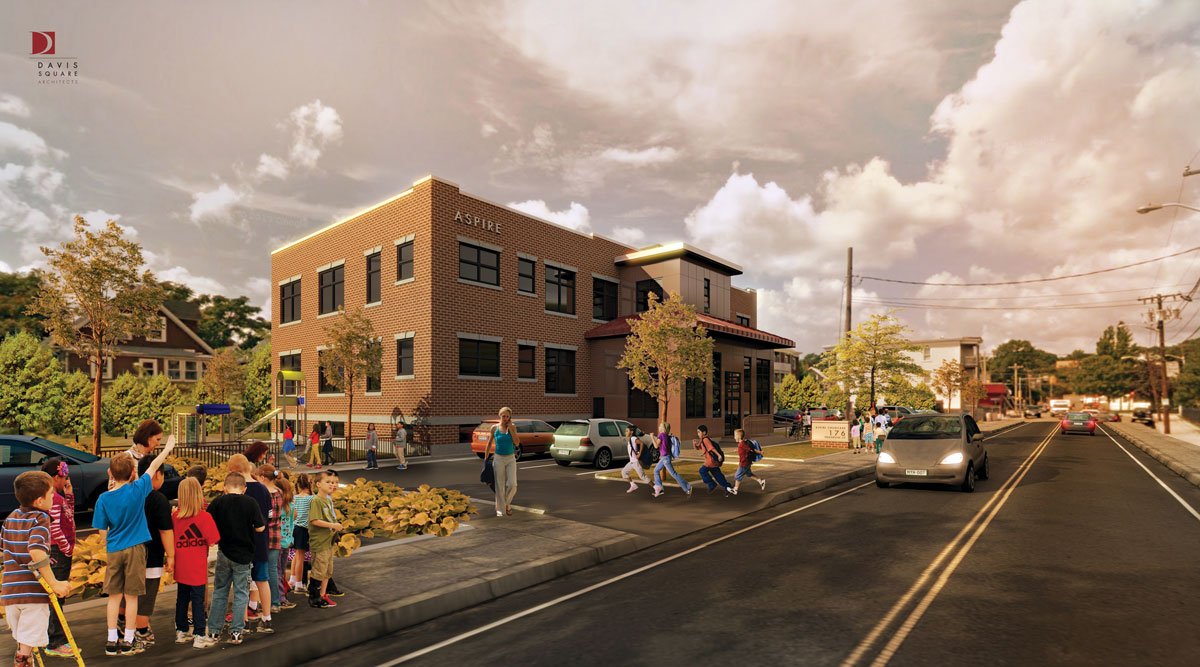
A rendering of Aspire Developmental Services’ plan to convert the former O’Keefe School on Franklin Street into an early intervention center.

BY PAUL HALLORAN

LYNN — Aspire Developmental Services’ efforts to raise funds for a new headquarters got a major boost when the agency was awarded a $1 million state grant. Aspire, which provides Early Intervention services to children up to age 3, was one of six agencies to receive the Early Education and Care and Out of School Time grant from the state Community Economic Development Assistance Corporation, in partnership with the Children’s Investment Fund. The state awarded competitive grants totaling $3.6 million to be used for major capital facilities projects. Aspire got the largest grant and was the only agency to receive the maximum of $1 million.

“We are extremely grateful to receive this funding,” said Lori Russell, acting executive director of Aspire. “This will play a major role in bringing our new building closer to reality. It was a very competitive process. We’re thrilled to be the only agency to receive $1 million.”

“We are very pleased that Aspire will be expanding their operation and capacity to provide critical services to children and families in Lynn and the surrounding area,” said Mayor Judith Flanagan Kennedy. Russell said while the grant is a big help, the capital campaign is ongoing, with the agency hoping to raise at least an additional $1 million for the $4.2 million project.

“This grant is very important, and we are extremely grateful, but we still have funds to raise in order to reach our goal,” said capital campaign committee member Debby Regan, co-owner ofMeninno Construction. “We plan to continue to make the case that this is a project worthy of the community’s support.” Aspire will renovate the former O’Keefe School building on Franklin Street. The new facility will provide 15,000 square feet of space — triple what it has now on Johnson Street. The additional space will allow Aspire to double the play group opportunities for children receiving Early Intervention Services. Aspire will also increase its capacity for child care from 20 to 49 toddlers and pre-school students.

The purpose of the grant is to improve the quality of early education settings.“The new building will allow us to serve more families in more modern and appropriate space,” Russell said. “We will also be able to provide parent-child groups and parent training workshops.”

“The Early Education and Care and Out of School Time grants are a critical resource for helping ensure that our early learning program environments support children’s learning,” said Lieutenant Governor Karyn Polito in announcing the grant recipients.

“By providing high quality facilities for children to grow and thrive in, we are both helping foster their success and building a more prosperous future for all of us.”

Aspire provided services to more than 1,850 children last year. Two-thirds of the families served were minority and 78 percent were below 200 percent of the federal poverty level.
Groundbreaking is scheduled for this fall.

6/25/2016
http://www.itemlive.com/news/lynn-school-gets-a-reason-to-aspire/
© Copyright 2016. All Rights Reserved.

SourceItem Live

Cambridge Housing Authority to Provide $153M in Affordable Housing Improvements

The Cambridge Housing Authority (CHA) has provided $153 million in affordable housing improvements through its Public Housing Preservation Plan.

Under the plan, CHA will improve 837 affordable housing units at Washington Elms, Newtowne Court, Manning Apartments, Putnam Gardens and Woodrow Wilson Court.

For most of the units, the improvements will include new kitchens and bathrooms, as well as life safety upgrades and energy efficiency improvements. The projects were designed and certified under the Enterprise Green Communities program, and are partly funded by a $1.6 million contribution from Action for Boston Community Development. When completed, the projects will save upwards of $1 million in energy costs annually, enabling CHA to meet its goal of generating 20 percent of its electricity onsite by 2020.

By CHA’s estimate, the ongoing construction at the developments is creating approximately 897 direct jobs and 1,040 indirect jobs through indirect and induced activities. Additionally, the projects are generating an additional output of $150 million through these indirect activities.

Funding for the projects was made possible through CHA’s use of the Rental Assistance Demonstration, an assistance program run by the United States Department of Housing and Urban Development. CHA also participates in HUD’s Moving to Work program, which provides operating support.

The financing of these projects marks a major milestone for CHA, which is now funding the most capital improvements underway in its 80 years of existence.

CHA and community members celebrated the first phase of the development with an event held yesterday at Washington Elms, one of the five sites under construction. Speakers for the event included Cambridge Mayor E. Denise Simmons and City Manager Richard Rossi, as well as financial partners from Wells Fargo Community Lending and Investment and Citi Community Capital.

SourceBanker & Tradesman

A Lean Model For Housing Affordability

High land and labor costs, thorny regulations and opposition to density choke the housing supply in Massachusetts and drive up the cost of living in one of the nation’s priciest real estate markets.
What if there was a way to shave years and millions of dollars off every multifamily project?

The 49-unit Walker Park affordable housing development in Boston’s Egleston Square is a pilot program testing the potential for Lean construction techniques to save time and money through collaboration between developers, designers and builders. Roxbury developer Urban Edge has been pursuing the revitalization of three vacant and blighted parcels with plans for two apartment buildings that could be models for affordable housing cost containment.

In a departure from a traditional project, the construction manager, Waltham-based Commodore Builders, was brought on early in the design phase. Commodore and Cambridge-based architects Prellwitz Chilinski Assoc. met at the outset with an alphabet soup of city and state agencies that have a say over the project. That consolidated the design process, since each of the agencies has separate guidelines.

“Instead of tail-to-nose like elephants at the circus, we got all the elephants in a room,” President David Chilinski said.

The nonprofit Massachusetts Housing Partnership approached Urban Edge in 2014 about using Walker Park as a case study, with the goal of spreading limited housing subsidies further by controlling development costs.

Originally, Urban Edge planned to build a steel or concrete podium on the ground floor, said Jeremy Wilkening, the company’s director of real estate. As the result of discussions with Commodore Builders and the engineering team, parking was relocated under the building, enabling the entire structure to be built with wood framing. And original plans for three buildings were consolidated into two.

Those and other changes cut $1 million from the estimated $12 million construction costs, Wilkening said. The developers are seeking low-income state tax credits which would enable them to break ground in early 2017.

Controlling Costs Upfront
Multifamily projects take years to design and build while affordable projects tend to have the most sluggish timelines, given developers’ need to assemble multilayered financing packages. The average multifamily unit costs $400,000 to build in Boston, according to industry research, with labor and construction materials accounting for three-quarters of the total.

Applying the principles of Toyota’s influential manufacturing approach, Lean construction techniques put a premium on collaboration among developers, designers and builders. Designs drive costs, rather than vice-versa, with the goal of minimizing surprises during construction that blow up budgets. Some projects include contract language indemnifying parties to avoid costly litigation that results from project delays.

Bringing engineers and construction managers onboard early allows architects to shift gears – reducing the size of units or scaling back urban design flourishes, for instance – if material costs or site conditions raise red flags.

“From an end-user standpoint, it helps to get those numbers out on the table and say, ‘This is what it costs,’” Chilinski said.

With construction costs escalating at a rate of 5 percent to 8 percent annually in the booming Greater Boston market, the savings are potentially significant, he said.

Market-rate developers have adopted many of the Lean principles in recent years, but affordable housing developers have been slower to get on board. Because most projects use public funding, state regulations steer most projects toward the traditional design-bid-build model, Chilinski said.
As a pilot Lean project, Walker Park is working with the Boston Redevelopment Authority, Boston Department of Neighborhood Development, Massachusetts Housing Partnership and affordable housing financiers Enterprise Community Partners to test cost efficiencies. All units would be reserved for households making no more than 60 percent of the area median income, including 15 percent for those earning a maximum 30 percent of AMI.

The project received final BRA approval last July, but the developer is awaiting additional financing sources before breaking ground.

Redistributing The Risk
Near the heart of the Lean model is the concept of shared risk, said Joubin Hassanein, Lean practice leader for Boston-based Shawmut Construction.

The firm has participated in approximately 30 projects with Lean principles, mainly for educational and health care institutions. The complexity of such projects cries out for greater coordination from start to finish, Hassanein said.

“One of the main focuses is really to focus on reliability among the trades,” he said. “The traditional model did not address the ability of construction managers or subcontractors to come through on their promises. There’s a lot of buffering to accommodate the unknowns, and that contributes to a lot of waste in the industry.”

To reflect the efficiencies of the Lean model, some projects use the integrated project delivery (IPD) mechanism. A contractual arrangement, it encourages owners, designers and builders to consider the overall project so that all can share in cost savings.

In a traditional project, subcontractors reap the bulk of the benefits from completing the project ahead of schedule. In the IPD model, the potential savings are shared. But the owner assumes more risk, without the option of legal action.

“Because you agree to pay people’s time and materials, there’s no end cap to what you pay if things go bad,” Hassanein said.

http://www.bankerandtradesman.com/2016/05/lean-model-housing-affordability/?utm_medium=email&utm_source=twg&utm_campaign=btDaily052216
© Copyright 2016 Banker & Tradesman. All Rights Reserved.

SourceBanker&Tradesman

New Codman Square Rental Housing Project Now Underway

Construction has begun on the mixed-use Whittier Lyndhurst Washington Homes redevelopment in Codman Square. The multi-site project will represent a $20.1 million investment and create 44 units of affordable rental housing, according to Mayor Martin Walsh, who led a groundbreaking ceremony at the site on Tuesday.
Four Codman Square sites are being developed within the project, including the renovation of 15 units of public housing at the Whittier School site, 13 new units of affordable rental housing adjacent to the school on Darlington Street, and the renovation of eight units on Lyndhurst Street. The property at 472 Washington St. will include 1,000 square feet of commercial space, along with another eight new rental units.
“In Boston, we are committed to building a city that holds opportunity for every person and every family, no matter their background, age or financial status,” Mayor Walsh said. “I’m proud that the city’s investment in this project will help support new affordable rental housing for families and I want to thank the many partners who are working to help us achieve our housing goals.”
The Codman Square Neighborhood Development Corporation., which is leading the project, anticipates completing the first phase of the project this summer.
As the properties are part of the Talbot Norfolk Triangle Eco-Innovation District, the Talbot Norfolk Triangle Neighbors United group worked with the city to ensure compliance with the district’s green standards.
According to the mayor’s office, the Department of Neighborhood Development contributed $1.6 million to the Homes. Also providing funding were the state’s Department of Housing and Community Development, the Massachusetts Housing Partnership, the Community Economic Development Assistance Corporation, Local Initiatives Support Corporation, NeighborWorks America, RBC Capital Markets and Bank of America.

Http://www.dotnews.com/2016/new-codman-square-rental-housing-project-now-underway
© Copyright 2016 Jennifer Smith. All Rights Reserved

SourceDotNews

HAPHousing awarded funds for Northampton Lodging Development

NORTHAMPTON — HAPHousing has recently been awarded affordable housing resources by the Massachusetts Department of Housing and Community Development, to be used for HAP’s Live 155 development at the Northampton Lodging site downtown, according to a news release.
The awards were recently announced at an event at Tribune Apartments in Framingham, a historic 53-unit complex for the elderly that also received funds for building rehabilitation and is part of a $21 million grant statewide for affordable housing. Live 155 will consist of 70 studio and one-bedroom apartments and 2,800 square feet of retail space on Pleasant Street.
The cost for construction of the building is estimated at $14 million. The Community Economic Development Assistance Corporation provided HAPHousing a $1.6 million acquisition loan and an $800,000 pre-development loan.
The City of Northampton had awarded $300,000 in Community Preservation Act (CPA) funding and $150,000 in Community Development Block Grant (CDBG) funding to the project. Easthampton Savings Bank has been selected as the construction and permanent lender for the project. HAPHousing plans to commence building demolition and construction in September and complete the project in late 2017.

Sourcemasslive