Baker-Polito Administration Awards $72 Million to Create, Rehabilitate and Preserve Nearly 2,000 Housing Units

BOSTON – Today, Governor Charlie Baker announced $72 million in housing subsidy funds and additional state and federal tax credits to 25 projects in 17 communities for the creation, rehabilitation, and preservation of 1,970 housing units across the Commonwealth, including 402 units reserved for very low-income families and families making the transition out of homelessness, building on the Baker-Polito Administration’s commitment to increasing the production and preservation of affordable housing for all residents.

“Safe and affordable housing is a cornerstone to the success of our Commonwealth’s families, including access to job opportunities for many of our most vulnerable populations,” said Governor Charlie Baker. “Through our combined efforts and investments to date, over 5,200 affordable housing units are being created, preserved or rehabilitated to support the growth of Massachusetts, our workforce, communities and families.”

The administration is awarding over $72 million in housing subsidy funds, including federal HOME funds and state capital funds. Additionally, the Department of Housing and Community Development is awarding more than $28 million in state and federal low-income housing tax credits, which will generate more than $180 million in equity for these projects. The awards will create or preserve 1,978 rental units, including 1,698 affordable units, in 25 projects across the state. Three projects will reserve units for individuals with disabilities, two are transit-oriented developments and three projects will include Single-Room Occupancy (SRO) units, including a building dedicated to youth aging out of foster care.

“Massachusetts is strongest when all of our families and residents have access to opportunities to thrive,” said Lieutenant Governor Karyn Polito.“Today’s awards will support affordable housing options for families in communities across the Commonwealth’s, regardless of income or zip code, including projects with housing for low-income or formerly homeless families, individuals with disabilities, veterans and the elderly.”

Governor Baker joined Boston Mayor Marty Walsh, Housing and Economic Development Secretary Jay Ash, Housing and Community Development Undersecretary Chrystal Kornegay and MassHousing Executive Director Tim Sullivan to make the funding announcement at Olmsted Green in Mattapan. Olmsted Green is a 38-acre, existing mixed-income housing community on the former site of the Boston State Hospital.

“Today was a big day for housing here in Boston and across the Commonwealth. Not only did we break ground on mixed-income housing units today, we were given the support to continue our work in creating affordable homes for those in this thriving city and create more construction jobs in our neighborhoods,” said Mayor Walsh. “I want to thank the Governor for making these funds available and for supporting important projects like Olmsted Green in Boston.”

Lena New Boston’s efforts are one piece of the larger redevelopment of the former Boston State Hospital into a mix of housing, community and green space. The site includes the Mass Audubon’s Boston Nature Center and Wildlife Sanctuary, which sits on 67 acres. While the site sat vacant after the hospital’s closure in 1979, the past decade has seen the complete transformation of the space, bringing significant affordable and mixed-income housing to the Mattapan neighborhood, with rental and home-ownership opportunities for residents.

The Lena Park Community Development Corporation and New Boston Fund, together known as Lena New Boston LLC, are currently completing a 41-unit affordable, home-ownership development, with previous support from MassHousing’s Workforce Housing Initiative, a joint initiative with DHCD. Lena New Boston will also build an additional 100 units of mixed-income rental housing in the next phase of the development with support from today’s awards.

“Today’s announcement of significant investments in affordable housing represents a key part of the administration’s inclusive strategy to support families and residents, and meet the needs of every community in Massachusetts,” said Housing and Economic Development Secretary Jay Ash. “Creating and preserving housing for families across the income spectrum will allow us to build and retain a skilled workforce across the state, and give our residents access to more opportunities.”

“Our administration is committed to supporting projects that support our most vulnerable communities, from very low-income families, to seniors, veterans and individuals with disabilities,” said Housing and Community Development Undersecretary Chrystal Kornegay. “Affordable housing is a strong tool for community development, and our investments using the Low Income Housing Tax Credit reflect those priorities.”

The 2017 affordable rental housing award round reflects the Baker-Polito Administration’s ongoing commitment to substantially invest in housing across the Commonwealth. In April, Governor Baker filed a housing bond bill seeking $1.287 billion in additional capital authorization to advance the administration’s commitment to affordable housing. In May 2016, the administration unveiled a five-year capital budget plan that includes a $1.1 billion commitment to increasing housing production, an 18% funding increase over previous funding levels. The $1.1 billion capital commitment provides for significant expansions in state support for mixed-income housing production, public housing modernization, and affordable housing preservation.

Since 2015 the Baker-Polito Administration has provided direct funding to create and preserve over 5,200 units of affordable housing across Massachusetts.

In addition, the administration and MassHousing have previously committed $100 million to support the construction of 1,000 new workforce housing units. To date, the Workforce Housing Initiative has advanced the development of 1,317 housing units across a range of incomes, including 387 workforce housing units.

2017 Awardees

Mechanic Mill is a mixed-income historic rehabilitation project located in Attleboro. The project sponsor is WinnDevelopment. When completed, Mechanic Mill will offer 91 total units, with 56 affordable, including 10 units reserved for households earning less than 30 percent of area median income (AMI). All 91 units will be reserved for persons who are at least 55 years old.

Burbank Gardens is a preservation project of an existing 52-unit development located in Boston’s Fenway neighborhood. Fenway Community Development Corporation, with assistance from DHCD, MassHousing, and the City of Boston, will rehabilitate and preserve the existing property and restrict 39 of the 52 units for rental to low and moderate-income tenants.

Cote Village is a 76-unit new construction project in Dorchester sponsored by Caribbean Integration Community Development and the Planning Office for Urban Affairs of the Archdiocese of Boston. The City of Boston also will provide substantial support to the project. When completed, Cote Village will include 56 affordable units, including eight units reserved for formerly homeless individuals or families, and several units reserved for persons with disabilities.

General Heath Square Apartments is a 47-unit new construction project in Boston’s Jamaica Plain neighborhood. The sponsor is the non-profit Jamaica Plain Neighborhood Development Corporation. The city of Boston also will provide substantial support to the project. When completed, this transit-oriented project will include 40 affordable units, including 20 units reserved for households earning less than 30 percent of AMI.

Olmsted Green Mixed-Income is a 100‑unit mixed-income new construction project in Boston to be built on the site of the former Boston State Hospital. Previously, the state and the City of Boston have helped finance over 500 units on the former hospital site. Sponsored by the New Boston Fund, the completed project will offer 40 affordable rental units, including 16 units for households earning less than 30 percent of AMI and several units for persons with disabilities. Sixty units within the project will be made available as workforce and market-rate rental units. The City of Boston also will provide funding for this project.

Talbot Commons Phase 1 is a new construction/rehabilitation project located in Boston’s Codman Square neighborhood. The sponsor is the non-profit Codman Square Neighborhood Development Corporation. The City of Boston also will provide significant support to Talbot Commons. The completed project will offer 40 affordable family units, including nine units reserved for households earning less than 30 percent of AMI.

The Clarion is a new construction mixed-income family housing project to be built on Blue Hill Avenue in Boston. The sponsor is the non-profit The Community Builders (TCB).  The City of Boston also will provide significant support to The Clarion. The site is located near major transit and retail opportunities and will offer 39 total units. Twenty seven units will be affordable, including seven units reserved for households earning less than 30 percent of AMI.  Several affordable units also will be reserved for persons with disabilities.

Washington Westminster House in Boston is a new construction project sponsored by the non-profit Elizabeth Stone House. The 32-unit project will provide affordable housing as well as support services for at-risk and homeless families. All 32 units will be reserved for households with incomes below 30 percent of AMI. The City of Boston also will provide funds to Washington Westminster House.

Wilshire Westminster in Boston is a scattered-site preservation project sponsored by the non-profit Urban Edge to rehabilitate existing properties consisting of 99 total units for families. Eighty-nine of the rehabilitated units will be affordable, including 10 units reserved for households earning less than 30 percent of AMI.

JAS Consolidation is a scattered-site preservation and production project located in Cambridge and sponsored by the non-profit Just-A-Start Inc. The 112-unit consolidation project includes multiple properties located between Kendall Square and East Cambridge. Several of the properties, including St. Patrick’s Church, were destroyed in a massive fire in December 2016. The fire-impacted properties will be demolished and replaced with new, affordable housing, including 12 units reserved for households earning less than 30 percent AMI. Other properties included in the consolidation will be rehabilitated with support from DHCD and from the City of Cambridge.

MacArthur Terrace in Chicopee is a preservation project, an existing large-scale family development sponsored by Dimeo Properties. The City of Chicopee also will provide support to the project.  When completed, MacArthur Terrace will offer 222 total units, with 182 affordable units, including 44 units for households earning less than 30 percent of AMI.

Brownstone Gardens in Easthampton is a preservation project sponsored by Carr Property Management. Originally financed through MassHousing’s Chapter 13A program, the property will be rehabilitated with subsidy funds from DHCD and assistance from MassHousing.  When completed, Brownstone Gardens will offer 132 total units, with 107 affordable units, including 33 units reserved for households earning less than 30 percent of AMI.

Bostwick Gardens in Great Barrington is a new construction/rehabilitation project for seniors sponsored by Berkshire Housing Development Corporation.  The completed project will offer 31 new affordable units for seniors as well as 29 rehabilitated units in an existing building. Eighteen of the total units will be reserved for individuals or couples earning less than 30 percent of AMI.  The non-profit Berkshire Housing Development Corporation will make certain services for seniors available on-site and also will help senior residents access off-site services.

98 Essex in Haverhill is a new construction family housing project sponsored by Affordable Housing and Services Collaborative, Inc. The City of Haverhill also will provide funds to 98 Essex.  When completed, the project will feature 62 total units, all of which are affordable, with seven units reserved for households earning less than 30 percent of AMI.

The Gerson Building in Haverhill is a new construction project sponsored by the non-profit Coalition for a Better Acre.  The City of Haverhill also will provide funds to the Gerson Building. The completed project will offer 44 units for families as well as a preference for households that include veterans.  All 44 units will be affordable, with eight units reserved for households earning less than 30 percent of AMI.

Holyoke Farms Apartments is a large-scale family preservation project located in Holyoke. The sponsor is Maloney Properties, Inc. The City of Holyoke also will provide funds in support of the rehabilitation.  When completed, Holyoke Farms will offer 229 family housing units, with 191 affordable units, including eight units reserved for households earning below 30 percent of AMI and 12 new construction units.

Carter School in Leominster is a historic rehabilitation project sponsored by the non-profit NewVue Communities. The sponsor will rehabilitate a vacant and fire-damaged school building into 39 family housing units. All units will be affordable, including 16 units affordable to households earning less than 30 percent of AMI.  The City of Leominster also will provide funds to the project.

Willis Street Apartments in New Bedford is a new construction project sponsored by the non-profit Women’s Development Corporation. The project will consist of 30 affordable single-room occupancy (SRO) units, and the sponsor will offer a veteran’s preference for each unit.  All units will be affordable, including 23 units reserved for individuals earning less than 30 percent of AMI.

Transitional and Supportive Housing is a scattered-site project located in North Adams and Adams and sponsored by the non-profit Louison House. The sponsor currently operates the only comprehensive shelter program for homeless families in northern Berkshire County. The Transitional and Supportive Housing project will consist of the rehabilitation of 22 family shelter units destroyed by fire as well as the construction of five new permanent housing units for homeless families. All units will be affordable to households earning less than 30 percent of AMI, and the sponsor will provide extensive services to resident families.

King Pine is a large-scale family preservation project located in Orange. The sponsor is The Schochet Companies. The sponsor will rehabilitate this project and extend restrictions on rental rates well into the future. The completed project will offer 234 affordable units, including 24 units affordable to households earning less than 30 percent of AMI.

Cape Cod Village is a new construction project in Orleans. The sponsor is the non-profit Cape Cod Village, Inc. When completed, the project will offer 15 affordable housing units and services to persons with disabilities, including autism. DHCD will support Cape Cod Village with subsidy funds, and seven communities on Cape Cod have committed Community Preservation Act or other local funds to the project.

Harbor and Lafayette Homes is a preservation project consisting of two properties, which are single-room occupancy (SRO) buildings, located in Salem. The project sponsor is the non-profit North Shore Community Development Coalition. The City of Salem also will provide funds to the project. When rehabilitation work has been completed, Harbor and Lafayette Homes will offer 27 SRO units. Twenty-six units will be affordable, including seven units reserved for individuals earning less than 30 percent of AMI.  The property located at Harbor Street will provide housing and services to youth aging out of foster care.

The Residences at Salisbury Square is a new construction and adaptive re-use project in Salisbury.  The sponsor is the non-profit YWCA of Greater Newburyport in partnership with L. D. Russo. When completed, the project will offer 42 total units, all of which will be affordable, with 16 units further restricted for rental to households earning less than 30 percent of AMI.

Chestnut Crossing is a 104-unit preservation project located in downtown Springfield.  Formerly owned by the YMCA of Springfield, the project now is owned by the non-profit Home City Housing. Home City Housing will rehabilitate the project as single-room occupancy (SRO) units with kitchenettes and baths. The City of Springfield also will provide funds in support of Chestnut Crossing. Seventy-nine of the completed SROs will be affordable, including 26 SROs affordable to individuals earning less than 30 percent of AMI.

Moseley Apartments in Westfield involves the historic rehabilitation of a vacant school building into affordable housing for families. The sponsor is the non-profit Domus; Moseley Apartments will be the sponsor’s second school re-use project in Westfield. When completed, Moseley Apartments will offer 23 affordable units, including six units affordable to households earning less than 30 percent of AMI.

http://www.mass.gov/governor/press-office/press-releases/fy2018/awards-to-create-rehab-and-preserve-2000-housing-units.html#

 

SourceGovernor Charlie Baker Press Office

Baker-Polito Administration Announces Nearly $1.5 Million In Brownfields Funding For Nine Projects

Today, Baker-Polito Administration announced nearly $1.5 million in Brownfields Redevelopment Fund awards to support the environmental assessment and cleanup of contaminated and challenging sites across the Commonwealth.

BROCKTON, MA – July 26, 2017 – Today, Baker-Polito Administration announced nearly $1.5 million in Brownfields Redevelopment Fund awards to support the environmental assessment and cleanup of contaminated and challenging sites across the Commonwealth.

“The Brownfields Redevelopment Fund is a critical tool that unlocks the potential of many former industrial sites throughout Massachusetts,” said Governor Charlie Baker, “transforming them into places where our communities and families can build homes and businesses.”

In Brockton, Lieutenant Governor Karyn Polito joined Mayor Bill Carpenter to announce the awards at a site in the city’s downtown Transformative Development Initiative District. NeighborWorks of Southern Massachusetts is receiving an award to conduct environmental assessments at this site in order to redevelop it into 48 units of affordable and market-rate housing and ground floor retail.

“These awards will revitalize downtowns, eliminate blight, and unlock private investment and job growth across the Commonwealth,” said Lt. Governor Karyn Polito. “We are pleased to provide these resources to advance the economic development goals of communities throughout Massachusetts.”

“Giving cities and towns the ability to create shovel-ready sites is a no brainer in terms of economic development,” said Housing and Economic Development Secretary Jay Ash. “These unused sites are often some of the largest in the Commonwealth and now can be transformed into housing, commercial or industrial spaces that create jobs and enliven communities.”

The Brownfields Redevelopment Fund, established in 1998, is administered by MassDevelopment of behalf of the Commonwealth. The Fund helps to transform vacant, abandoned, or underused industrial or commercial properties. In most cases, redevelopment is complicated by real or perceived environmental contamination and liability. In FY17, the Commonwealth authorized $45 million in capital funding for the Brownfields Redevelopment Fund.

“Since 1998, MassDevelopment has been pleased to administer the Brownfields Redevelopment Fund, which has led to the creation of more than 4,400 jobs and 2,750 units of housing,” said MassDevelopment Executive Vice President of Finance Programs Laura Canter. “We are grateful to the Baker-Polito Administration and the Legislature for its support of this fund, and to Massachusetts’ 351 cities and towns for partnering with us on our brownfields projects.”

“Thank you to the Baker-Polito administration for helping us provide the funds to conduct the necessary steps to better plan and redevelop our downtown and provide the necessary handicap accessible housing our community needs,” said Senator Michael D. Brady. “The Old Kresge building was a landmark in downtown Brockton and it would be great to see that area built back up to help revitalize the city.”

“The funding from the Brownfields Redevelopment Fund will help transform the area in Brockton’s TDI district into a 48 unit affordable and market-rate housing development ,” said Representative Claire Cronin. “We look forward to seeing the benefits that this revitalization will have in our community. Thank you to MassDevelopment and NeighborWorks for their continued investment in our city.”

“These funds are vital to continuing our efforts at revitalizing downtown Brockton, by ensuring healthy and environmentally safe construction,” said Representative Gerry Cassidy. “NeighborWorks is a great asset to our community and I have no doubt they will continue their hard work. Thank you to MassDevelopment and the Baker-Polito administration for investing in Brockton.”

“As a State Representative for Brockton and East Bridgewater, I am grateful for the investment by the Brownfields Fund and the administration to start the clean-up of these sites and get them back onto the tax-rolls,” said Representative Michelle DuBois.

The following municipalities and organizations received Brownfield Redevelopment Fund awards in FY17:

Brockton’s NeighborWorks of Southern Massachusetts, $26,000

NeighborWorks of Southern Massachusetts will use the award to conduct environmental assessment at this highly visible, vacant site in Brockton’s TDI District. NeighborWorks of Southern Massachusetts plans to redevelop this site into 48 units of affordable and market-rate housing with ground floor retail.

Lawrence CommunityWorks Duck Mill project, $334,365

Lawrence CommunityWorks will use this award to perform environmental clean up at the Duck Mill site to transform the former mill building into 10,000-square-feet of retail and 73 units of affordable rental housing.

Lawrence CommunityWorks Union & Milford Street projects, $160,509

Lawrence CommunityWorks will use the award to perform remediation required to build five units of single-family, owner-occupied affordable housing on five vacant lots in Lawrence.

Gardner’s Newvue Affordable Housing Corporation, $18,000

Newvue Housing Corporation will use the award to conduct soil and air testing at a two-story downtown block building in Gardner. Once the property is safe for occupancy, NewVue, a community development corporation, will open a career and homeownership center on the ground floor and create three units of affordable housing on the upper floors.

City of Gardner Theatre Project, $490,475

The City will use this award to demolish and perform hazardous abatement of the former Orpheum Theatre in downtown Gardner, which the City will transform into a public park and parking lot useable to downtown businesses and residents.

Town of East Bridgewater, $99,400

The Town will use this award to perform assessment and find a permanent solution for the Eastern States Steel site, a contaminated, blighted, and highly visible site.

Town of East Bridgewater, $99,700

The Town will use this award to perform environmental assessment at the Precise Engineering site, which it ultimately plans to redevelop into a commercial or light industrial use.

Town of Seekonk, $99,800

The Town will use this award to assess the former Attleboro Dyeing and Finishing site, which it is seeking to redevelop into mixed-income housing and retail that will provide access to the Ten Mile River on which the property sits.

Worcester East Side CDC, $125,000

Worcester East Side CDC will use this award for assessment of a site that will become eight units of garden-style, handicap-accessible housing for extremely low-income or potential homeless residents while they continue to receive supportive services from the Department of Mental Health.

About MassDevelopment:

MassDevelopment, the state’s finance and development agency, works with businesses, nonprofits, financial institutions, and communities to stimulate economic growth across the Commonwealth. During FY2016, MassDevelopment financed or managed 352 projects generating investment of more than $4 billion in the Massachusetts economy. These projects are projected to create about 8,200 jobs and build or rehabilitate about 4,200 residential units.

http://www.mass.gov/hed/press-releases/administration-announces-1-5m-in-brownfields-funding.html

SourceExecutive Office of Housing and Economic Development

Housing Bond Bills Aim To Add $1.3B To State Programs

Massachusetts is a national leader in affordable housing by creating a system that provides reliable capital funds to affordable housing developers and because of leadership that consistently supports it. Current legislative proposals aim to recapitalize these programs through the introduction of new housing bond bills that seek over $1.3 billion in additional capital authorization for affordable housing.

The housing bond bill is critically important to ensuring that community development agencies and affordable housing developers have access to public financing options that make their projects feasible. In recognition of the importance of quality housing to the region’s economic competitiveness, the Commonwealth of Massachusetts has bold housing production and preservation goals over the next several years. These goals were expressed in the Baker-Polito administration’s ambitious capital budget plan for fiscal years 2018–22, which increased housing funding by 18 percent over prior levels. The enactment of a new Housing Bond Bill in the current legislative session is essential for the state to meet these goals.

The bills are important because they include resources that promote the production and preservation of affordable housing in general, including an extension of the state’s housing tax credit program. I want to focus on one specific area of community development for which both legislative proposals include significant funding – supportive housing. The commonwealth’s ability to create supportive housing units that provide case management and other services to some of the state’s most vulnerable populations is a quiet but important success story. The commonwealth produced 1,750 supportive housing units through these programs over the past three years.

The Community Economic Development Assistance Corporation (CEDAC) manages three supportive housing loan programs on behalf of the Department of Housing and Community Development (DHCD). The Housing Innovations Fund (HIF), the Facilities Consolidation Fund (FCF) and the Community Based Housing (CBH) programs provide resources to community-based developers. These loans not only offer developers much needed funds for their projects, they also help those organizations meet the housing needs of their most vulnerable community members.

Over the past 29 years, DHCD and CEDAC have through the HIF program allocated over $248 million to produce more than 13,500 units to assist homeless families and individuals, victims of domestic violence and their families, individuals living with HIV/AIDS, disabled veterans and single working adults. Through FCF funding, we have financed another 2,400 units with over $140 million to provide service-enriched housing to clients of the Departments of Mental Health and Developmental Services. And with the newest supportive housing bond program, CBH, CEDAC has allocated over $48 million to produce 342 fully accessible units for disabled persons. Ninety percent of these units serve extremely-low and very low-income residents of Massachusetts.

Continued Success

The success of the state’s investment in supportive housing programs is exemplified by the recent opening of the New Joelyn’s Home in Roxbury. Victory Programs, an experienced provider of housing and services, was forced to create a new residential facility serving those struggling with addiction after their original site on Long Island was abruptly shut down in 2014. As the city and state continue to deal with the opioid crisis and finding ways to treat individuals looking for a way out of addiction, facilities like New Joelyn’s Home become even more important. DHCD and CEDAC committed almost $1 million in HIF funds to Victory Programs, the state’s Department of Public Health provides over $750,000 in annual operating funds, and the nonprofit agency is now serving 24 women with supportive housing.

The bond bill also supports two other programs that CEDAC manages – the Home Modification Loan Program (HMLP), administered with the Massachusetts Rehabilitation Commission, which provides low- and no-interest loans to individuals and families with a disabled loved one to construct accessibility improvements that help them stay in their homes; and the Early Education and Out of School Time (EEOST) Capital Fund, managed in conjunction with the Department of Early Education and Care, which offers loans to community-based child care providers looking to upgrade or renovate their facilities. All of these programs help to strengthen Massachusetts’ cities and towns.

The commonwealth last passed a housing bond bill in 2013. In doing so, it strengthened community development agencies across Massachusetts and effectively created thousands of supportive housing units in cities and towns across the state. The challenges for homeless families or individuals living with addictions or disability have only grown since then. These bond programs work, for individuals and families, for the communities they live in and for the programs that help them. Let’s keep building on that success.

Roger Herzog is the executive director of the Community Economic Development Assistance Corporation (CEDAC).

http://www.bankerandtradesman.com/2017/06/housing-bond-bills-aim-add-1-3b-state-programs/

»

SourceBanker & Tradesman

Child Care of Berkshires Plans $1.75M Renovation of Haskins School

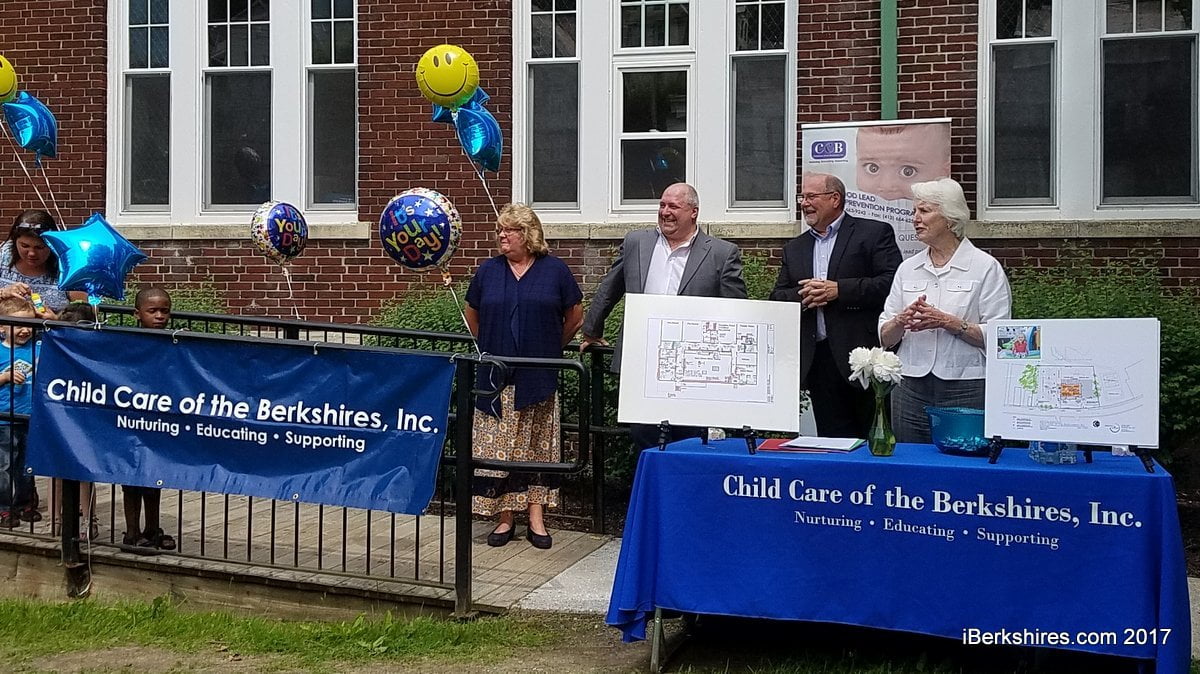
The historic Sarah T. Haskins School is about to get a $1.75 million facelift and modernization to better serve Child Care of the Berkshires and its programs.
The bulk of the funding, a $1 million grant from the state Department of Early Education and Children’s Investment Fund was announced on Thursday afternoon with balloons and bubbles at the child-care center.
“I have to tell you we have chasing this grant for three years but the process started a long lont time ago,” longtime President and CEO Anne Nemetz-Carlson said on the front lawn of the State Street school while children blew bubbles. “Rewards are so exciting that come late. They require hard work dedication passion and … I am not just pleased but thrilled to get this award.”
The goal, said officials, is to create an environment that is “warm, inviting, enriching and welcoming to both children and families. These improvements will transform the facility into an accessible, safe and modern space.”
Over the next two years, an elevator will be added on the exterior; windows and interior and exterior doors will be upgraded for utility and security; the heating will be switched to natural gas; air-handling units will upgraded; bathrooms will be made handicapped accessible; the roof will be repaired and brick exterior repointed and the parking lot revamped; a new fire-suppression system will be installed along with updated technology; a new entrance will be designed with security and safety in mind; and a new classroom will be built on the second floor above the gym to accommodate school-aged children who now meet in basement classrooms.
“My program is going to benefit so greatly,” said Kelly Phillips, director of the Monument Square Early Childhood Center. “Our school-age children who are blowing bubbles for you all will have a wonderful space to be in … it’s just so fitting that we have the families of North Adams [here] and how much we value the parents and the children and what they bring to our center and what we can bring to them.”
The child-care program has been housed in the 1922 building since 1980 and initially shared space with the public school until it closed a few years later. There have been a few updates, including two small renovations of about $50,000 each that addressed flooring, storage, and rooms, particularly the renovation of an infant room a few years ago.
But the nonprofit has been limited in what it can do without triggering more extensive modernization to comply with state and federal codes, particularly the Americans with Disabilities Act. Nemetz-Carlson said a decision was made with the nonprofit’s board to pull that trigger.
“We going to put an elevator on the outside that triggers all our building codes,” she said. “It’s just a really nice list of many, many projects to bring the facility up to code.”
A clearly delighted Nemetz-Carlson said there were “a million things to do” that will probably start with a separate U.S. Department of Agriculture grant to begin addressing the bathrooms.
The grant, a big, thick application, took three years to be approved as the center pinned down the requirements — schematics, estimates, facts, and fundraising.
Nemetz-Carlson said the support of the board and especially of the faculty who ensure that CCB has a high-quality children’s center — which is accredited and ranked by the state at Level 3 (4 being top) — were instrumental in obtaining the grant.
The board launched a capital campaign, run by former board member John Craig, that has so far raised $250,000 and has had 100 percent board participation.
“We had a lot of funders that really believed in us,” she said, and received support from the Northern Berkshire United Way, Williamstown Community Chest, Barrett and Hardman funds, Adams Community Bank, the Ruth Proud Trust and Feigenbaum Foundation.
David Westall of Westall Architects was brought on to make the design plans submitted with the application.
William Robinson, chairman of the board, also gave thanks to those who helped with the grant application, including Mayor Richard Alcombright, CCB’s landlord, who with the City Council approved a 25-year lease that gave the facility the site control needed for the grant to be approved.
“We’re going to have a home here for the next 25 years … without that wouldn’t have this great opportunity,” he said. “We have to do something if we wanted to do be here long term. …
“To make this a state-of-the-art facility for child care that people want to be at for years to come.”
The center serves 81 children ranging from infants to school age and sees some 2,000 parents and children a year. In addition to the child care, it operates the Family Center of Northern Berkshire providing parent resources and training, and a free clothing exchange. The Parent Child Home Program served 46 families in North Berkshire and, between that program and one in Pittsfield, conducted 2,650 home visits.
One of the requirements of the grant was that center serve a 25 percent population of low-income families; in fact, 95 percentof the children served through Child Care of the Berkshires come from low-income homes.
“The city of North Adams could not be more pleased to have this facility right here and guaranteed to be here for the next 25 years to provide services to families here that are just unprecedented anywhere in the region,” Alcombright said.
Phillips later led a tour of the building, pointing out where improvements have been made over the years and where changes will be made. She’s particularly focused on moving the school-age children out two rooms in the basement level and bringing them up to the new room that will be constructed by extending the second floor over part of the gym.
The plan is to continue keeping the gym as a place for movement and play as well as using its large arched windows to emit light into the new second floor room. The new room will allow the program to open up slots for five more children, for 30 total.
The building is not on the Register of Historic Places but the Historical Commission has asked CCB to continue to recognize Haskins, whose name is large across the front of the school. Haskins was a longtime educator in the North Adams Public Schools and had retired as principal of the former State Street School. Nemetz-Carlson said the name and her picture will remain up.
Robinson credited Nemetz-Carlson for her passion and perseverance — as well as her extensive contacts — in pushing the application through.
“She has such a strong vigor and so much clout through the state of Massachusetts,” he said. “When they hear her name … she puts North Adams and child care on the map of the the state.”
Nemetz-Carlson is now focused on rejuvenating the nearly century-old school.
“We want it to be safe and secure and really warm and inviting,” she said.
http://www.iberkshires.com/story/54773/Child-Care-of-Berkshires-Plans-1.75M-Renovation-of-Haskins-School.html

SourceiBerkshires

CEDAC Receives Funding From Kuehn Charitable Foundation for New Grant Program

For more information and to apply for a Kuehn Planning Grant, please visit our Application Forms & Guidelines page under Housing Programs.

The Community Economic Development Assistance Corporation (CEDAC) was recently awarded $180,000 of funding by the Kuehn Charitable Foundation to establish a new planning grant program to help the non-profit community development sector across Massachusetts. Named for the foundation’s creator Robert H. Kuehn, Jr., the Kuehn Planning Grants will help non-profit corporations in Massachusetts explore the feasibility at the earliest stages of project development. The Kuehn Charitable Foundation was created by the late Robert H. Kuehn, Jr. in the late 1990s and is dedicated to preserving communities around Massachusetts. By supporting affordable housing and historic and open space preservation, the Foundation carries on the legacy of its founder who spent his life developing affordable and historic housing. The primary activity of the foundation is the Kuehn Fellows Program, which provides hands-on experience to its fellows by placing them in positions with vetted nonprofit affordable housing organizations around the Commonwealth. “There are non-profit organizations across the Commonwealth who want to improve their communities by building new affordable housing or economic development space, but are unaware of both the challenges and the funding available to do so,” said Jennifer Gilbert, Director of Kuehn Charitable Foundation. “These grants will help those agencies determine what is feasible. We are partnering with CEDAC because their expertise in this area will allow these organizations to take the steps in turning their vision into a reality.” For more than 35 years, CEDAC has provided early stage capital to non-profit, community-based organizations engaged in effective community development. The Kuehn Planning Grants of up to $15,000 each will be awarded to organizations for costs associated with affordable housing or economic development projects. There will be a preference for projects undertaken by small, community-based organizations, as well as mixed-use and/or mixed-income projects incorporating historic preservation, projects serving low- and moderate-income artists, supportive housing for vulnerable families and individuals, and smaller scale projects. “Throughout our history, CEDAC has provided early-stage financing to community development corporations and other community-based non-profit organizations to help them develop affordable housing and child care facilities,” said CEDAC’s Executive Director Roger Herzog. “But we know that there many more organizations who want to improve their communities by producing or preserving affordable units or commercial space. The Kuehn Planning Grants will allow smaller non-profits to explore opportunities that they might feel are too financially risky otherwise. We’re looking forward to working with these organizations through these grants.” More information on the Kuehn Planning Grants can be found at CEDAC’s Website at www.cedac.org.

SourceCEDAC

CEDAC Gets $180K to Help the Community Development Sector

The Community Economic Development Assistance Corporation, a Boston nonprofit that provides financial resources and technical expertise for community-based and other nonprofit organizations engaged in effective community development in Massachusetts, recently announced that it has been awarded $180,000 to establish a new planning grant program to help the state’s nonprofit community development sector.

The funding, from the Kuehn Charitable Foundation, will help nonprofit corporations in Massachusetts explore the feasibility at the earliest stages of project development.

Roger Herzog, executive director of Community Economic Development Assistance Corporation(CEDAC), said, “Throughout our history, CEDAC has provided early-stage financing to community development corporations and other community-based non-profit organizations to help them develop affordable housing and child care facilities.

“But we know that there many more organizations who want to improve their communities by producing or preserving affordable units or commercial space. The Kuehn Planning Grants will allow smaller non-profits to explore opportunities that they might feel are too financially risky otherwise. We’re looking forward to working with these organizations through these grants.”

The Kuehn Planning Grants of up to $15,000 each will be awarded to organizations for costs associated with affordable housing or economic development projects. Preference will be given for projects undertaken by small, community-based organizations, as well as mixed-use and/or mixed-income projects incorporating historic preservation, projects serving low- and moderate-income artists, supportive housing for vulnerable families and individuals, and smaller scale projects.

Jennifer Gilbert, director of the Kuehn Charitable Foundation, observed, “There are nonprofit organizations across the Commonwealth who want to improve their communities by building new affordable housing or economic development space, but are unaware of both the challenges and the funding available to do so.

“These grants will help those agencies determine what is feasible. We are partnering with CEDAC because their expertise in this area will allow these organizations to take the steps in turning their vision into a reality.”

For more than 35 years, CEDAC has provided early stage capital to nonprofit, community-based organizations engaged in effective community development, focusing on three key building blocks of community development: affordable housing, workforce development, and early care and education. CEDAC is also active in state and national housing preservation policy research and development and is widely recognized as a leader in the non-profit community development industry.

According to CEDAC, that more than 18,000 affordable apartments in Massachusetts will be at risk by the end of the decade, including over 5,000 maturing mortgage units at high risk.

For the year ending June 30, 2015, CEDAC posted $5.4 million in operating revenue and $4.8 million in expenses, according to its most recently available annual report.

http://www.massnonprofit.org/news.php?artid=4686&catid=12

SourceMassNonprofit News

Baker Administration Announces Affordable Housing Development Awards

Baker Administration Announces Affordable Housing Development Awards

Aug 16, 2016


The Baker Administration announced awards to fund the development, renovation and preservation of affordable rental housing across the commonwealth on Monday. The money will be used to create or preserve 1,420 housing units.

“These affordable housing awards reflect our administration’s commitment to a stronger, more prosperous and more inclusive commonwealth,” Gov. Charlie Baker said in a statement. “By increasing affordable housing production, and stabilizing working families, low-income senior citizens and homeless families or those at risk, these housing awards will strengthen communities across Massachusetts.”

The announcement was made at48 Boylston St. in Boston, a historic rehabilitation project for formerly homeless residents sponsored by St. Francis House and the Archdiocese of Boston’s Planning Office for Urban Affairs.

The 26 projects awarded will create or preserve 1,420 rental units, including 1,334 affordable units, across 16 Massachusetts communities. The Department of Housing and Community Development is awarding over $31 million in state and federal low-income housing tax credits, which will generate over $218 million in equity for these projects. Additionally, the administration is awarding over $59 million in housing subsidy funds, including federal HOME funds and state capital funds, across the 26 projects.

Projects will serve a wide variety of constituents, including individuals and families transitioning out of homelessness, persons with disabilities and the elderly. Four projects are focused on senior housing, five will provide supportive services to residents and all 26 will include deeply affordable units. The Baker Administration prioritized applications that included a 10 percent allotment for individuals and families who are, or are at risk of becoming, homeless.

In May, the administration unveiled a five-year capital budget plan that includes a $1.1 billion commitment to increasing housing production, an 18 percent funding increase for mixed-income housing production, and affordable housing preservation. In May, the Administration and MassHousing committed $100 million, to support the construction of 1,000 new workforce housing units. Since 2015, the administration has provided funding to create and preserve 2,856 units of affordable housing, including 874 deeply affordable units for at-risk populations.

“St. Francis House is a perfect example of an organization committed to ending homelessness for individuals and families by providing safe and affordable housing and meeting the full needs of their tenants,” Secretary of Health and Human Services Marylou Sudders said in a statement. “These awards will help support vulnerable citizens in the commonwealth.”

The award will include 46 units of affordable housing at the former Boston Young Men’s Christian Union building at 48 Boylston St. The state Department of Housing and Community Development (DHCD) will support the project with federal and state low income housing tax credits that will leverage about $11.8 million in equity and $4 million in subsidies from DHCD.

St. Francis House and the Planning Office for Urban Affairs of the Archdiocese of Boston (POUA) purchased the building in April of this year, and the two entities plan to rehabilitate the historic, but presently vacant, building into affordable housing. The completed development will include units reserved for people who have experienced homelessness and others with very modest incomes. Twenty-six of the units will be reserved for individuals earning less than 30 percent of the area median income.

Copyright © 2016 The Warren Group | All Rights Reserved |

http://www.bankerandtradesman.com/2016/08/baker-administration-announces-affordable-housing-development-awards/?utm_campaign=Daily&utm_source=hs_email&utm_medium=email&utm_content=32993672&_hsenc=p2ANqtz–woMwC9tdw1LL0nM3nVUjpGZiEBsgWYlAEcRRKX6X3ayEg2HKd5ApDSeOlMqj2Htb1gcX8fC21aE0TX-lg-QSNdkdiZw&_hsmi=32993672


SourceBanker & Tradesman

Fiscal Year Plan Allocates Funds To Housing, Transportation Grants

The Baker administration recently released the 2017 Fiscal Year Capital Plan, which includes a $2.19 billion bond cap on general obligation bonds.

The plan outlines resources that will be invested in affordable and workforce housing, transportation projects and various grant programs.

“This capital plan makes substantial investments in maintaining and modernizing our transportation network, preserving thousands of affordable housing units, training an already highly skilled workforce and supporting programs critical to economic development in cities and towns across Massachusetts,” Gov. Charlie Baker said in a statement.

“In addition to important capital funding for local issues like Chapter 90 transportation funding, vocational skills grants and cultural facilities grants, the Community Compact Program will build upon a successful first year to continue awarding communities who partner with the state to improve local services, IT infrastructure and various local projects, “ Lt. Gov. Karyn Polito said in a statement.
The full capital plan can be found here.

SourceBanker & Tradesman

Walsh Announces More Than $28M To Support Affordable Housing In Boston

Boston Mayor Martin Walsh announced $28 million in funding awards to support the creation of affordable housing throughout Boston yesterday. The funding, which will preserve or produce 837 housing units, comes from $21 million of federal and local resources awarded through the Department of Neighborhood Development (DND) and $7 million of Linkage funds, awarded through Boston’s Neighborhood Housing Trust.

“We are committed to creating a Boston where everyone who wants to live here, can afford to,” Walsh said in a statement. “I thank our local, state and federal partners for these housing investments that create good jobs and fuel our economy.”

The new funding will leverage more than $323 million of public and private investment in the neighborhoods, and will help to create an estimated 500 construction jobs. These developments will also create 125 units for homeless or extremely low-income families.

With the awarding of these funds, the Walsh Administration has now made more than $66 million in affordable housing available since Walsh took office.

SourceBanker&Tradesman

Walsh Announces $39M For Affordable Housing In Boston

Boston Mayor Martin Walsh yesterday announced nearly $39 million to support affordable housing developments in Boston.
The funding will create or preserve 1,194 housing units and is made possible through $27 million in federal and local resources through the Department of Neighborhood Development (DND) and $11.7 million in linkage funds through Boston’s Neighborhood Housing Trust.
The development budgets for all proposals will total over $614 million of public and private investment in Boston, with the city’s investment representing 6 percent of the total capital needed. Many of the proposals are seeking additional support from the state.
Plans for the funds include: leveraging more than $575 million in public and private investment in neighborhoods, creating an estimated 1,200 construction jobs and setting aside 196 units for homeless or extremely low-income families.
Housing projects to receive founding include the following:
• 28 Affordable Units at Waverly Abby in Allston-Brighton for single parents and transitional living opportunities for at-risk youth and families.
• 80 total units – including 26 affordable units – at Ropewalk, Frontier Enterprise Inc. in Charlestown. Plans include redeveloping two historic buildings located in the Charlestown Navy Yard. Four thousand square feet of museum space will also be created.
• 39 units – including 33 affordable units – at Harmon Apartments in Dorchester. All units will be handicapped accessible with specialized technology and services that will allow those with neurological disabilities to continue to live independently.
“It is imperative that we continue to support affordable housing in our neighborhoods, and this funding will help many of our families in need of safe housing stay in their homes,” Walsh said in a statement. “By investing in housing, we are supporting economic development and creating jobs that will revitalize Boston’s neighborhoods for future generations.”

SourceBanker & Tradesman