10 Boston developments to watch in 2020

So far, Boston’s building boom shows no signs of abating in 2020.

In the last six years, the Boston Planning and Development Agency has permitted about 65 million square feet of new development and the city has seen more than 60 million square feet built in that time, according to the city agency.

Even as some of the city’s most transformative projects of the last decade, like Hub on Causeway, continue to inch higher into the sky in 2020, we asked Jonathan Greeley, director of development review for the BPDA, to name some of the notable developments the public should keep an eye out for in 2020.

“One of the things the city is trying to do is respond to tremendous residential demand,” Greeley said. “In addition to responding to that residential demand by hopefully permitting and building as many units as possible, we’re trying to find a way to maximize the amount of those units being affordable. We put our money where our mouth is.”

The director of development review said that in 2019, guided by goals established with the city’s 2030 plan, 20 percent of all the units the BPDA approved were affordable. Officials, he emphasized, are constantly thinking about how to plan and facilitate “proper growth” in Boston.

“We want to make sure we’re creating a thriving city for all Bostonians,” he said of the efforts.

Below, 10 projects in Boston that will be ongoing or kicking-off in the coming year.

Already under construction


Winthrop Square

Winthrop Square Tower Rendering
Renderings of Winthrop Square Tower. —Handel Architects

Work on the new residential and office tower at 115 Winthrop Square will push on in 2020, Greeley said.

“What’s exciting about this year is you’re going to start to see it come out of the ground,” Greeley said. “They’ve been doing a lot of work below the surface.”

The almost 1.6 million-square-foot project, on the site of the previously city-owned, shuttered Winthrop Square Garage, will feature residential, office, retail, and dining space. The tower, which will stand 691 feet tall, will contain a “Great Hall” at its base to serve as a public space.

Greeley emphasized that the project is a “one-two” punch for the city. Not only will it create new, mixed-use space, but it will contribute to other efforts city-wide. He said notably it will bring “significant investment” to the area around the site, including infrastructure improvements to Winthrop Square and the nearby park. But money from sale of the site to Millennium Partners will generate more than $150 million in funding for the City of Boston, which is slated for efforts  including improvements to the Boston Common and Franklin Park and affordable housing.

“Most importantly it’s going to help to fund an all-affordable building in Chinatown,” Greeley said.

“[Winthrop Square] is a great example of a public/private partnership on public land to deliver a wide variety of results, which will add improvements on the site, but also in and around the neighborhood they sit in,” he added.

The Beat

The Beat Rendering
A rendering of The Beat. —BPDA

Work to redevelop the former headquarters of the Boston Globe got underway in 2019 and will continue in 2020 as the developers search for a wide variety of tenants to fill the building, Greeley said. The new name for the property at 135 Morrissey Blvd.“The Beat,” stands for “The Boston Exchange for Accelerated Technology” and pays homage to the “beat” reporters who used to call the site home.

“What’s exciting there is that they took a look at the site and said, we’re not going to demolish the whole thing, we’re going to re-envision the whole thing,” Greeley said. “So if you drive by it today, either from Morrissey Boulevard or the highway, you’ll see they are gutting and rebuilding the building.”

Development firm Nordblom envisions reconfiguring the 695,000-square-foot building into both tech and traditional office space, while maintaining ground floor use for neighborhood amenities that could serve nearby Savin Hill.

“One of the things that project has done is make sure there are pedestrian connections through Savin Hill,” Greeley said. “So they want to make sure that it’s not just ground floor uses and ground floor retail amenities that serve the building — they want those uses to be enhancements to the neighborhood as well.”

Greeley said the project is one of several exciting development efforts around the Columbia Point peninsula, and the city believes the approach taken for the “The Beat” is a precursor to other projects that could follow in and around the JFK/UMass area.

Fenway Center

A rendering of the Fenway Center project. —The Architectural Team

Both Phase I and Phase II of the enormous development will be underway in 2020, Greeley said. When completed, the $500 million construction project will comprise four buildings and a parking garage that will extend along, and above, the Mass. Pike.

Phase 1, which features the construction of two buildings on Brookline Avenue and the creation of about 312 new residential units, broke ground in 2018 and is expected to be ready for occupancy in 2020.

“Those two new buildings will bring some life to that area, which again, it’s been a series of surface parking lots for a long time,” Greeley said of the project.

In 2020, Greeley said the BPDA is also expected to hear proposed changes to Phase II of the project, which would feature the construction of a 27-story tower above the Mass. Pike. The change would bring more space for office and life science tech to the site, replacing about 150 housing units originally planned for the site.

“We’re currently reviewing that project — those alterations,” he said. “And that project could be considered by our board in the first half of 2020.”

When the second phase over the Mass. Pike moves forward, it will be one of two so-called “air rights” projects, the first in decades, predicted to get underway in 2020.

“That’s something that was the subject of long-term planning efforts in partnership between the city and state, and we’re really thrilled to see that piece of the project go forward, built over the turnpike,” Greeley said.

Bulfinch Crossing / Government Center Garage Redevelopment 

Renderings of the Government Center Garage redevelopment project. —BPDA

By the end of 2020, Greeley said he expects to see the first phase of the downtown project, which will ultimately create six new high-rise and mid-rise buildings, completed.

The project includes 800 new residential units in two towers and more than 1 million square feet of office space, with the new corporate headquarters for State Street anchoring a retail tower at One Congress.

As the project moves forward, Bostonians can expect to see the existing Government Center Garage on Congress Street come down, Greeley said.

“[It’s] a dramatic change to the downtown neighborhood,” Greeley said of the project. “A dramatic change in the daylighting of Congress Street and I think just a really pleasant removal of a barrier between Government Center and North Station.”

Expected to start construction


Back Bay / South End Gateway 

Rendering of the proposed Back Bay Station redevelopment. —Courtesy of Boston Properties / Pelli Clarke Pelli Architects

The 1.26 million-square-foot mixed-use project that will rise above and adjacent to Back Bay Station is one the city hopes will reach into the skyline in 2020.

Some elements of the project — which features a new office building with ground floor retail, two new residential buildings, an expansion of the existing station, and redevelopment of the 165 Dartmouth Street Garage — are already already underway, Greeley said.

Improvements within Back Bay Station, such as redoing the bathrooms, are already underway as part of the project. The MBTA is responsible for platform level investments, but developer Boston Properties is responsible for the station renovations itself.

“That work is starting now,” Greeley said. “We hope and anticipate that Boston Properties will start construction in 2020 on one of those three towers.”

Suffolk Downs

A rendering of the proposed development at Suffolk Downs. —Provided by BPDA

Greeley said the hope is that redevelopment of the East Boston site can get underway in 2020, pending an ongoing community review and approval by the BPDA board.

“The goal is to return what is kind of largely a surface parking lot with [an] infrequently used racing track and take it and use it to create a dynamic mixed-use community that is really anchored by two MBTA stations on the Blue Line, Suffolk Downs and Beachmont,” he said.

The project from HYM Investment Group proposes during Phase I of the project the creation of 520,000 square-feet of corporate and amenity space, three residential buildings, and town homes for the construction of more than 800 housing units. About two-thirds of the 150-acre plot sits in Boston, with a third falling in Revere.

About 40 acres of the development are proposed to remain unbuilt, serving as a mix of parks and open space, Greeley said.

“It’s going to be a really, really dynamic space and will truly be a mixed-use project that we’ll see manifest itself over the next 20 years,” he said. “One of the reasons why it’s taken us so long in the review process is that it’s been something we really want to get right, prioritizing a real mix of use, of affordability, of open space, and also making sure the design is just really dynamic as well.”

Allston Yards 

A rendering of “Building A” at the proposed Allston Yards development. —Stantec via BPDA

The project, proposed at the nexus of Allston, Brighton, and the area surrounding Boston Landing, was approved by the BPDA in December, and Greeley said he anticipates construction of the new neighborhood to get underway in 2020. The 868-unit mixed-use development would transform the existing Stop & Shop plaza at 60 Everett St. into a “transit-oriented” neighborhood featuring open space, a flagship grocery store, office and retail space, and residential units.

Greeley said the project will also create a new roadway network for better connectivity through the neighborhood and has subsidies for local transit in and around Allston/Brighton, including to help fund more frequent MBTA service for rail and bus.

“[It’s] a great mixed-use, dynamic project,” he said. “The project is getting 17 percent affordability on site and will fund another 40-plus units of affordable [housing] offsite throughout the neighborhood. So we’re really excited for the potential of that project.”

Dot Block 

A rendering of the Dot Block project. —Provided by the BPDA

This project, located on almost an entire city block along Dorchester Avenue, first won approvals from the BPDA in 2016 and has gone through several iterations since then. A revised proposal for the project was approved in 2019, and Greeley said the hope is that it could break ground in 2020.

The project at 1205 Dorchester Ave. would include the construction of four new buildings that would contain 488 residential rental units, about 23,000 square feet of commercial space for neighborhood-oriented retail and restaurant space, as well as 1.34 acres of open space.

“That site will take what was essentially a derelict site, not a lot going on, and bring much-needed housing to the neighborhood, as well as breaking up a very large development site with new roadways and public realm,” Greeley said. “And we’re excited because it’s investment in an area that hasn’t seen as much investment traditionally, and so it would also set the tone for the types of development we want to see there long-term.”

Mattapan Station

A rendering of the proposed Mattapan Station project. —Provided by the BPDA

Construction on this $57 million mixed-use project is anticipated to start in the spring of 2020. It will feature the construction of 135 units of mixed-income apartments for rent and 10,000 square feet of commercial and retail space at 500 River Street.

Located beside the Mattapan MBTA station, it is being heralded as a transit-oriented development project that will provide affordable and market-rate housing to the neighborhood.

“We are excited to see investment in Mattapan and in the Mattapan Station area,” Greeley said. “This is a good project.”

3368 Washington Street / Pine Street Inn

A rendering of the proposed Pine Street Inn development for Washington Street in Jamaica Plain. —RODE Architects via Boston Planning and Development Agency

Pine Street Inn formally filed plans with the BPDA last March to construct the 225-unit building at 3368 Washington St., with the aim of serving chronically homeless disabled adults. The proposal won board approval later in the year, and Greeley said he hopes the project will secure its needed financing in 2020 in order to break ground and be under construction by the end of the year.

“One of the things that we’ve been able to do over the course of this year is that 20 percent of all new units throughout the city have some sort of deed restriction making them more affordable to Bostonians,” Greeley said of the project’s importance. “This project has a higher percentage and is an example of a nonprofit working really hard to fulfill their mission. So we’re really excited about the mission-driven outcome of this project in a neighborhood that has been really, really receptive to that type of use.”

Of the 225 affordable residential units in the six-story building, 140 would be reserved for supportive housing for individuals being served by the Pine Street Inn. The remaining 85 units would serve households earning between 60% and 80% of area median income.

SourceRealEstate

City approves supportive housing complex for homeless in Jamaica Plain

A major effort to house Boston’s homeless took an important step forward Thursday night.

The Boston Planning & Development Agency board approved plans for a 202-unit apartment building on Washington Street in Jamaica Plain that would include 140 studio spaces for formerly homeless people, along with social services they need.

The complex, being developed by Pine Street Inn and two partners, could break ground within a year, if financing comes together, said Lyndia Downie, Pine Street’s executive director. It would be the largest such “permanent supportive housing” development of its kind in Boston, she said.

“This is the kind of stuff people like us dream about,” Downie said. “We know this works for people who are stuck in homelessness. This is the answer for a lot of people.”

This type of housing, which combines affordable rents with on-site services, has become a big part of Boston Mayor Martin J. Walsh’s bid to end chronic homelessness in Boston, a problem that was exacerbated by the 2015 closure of the Long Island shelter. Walsh has pushed to raise $10 million for Boston’s Way Home Fund, which would fund ongoing services at the planned building, Downie said.

“We are committed to making sure that every individual has a place to call home and build a better life,” Walsh said in a statement. “This project is only possible because of the commitment of Pine Street Inn, The Community Builders [an affordable housing developer], and many partners and stakeholders across the city who have joined our call to bring an end to chronic homelessness.”

To go forward, the building will probably need city and state funding, along with federal low-income housing tax credits, to help finance construction. Developers expect the 144,000-square-foot building to cost about $81 million in all.

Along with 140 units run by Pine Street Inn, The Community Builders would build and run 62 apartments dedicated to low- and middle-income renters. That’s 23 fewer units than were originally proposed, the reduction coming partly in response to neighborhood concerns about the project’s size and the traffic it might generate. It’s also one floor shorter than designers RODE Architects initially envisioned. But over the course of numerous community meetings since this spring, neighbors were generally supportive, said Dana Whiteside, who oversaw review of the project for the BPDA.

“Support for the project was quite good,” he said.

The complex, near Green Street, is one of the first large buildings proposed on a stretch of Washington Street where the BPDA two years ago approved plans for thousands of new apartments and condos. Some 40 percent of those housing units are required to be affordable.

This project will make a dent in that number, BPDA director Brian Golden said, while creating a much-needed place to help homeless Bostonians get back on their feet.

“This is a really good outcome,” he said.

The BPDA on Thursday also approved a six-building, 344-unit condo and apartment complex at the corner of Harvard Avenue and Cambridge Street in Allston Square, a 60-unit affordable housing development in West Roxbury by B’Nai B’rith Housing New England, and tweaks to Millennium Partners’ Winthrop Center tower downtown. The board also gave WS Development permission to convert a planned housing building at its Seaport Square complex into an office building instead.

SourceThe Boston Globe

Walker Park Apartments and Delphine’s Courtyard Opened

Mayor Martin J. Walsh today joined the community development agency Urban Edge, elected officials, community leaders and neighbors to celebrate the opening of the Walker Park Apartments and Delphine’s Courtyard, consisting of 49 units of affordable family housing and a pocket park in Egleston Square. The City of Boston’s Department of Neighborhood Development and the Community Preservation Fund provided more than $2.8 million in total for the new homes and courtyard.

“Today we celebrate the creation of 49 new affordable homes, a crucial step forward in our goal of preserving our neighborhoods,” said Mayor Walsh. “Along with our partners, the City of Boston is making big investments in Egleston Square, increasing opportunity for families and helping us keep housing affordable and accessible. I want to thank Urban Edge and everyone involved in this project for their work in making these new affordable homes possible.”

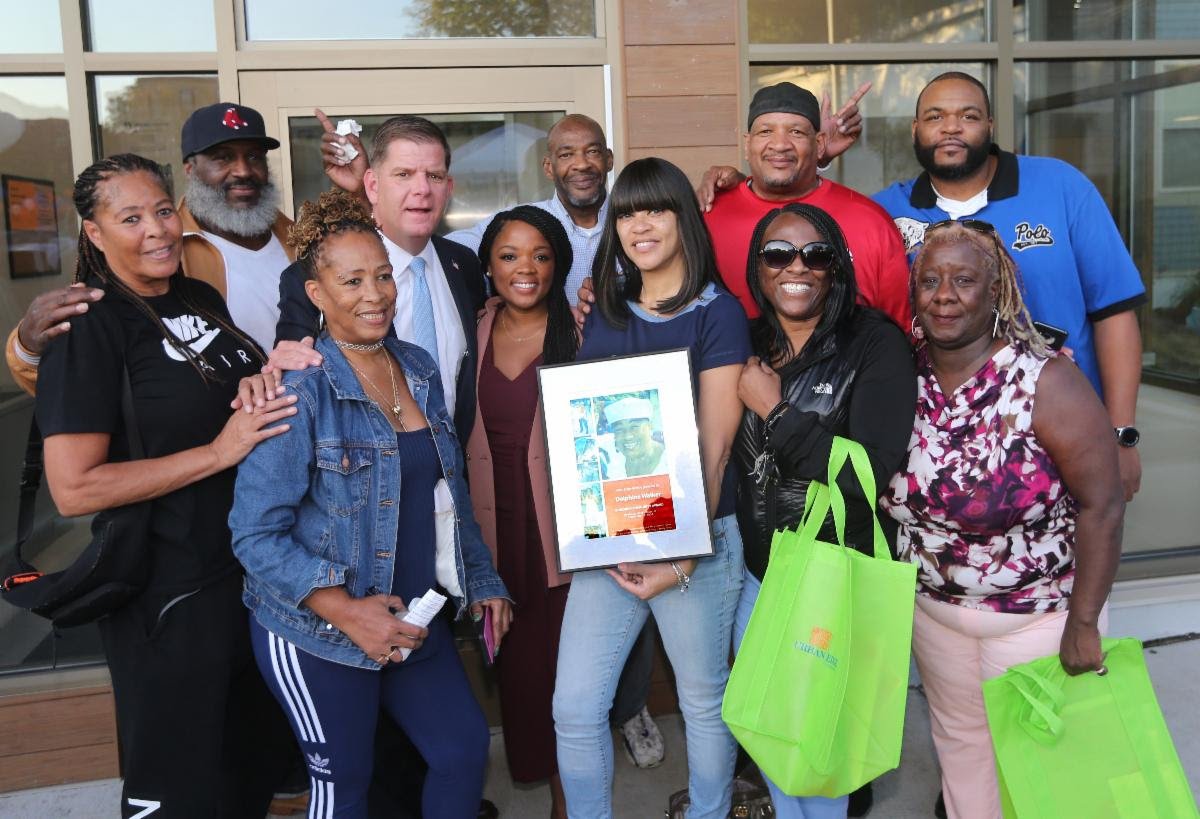
Mayor Walsh with members of the Walker family.

Mayor Walsh with members of the Walker family.

The Walker Park Apartments redeveloped three formerly vacant or underutilized parcels adjacent to the Egleston Square Branch of the Boston Public Library and in the Egleston Square Main Street District. The development is named for longtime community activist Delphine Walker, whose home stood on one of the development sites. All of the 49 new apartments have been rented to households who earn at or below 60 percent of the Area Median Income (AMI), including eight apartments reserved for families earning 30 percent of AMI or below.

“Urban Edge is proud that we have led investment in Egleston Square and is doing so in a way that honors the neighborhood’s past while providing more opportunities for quality housing for members of the community,” said Natacha Dunker, president of Urban Edge’s Board of Directors. “We are so grateful to Mayor Walsh, the Department of Neighborhood Development, and all of our funders for their support of this important project.”

“Today, we celebrate another victory for our city and community: new construction of 49 income-restricted units and 34 off-street parking spots,” said State Representative Liz Malia (D-11th Suffolk). “This is exactly the type of housing we need to build in Boston and specifically in the Egleston Square Neighborhood. The face of our community depends on it, and I’m  grateful to Urban Edge and the City for having the long-term vision to realize this project and others like it.”

The Walker Park Apartments now boast 13 one-bedroom, 28 two-bedroom, and eight three-bedroom family apartments, an elevator for accessibility, on-site laundry facilities, on-site parking, and Delphine’s Courtyard funded by the Community Preservation Fund. In accordance with state guidelines, funds generated from the Community Preservation Act fund for affordable housing, historic preservation, and parks and open space projects.

“My mother bought her home in Roxbury at a time when many people were not making investments in this community, and she worked with others to strengthen Egleston Square as a neighborhood,” said Pamela Walker, daughter of Delphine Walker. “We are so grateful that Urban Edge has honored her by naming both the apartment complex and the courtyard after her.”

“Since I moved to Walker Park, my life feels different. I can see how my children always have a smile on their faces,” said Cassandra Amazan, a resident of Walker Park Apartments. “It was a great feeling seeing them choosing their own room and making plans of how they would decorate them. It is not only about having or walking in to my own apartment now, it’s about feeling accomplished in many ways and that this is opening new doors for me and my family.”

In accordance with the City of Boston’s Green Affordable Housing Program, Walker Park Apartments will utilize a high-efficiency heating system as well as Energy Star rated appliances. The development employs environmentally friendly design features that meets the U.S. Green Building Council LEED Homes Silver certifiable standard. The development also met the U.S. Environmental Protection Agency’s Energy Star standards. The development team is made up of Urban Edge, Prellwitz Chilinski Associates, and NEI General Contracting, Inc.

The Walker Park Apartments have been made possible by funding from the City of Boston, and State and Federal Low Income Housing Tax Credits from the Commonwealth’s Department of Housing and Community Development (DHCD). Financing team members also included Bank of America Merrill Lynch, Brookline Bank, the Community Economic Development Assistance Corporation, MassDevelopment, MassHousing, Massachusetts Housing Investment Corporation, Massachusetts Housing Partnership, US Bank Corporation, and the US Department of Housing and Urban Development.

Walker Park Apartments strongly aligns with the City’s housing goals outlined in Housing a Changing City: Boston 2030. Mayor Walsh recently increased the City’s overall housing targets from 53,000 to 69,000 new units by 2030 to meet Boston’s population growth. These updated housing goals build on Mayor Walsh’s commitment to increasing access to home ownership, preventing displacement and promoting fair and equitable housing access.

Since the release of the original Housing a Changing City: Boston 2030 plan in 2014, income-restricted housing stock, designed to increase affordable housing, has grown along with overall new production: nearly 20 percent of housing units are income restricted, and 25 percent of rental units are income restricted. In total, after creating an additional 15,820 units of income-restricted housing, Boston will have nearly 70,000 units of income-restricted housing by 2030.

Mayor Walsh’s 2019 housing security legislative package focuses on expanding upon the work that Boston has done to address the region’s affordable housing crisis and displacement risks for tenants by proposing new and strengthening current tools to leverage Boston’s prosperity and create sustainable wealth opportunities that make Boston a more inclusive and equitable city. The housing security bills proposed seek to help existing tenants, particularly the elderly, remain in their homes, and creates additional funding for affordable housing.

For more information on the City’s work to create more housing, please visit: Housing A Changing City: Boston 2030.

###Delp

SourceMayor's Office

Mayor Walsh and residents celebrate preservation of affordable housing in Lower Roxbury

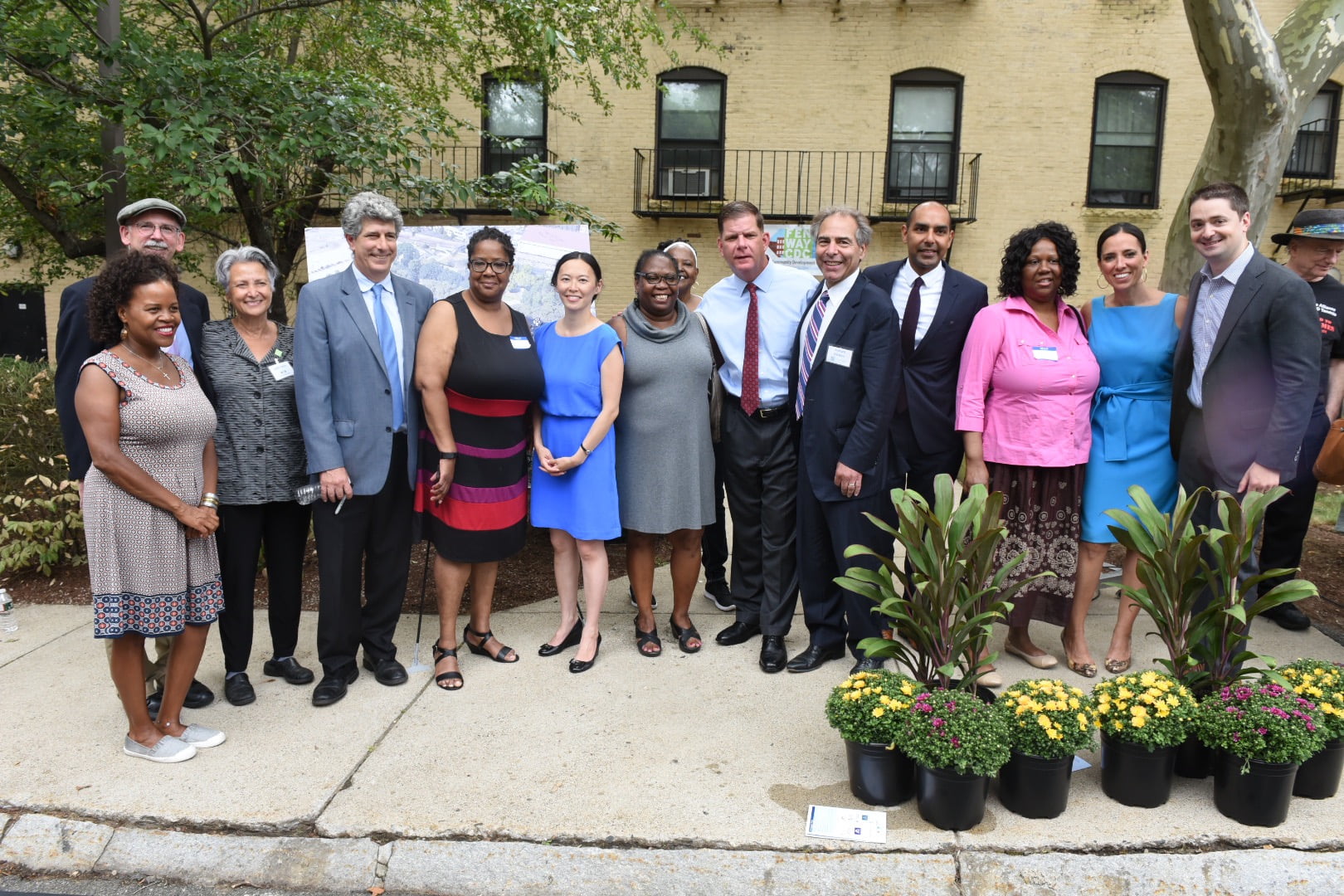
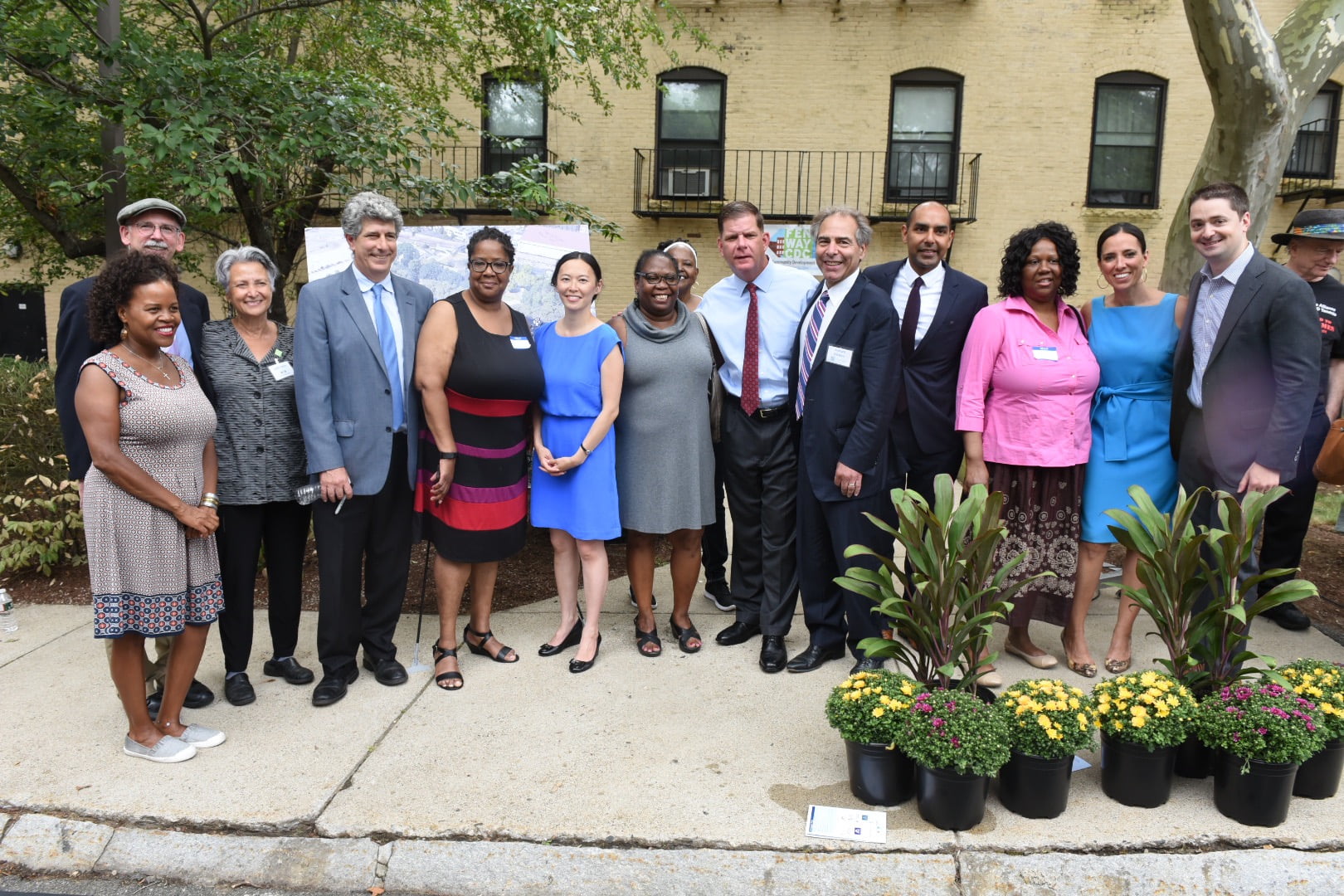
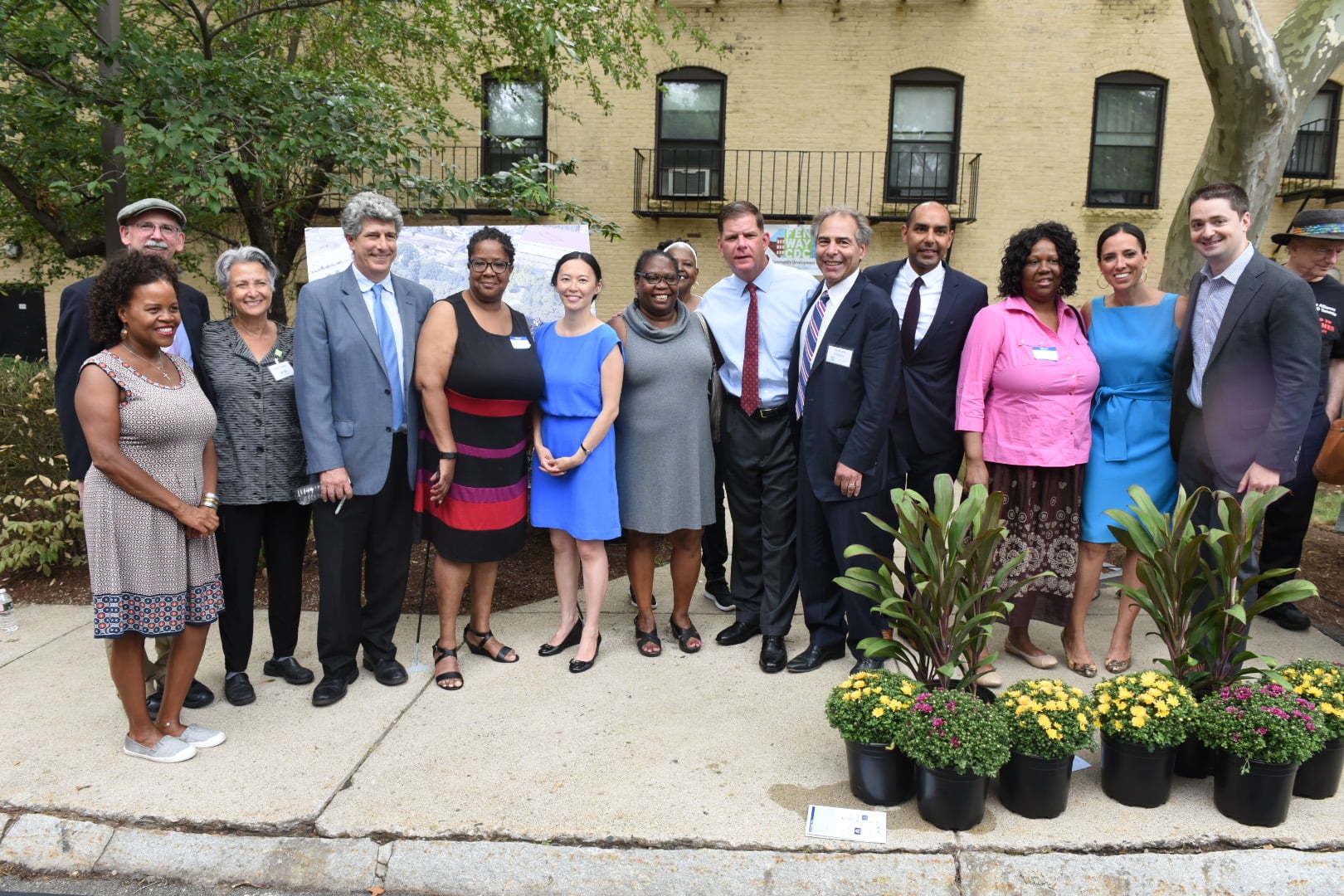
Building on his commitment to preserve affordable housing in Boston, Mayor Martin J. Walsh today joined the Fenway Community Development Corporation, their development partner Schochet Companies and Lower Roxbury residents to celebrate the acquisition and preservation of 97 affordable housing units at the Newcastle/Saranac Apartments.

“Preserving Boston’s affordability is key to ensuring everyone who wants to live here can afford to do so, and I’m particularly pleased our commitment to the Newcastle/Saranac Apartments will both preserve and renovate 97 units of our existing affordable housing stock,” said Mayor Walsh. “I want to thank the Fenway CDC and our partners for working with us to make sure families can stay in their homes. Together, we’re protecting long-time residents from displacement, and we’re helping maintain the character of this community.”

The preservation of the units is made possible through Inclusionary Development Policy (IDP) off-site unit contributions by three housing development projects: 60 Kilmarnock Street, 1000 Boylston Street, and 212 Stuart Street, negotiated by the Boston Planning & Development Agency (BPDA). IDP requires that market-rate housing developments with 10 or more units and need zoning relief contribute to income-restricted housing.

“Newcastle/Saranac has been my home for years, I raised my family here and I love this neighborhood,” said Patricia Rogers, a 30-year resident of Newcastle/Saranac Apartments. “This building is in a convenient location, but the best part of living here is my neighbors. We look out for each other. I want to thank the Mayor, Fenway CDC and all of the people here today for helping us stay in our homes.”

The City’s Department of Neighborhood Development (DND) worked with the Fenway CDC to acquire the building and assist in the plan for the renovation of its 97 apartments, located on Columbus Avenue and Northampton Street in Lower Roxbury. Newcastle Saranac’s long-term affordability restrictions were set to expire as the former owners paid off the mortgage they’d received using the MassHousing 13A program. If the building converted to market-rate, all of the tenants were likely to be displaced from homes they had lived in for decades. With help from City of Boston, Fenway CDC was able to purchase the building from its owners, protecting existing tenants from displacement, and preserving the long-term affordability of this mixed-income development.

“You know the old saying ‘It takes a village?’ Well, in order to save 97 units of affordable housing at Newcastle/Saranac, it took the City of Boston, the Commonwealth, and numerous quasi-public entities, banks and investors to rescue these apartments,” said Leah Camhi, executive director of the Fenway CDC. “The families at Newcastle/Saranac are now guaranteed affordable homes for years to come due to all their herculean efforts.”

The Newcastle/Saranac acquisition and preservation was made possible with the significant support from the City’s Department of Neighborhood Development, the Boston Planning & Development Agency, the State’s Department of Housing and Community Development, MassDevelopment, MassHousing, Massachusetts Housing Investment Corp and the Community Economic Development Assistance Corporation.

Today’s celebration builds on the release of Housing a Changing City: Boston 2030, Boston’s latest quarterly housing report, and the City’s overall housing goal of 69,000 new units by 2030, to meet Boston’s faster than expected population growth. These 69,000 new units include 15,820 new income-restricted units, which would elevate Boston’s income-restricted inventory total to 70,000, or one in five of all housing units. In addition, the plan set a goal to preserve 85 percent of Boston’s most at-risk privately-owned affordable units, and to purchase 1,000 units of rental housing stock from the speculative market and income-restrict them for perpetuity.

Mayor Walsh’s 2019 housing security legislative package focuses on expanding upon the work that Boston has done to address the region’s affordable housing crisis and displacement risks for tenants. The housing security bills proposed seek to help existing tenants, particularly older adults, remain in their homes, and creates additional funding for affordable housing.

SourceSampan

‘Herculean’ Efforts Preserve 97 Affordable Units in Lower Roxbury

A partnership led by the Fenway Community Development Corp. will renovate and preserve affordability for 97 housing units in Lower Roxbury.

The Fenway CDC and development partner Schochet Cos. of Braintree acquired the Newcastle/Saranac Apartments at Columbus Avenue and Northampton Street in January. Affordability restrictions were set to expire as the former owners paid off the mortgage they received from MassHousing’s 13A program, threatening displacement for residents of 97 units that could have been converted into market-rate housing.

“It took the city of Boston, the commonwealth, and numerous quasi-public entities, banks and investors to rescue these apartments,” Leah Camhi, executive director of the Fenway CDC, said at a groundbreaking ceremony Wednesday. “The families at Newcastle/Saranac are now guaranteed affordable homes for years to come due to all their herculean efforts.”

Funding was provided through Boston’s inclusionary development policy off-site contributions from three projects: 1000 Boylston St., 60 Kilmarnock St. and 212 Stuart St. The policy requires developers who don’t include income-restricted units on-site to make cash payments to support affordable housing in the surrounding area.

Additional funding came from the city’s Department of Neighborhood Development, the Boston Planning & Development Agency, Massachusetts Department of Housing and Community Development, MassDevelopment, MassHousing, Massachusetts Housing Investment Corp. and the Community Economic Development Assistance Corporation.

Members of the project team include The Architectural Team, attorneys Klein Hornig and Holland & Knight, Keith Construction, development consultant David Levy and Community Square Assoc.

SourceBanker & Tradesman

Affordable Housing in Lower Roxbury Preserved

Building on his commitment to preserve affordable housing in Boston, Mayor Martin J. Walsh today joined the Fenway Community Development Corporation, their development partner Schochet Companies and Lower Roxbury residents to celebrate the acquisition and preservation of 97 affordable housing units at the Newcastle/Saranac Apartments.

“Preserving Boston’s affordability is key to ensuring everyone who wants to live here can afford to do so, and I’m particularly pleased our commitment to the Newcastle/Saranac Apartments will both preserve and renovate 97 units of our existing affordable housing stock,” said Mayor Walsh. “I want to thank the Fenway CDC and our partners for working with us to make sure families can stay in their homes. Together, we’re protecting long-time residents from displacement, and we’re helping maintain the character of this community.”

Celebration of affordable housing in Lower Roxbury

The preservation of the units is made possible through Inclusionary Development Policy (IDP) off-site unit contributions by three housing development projects: 60 Kilmarnock Street, 1000 Boylston Street, and 212 Stuart Street, negotiated by the Boston Planning & Development Agency (BPDA). IDP requires that market-rate housing developments with 10 or more units and need zoning relief contribute to income-restricted housing.

“Newcastle/Saranac has been my home for years, I raised my family here and I love this neighborhood,” said Patricia Rogers, a 30-year resident of Newcastle/Saranac Apartments. “This building is in at a convenient location, but the best part of living here is my neighbors. We look out for each other. I want to thank the Mayor, Fenway CDC and all of the people here today for helping us stay in our homes.”

The City’s Department of Neighborhood Development (DND) worked with the Fenway CDC to acquire the building and assist in the plan for the renovation of its 97 apartments, located on Columbus Avenue and Northampton Street in Lower Roxbury. Newcastle Saranac’s long-term affordability restrictions were set to expire as the former owners paid off the mortgage they’d received using the MassHousing 13A program. If the building converted to market-rate, all of the tenants were likely to be displaced from homes they had lived in for decades. With help from City of Boston, Fenway CDC was able to purchase the building from its owners, protecting existing tenants from displacement, and preserving the long-term affordability of this mixed-income development.

“You know the old saying ‘It takes a village?’ Well, in order to save 97 units of affordable housing at Newcastle/Saranac, it took the City of Boston, the Commonwealth, and numerous quasi-public entities, banks and investors to rescue these apartments,” said Leah Camhi, executive director of the Fenway CDC. “The families at Newcastle/Saranac are now guaranteed affordable homes for years to come due to all their herculean efforts.”

The Newcastle/Saranac acquisition and preservation was made possible with the significant support from the City’s Department of Neighborhood Development, the Boston Planning & Development Agency, the State’s Department of Housing and Community Development, MassDevelopment, MassHousing, Massachusetts Housing Investment Corp and the Community Economic Development Assistance Corporation.

Today’s celebration builds on the release of Housing a Changing City: Boston 2030, Boston’s latest quarterly housing report, and the City’s overall housing goal of 69,000 new units by 2030, to meet Boston’s faster than expected population growth. These 69,000 new units include 15,820 new income-restricted units, which would elevate Boston’s income-restricted inventory total to 70,000, or one in five of all housing units. In addition, the plan set a goal to preserve 85 percent of Boston’s most at-risk privately-owned affordable units, and to purchase 1,000 units of rental housing stock from the speculative market and income-restrict them for perpetuity.

Mayor Walsh’s 2019 housing security legislative package focuses on expanding upon the work that Boston has done to address the region’s affordable housing crisis and displacement risks for tenants. The housing security bills proposed seek to help existing tenants, particularly older adults, remain in their homes, and creates additional funding for affordable housing.

###

SourceMayor's Office

New Affordable Housing Development Opened in Downtown Boston, MA

The building, called the Union, includes forty six new units of housing for people who are currently experiencing homelessness

BOSTON, MA (STL.News) – Building on his commitment to build more affordable housing and end chronic homeslessness in the City of Boston, Mayor Martin J. Walsh Wednesday, May 29, 2019, joined Cardinal Seán Patrick O’Malley, Governor Charlie Baker, President of the Planning Office for Urban Affairs of the Archdiocese Lisa Alberghini, President and CEO of St. Francis House Karen LaFrazia, and residents to celebrate the ribbon cutting for The Union, a historic redevelopment in downtown Boston that creates 46 units of affordable supportive housing.

“The Union represents our belief that every single person in our City deserves compassion, support, and a safe place to call home,” said Mayor Martin J. Walsh.  “This project couldn’t have been possible without the compassionate leadership of The St. Francis House and The Planning Office for Urban Affairs of the Archdiocese, as well as the City and State.”

“The Archdiocese of Boston, through the Planning Office for Urban Affairs, is pleased to have collaborated with St. Francis House as together we received support and assistance from Governor Baker and Mayor Walsh in developing this greatly needed affordable housing,” said Cardinal Seán O’Malley.  “The Union’s new residents, those of limited income and those formerly homeless, now have a home from where they can fully participate in civic and community life.  It is a blessing for the Archdiocese to be able to work with the Commonwealth and the City of Boston to provide sustainable, dependable and affordable housing for people in need.  As we celebrate the successful completion of this project we look forward to further opportunities for continuing the mission of lifting people from the instability and anxiety of not knowing where they will spend the coming day or night to the dignity, respect and confidence of having a home.”

“Our administration remains committed to addressing the Commonwealth’s housing crisis by supporting development at all levels, including boosting affordable housing stock,” said Governor Charlie Baker.  “The Union is a key step toward that goal, and the project’s focus on supporting people struggling with homelessness is crucially important.  We look forward to working with all stakeholders to encourage future development modeled on the successful partnership that made The Union possible.”

This development creates permanent affordable homes for people experiencing homelessness or with low incomes. The Union has 26 units set aside units for people who are currently homeless or have experienced homelessness in the past, and 20 units set aside for residents with incomes at or below 50-60 percent of area median income (households making up to $51,780 a year).  In addition to this new housing, St. Francis House, located across the street, has relocated their administrative offices into the development, will provide the wrap around support services needed to ensure the residents are stable and able to thrive in their new homes.

The new homes at The Union were created by renovating the historic Boston Young Men’s Christian Union, completed in 1875 and designated a Boston Landmark in 1977.  This adaptive reuse of the 48 Boylston Street property was completed to the standards for historic preservation and utilized both Federal Historic Tax Credits and Massachusetts Historic Tax Credits provided by the Massachusetts Historical Commission. Financing was made possible by funding from the City of Boston Neighborhood Housing Trust; the City of Boston Department of Neighborhood Development; the Massachusetts Department of Housing and Community Development; MassHousing; Bank of America Merrill Lynch; the Community Economic Development Assistance Corporation; and the Federal Home Loan Bank of Boston. Additionally, Eastern Bank is participating in the Bank of America financing.

The Union was developed through a unique partnership between the Planning Office for Urban Affairs (POUA) and St. Francis House, two non-profits rooted in a commitment to social justice and serving others.  With the completion of The Union, POUA has developed nearly 3,000 units of affordable and mixed-income housing, over 1,200 of which are in Boston.

“We are so grateful for our partnership with the Planning Office for Urban Affairs and the extraordinary commitment of the City and Commonwealth for the development of this housing.  Together we are creating an inclusive community where men and women once homeless will live a new life contributing to and enjoying the vitality and prosperity of the neighborhood.” said Karen LaFrazia, President and CEO of St. Francis House.

“Providing housing options for a diverse group of people is key to a vibrant community and illustrates what can happen when we work together for the common good,” said Lisa Alberghini, President of the Planning Office for Urban Affairs.  “We’re grateful to the Commonwealth, the City, our funders and supporters who made this possible, and especially to our partner St. Francis House.”

St. Francis House, which partners with homeless individuals to help them move from the streets and shelters to permanent homes, operates more than 102 units of permanent and supportive housing in downtown Boston.  The Union will help St. Francis House meet the growing need for safe, secure and affordable long-term housing solutions.

Creating new permanent supportive housing like these new units at The Union, are an important component of Boston’s Way Home, the Mayor’s action plan to end veteran and chronic homelessness in Boston.  Permanent supportive housing provides individuals with subsidized rents and individualized support services so that they receive the assistance needed to stay housed.  The housing is designed to build independent living skills and connect people with services such as community-based medical and mental health care, job training and employment services.

“As with many people who end up at the front door of SFH, it has been a long and winding road, filled with pain and shame but ultimately triumph.  I can’t emphasize enough the importance of stable housing for people like me.  The safety and dignity of a home and the support of people that care about you makes all things possible,” said Andrew Moskevich, a resident at The Union.

Over the past five years, the City has transformed its system so that every homeless veteran in Boston has access to shelter and a path to permanent housing. As a result, Boston has the lowest rate of unsheltered homelessness of any major U.S. city, as well as one of the lowest rates of unsheltered veteran homelessness nationally.  Mayor Walsh recently announced that since the inception of the Boston’s Way Home plan to end chronic and veteran homelessness, the City of Boston has housed more than 1,000 homeless veterans.

Since 2016, there has been a 36 percent reduction in veteran homelessness. During that time there has been a 20 percent reduction in the chronically homelessness population and more than 770 chronically homeless individuals have been housed.

SourceSTL.News

Gripped By Housing Crisis, Boston Developers Look for Federal Help to Tackle Affordability

Boston developers and policymakers are desperate for more affordable housing tools in the city, but the biggest help may hinge on lawmakers in Washington, D.C.

“I think the biggest challenge is the limited resources,” The Community Builders Vice President of Development Andy Waxman said. “We have a lot of high-quality affordable housing developers, and if there were more resources, we could all get more projects done.”

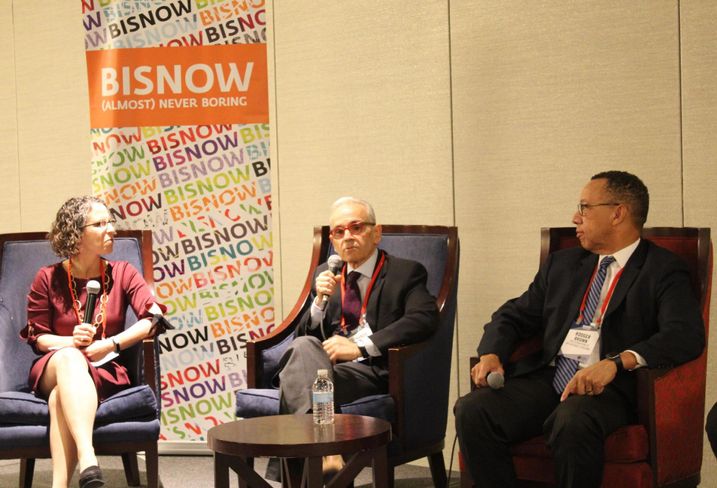
A leading tool in Boston’s affordable housing toolkit, the Inclusionary Development Policy, led to the creation of 546 new units of affordable housing in 2018, or 21% of the program’s overall production since it was implemented in 2000. While Boston Mayor Martin Walsh was pleased by the news, he and members of the private and public sector speaking Tuesday at Bisnow’s Boston Affordable Housing Conference agreed changes in policy and development practices are crucial in moving Boston’s affordability needle.

“We have members of Congress coming out of the woodwork with affordable housing legislation,” Housing Advisory Group Executive Director David Gasson said.

Gasson and Boston Capital President and CEO Jack Manning are working on reforming the Low-Income Housing Tax Credit (to be renamed the Affordable Housing Tax Credit if the new legislation is passed). The LIHTC offers 9% and 4% tax credits for affordable housing projects, with the higher rate typically reserved for new construction and the lower rate for rehabilitation or new construction projects financed with tax-exempt bonds.

The problem is the credits have often fallen short of the 4% and 9% figure and fluctuated due to market interest and borrowing rates of the federal government, according to a February report by the Congressional Research Service. One goal of the bill, expected to be introduced by U.S. Sen. Maria Cantwell (D-WA), would freeze the 4% rate at its actual level. Doing that alone would, at a conservative estimate, create 65,000 more affordable units.

Low-Income Housing Tax Credits generated in each state are based on population. Originally, the rate was $2.40 per capita. Congress has since provided a 12.5% increase through 2021, and there is a potential for the rate to increase by 50% in the new bill. But Gasson indicated the 4% fix is the top priority.

“This is a gigantic change for our industry and the people that need affordable housing,” Manning said.

Both Manning and Gasson claim to have bipartisan support in both federal legislative chambers.

Along with Cantwell, Sen. Todd Young (R-IN), Sen. Johnny Isakkson (R-GA) and Sen. Ron Wyden (D-OR) are supportive of the bill, according to Manning. Speaker of the House Nancy Pelosi (D-CA 12th), Rep. Richard Neal (D-MA 2nd) and Rep. Kenny Merchant (R-TX 24th) have also supported the bill. More are expected to join.

“There are Republicans clamoring to jump onto the bill, and it hasn’t even been introduced yet,” Gasson said with a laugh.

Beyond federal policy, panelists indicated Boston leaders and developers are doing more at the local level to rein in costs.

Walsh indicated his proposed 2020 city budget includes a historically high level of city funding for the creation and preservation of affordable housing in Boston. After citing a long list of economic accomplishments under his watch, Walsh said there were plenty of initiatives in the works to tackle affordable housing, including an increase in the affordable housing requirement for market-rate developers in the IDP.

“I’m painting a rosy picture here, but there’s still a lot of work we need to do to continue to move forward,” Walsh said.

Forward thinking in the planning and development stages is also crucial to making affordable housing a realistic goal in Boston. Construction costs have gotten so high that Preservation of Affordable Housing Managing Director for Real Estate Development Rodger Brown said his team has looked overseas for building technologies to move a project forward. Instead of stick-frame construction, the developer utilizes modular and panelized materials.

Others are looking for ways to streamline the approval process because it is easy for a project to go over budget simply due to the quick timeline of building costs rising. It can cost a developer around $450K to build a single residential unit in Boston today, and Dellbrook JKS President and CEO Mike Fish said building costs are rising at an average of 5% each year.

“The biggest challenge we see is when we price a project, and then they have to wait four years,” Fish said. “Costs just continue to go up.”

SourceBisnow Boston

Landmark Agreement Reached to Preserve Affordable Housing in the South End

Mayor Martin J. Walsh together with LIHC Investment Group, one the nation’s largest investors in affordable housing, the Boston Housing Authority, Mass Alliance of HUD Tenants (MAHT), and Greater Boston Legal Services (GBLS), today announced HUD approval of a creative plan to keep Concord Houses in the South End affordable for at least the next 40 years, with the support of the building’s tenants.

“As we build more affordable housing, it is critical that we do not lose sight of the need to preserve Boston’s inventory of income-restricted housing,” said Mayor Martin J. Walsh. “This agreement marks a positive resolution reached to keep these residents in their homes for decades to come. I thank all the residents for their advocacy, and all partners involved who helped ensure the long-term affordability and viability of the Concord Houses.”

“This agreement is the culmination of a multi-year effort to establish a new HUD program that will protect current and future residents of Concord Houses while providing funds for repairs and upgrades throughout the property,” said Charlie Gendron, Principal, LIHC Investment Group. “We appreciate the support we received from the tenants; Congress, especially the efforts of Sen. Susan Collins; HUD; the City of Boston; BHA; MAHT; and GBLS in our drive to preserve this property for future generations.”

Spanning two buildings located at 705-715 Tremont Street in the heart of the South End, Concord Houses has served as an important source of income-restricted housing in the South End for decades. In 2017, the HUD subsidy provisions governing the property expired, putting it at risk of losing its long-term affordability.

Of the 181 households at Concord Houses, 171-or 95 percent of households-chose to sign a waiver to convert their Enhanced Vouchers (EVs) to a new project-based rental assistance (PBRA) contract to make the plan work. The new HUD contract ensures homes at Concord Houses will be reserved for individuals earning no more than 80 percent area median income (AMI) and is renewable for a total of 40 years.

The agreement also guarantees that current and future tenants pay no more than 30 percent of their income toward rent, which will actually reduce the rent burden for 30 existing households at the property. The remaining ten households will receive rent protections in the form of EVs administered by BHA.

“Preserving units of affordable housing like those at Concord House is a key element of Boston’s housing strategy,” said Roger Herzog, Executive Director of the Community Economic Development Assistance Corporation (CEDAC), which works closely with DND on preservation issues and provided technical assistance in this case. “Congratulations to the City of Boston, the project residents, and LIHC Investment Group, and their partners, for thinking creatively to find a way to keep Concord House affordable for individuals and families in the South End.”

“It’s a dream to secure permanently affordable housing here — not just for ourselves, but other people who will be here long after we’re gone,” said Pauline Durant, 85, a 20-year resident of Concord Houses and member of the Concord Houses Tenants Association. “It’s been a long journey. When tenants stay together and fight, we win!”

“We’re very elated by this victory,” added Adella Quinn, 76, a retiree from Fidelity Investments and 24-year resident of Concord Houses. “We’re losing too many people in the South End who are assets to the neighborhood due to rising rents. We need to come up with more ways like this to keep our community affordable.”

“This is an historic victory,” commented Michael Kane, Director of MAHT, which helped the tenants organize. Since 1983, MAHT has saved more than 12,450 homes like Concord Houses as affordable housing, one building at a time, through tenant organizing. “Saving affordable housing in the heart of the South End will help maintain the neighborhood’s racial and economic diversity well into the future. The 171 tenants who signed up to preserve their apartments are to be commended for making this possible.” Kane also lauded LIHC and the City of Boston for supporting the tenants’ preservation plan and working creatively with Congress and HUD to make it work.

Attorneys for GBLS, Susan Hegel and Ann Jochnick, said they are pleased with the creative and collaborative process, which resulted in preserving much-needed affordable housing in the South End. “It’s a win for current and future tenants, a win for the city and a win for the owner.  We hope that this may serve as a model for future preservation efforts.”

LIHC Investment Group is undertaking a $7 million repair and capital improvement campaign at the property, which includes a new entry system and security cameras; flooring and ceiling replacement; lighting upgrades in the building’s common areas; and exterior work ranging from masonry repair to new fencing and landscaping. Under LIHC’s ownership, apartments in the building have already received new kitchen cabinets, granite countertops and appliances; upgraded bathroom fixtures, tubs, and tiles; and vinyl plank flooring.

About the City of Boston’s Housing Agenda

In 2018, Mayor Martin J. Walsh updated his comprehensive housing strategy, Housing A Changing City: Boston 2030 to increase the City’s overall housing goal from 53,000 to 69,000 new units by 2030, including 15,820 new income-restricted units, to meet Boston’s population growth. In addition, the updated plan also set a goal to preserve 85 percent of Boston’s most at-risk privately-owned affordable units, like those at Concord House. Mayor Walsh’s recently announced housing security legislative package focuses on expanding upon the work that Boston has done to address the region’s affordable housing crisis by proposing new and strengthening current tools to create more ways to leverage Boston’s prosperity and create sustainable wealth opportunities that make Boston a more inclusive and equitable city. The housing security bills proposed for the 2019 Legislature seek to help existing tenants like those at Concord House, particularly the elderly, remain in their homes, and creates additional funding for affordable housing.

About LIHC Investment Group

Based in Portland, Maine, LIHC Investment Group has been active in the Greater Boston housing market for over two decades. In July 2017, the company donated its ownership stake in the Close Building, a 61-unit affordable housing community in Cambridge, ­to the nonprofit Just-A-Start Corporation, which develops, own and maintains affordable housing; provides housing resources and services; and offers education and workforce training for youth and adults in Boston. In August 2017, LIHC and Weston Associates forged an agreement to keep 380 homes at Shore Plaza Apartments in East Boston affordable and have since completed a major capital repair campaign for the property.

SourceMayor's Office

New housing opens in Hyde Park, Affordable development is first in 20 yrs

It took the Southwest Boston Community Development Corporation more than 20 years to see its 27-unit all-affordable housing building through to completion, so when Mayor Martin Walsh and leadership from the organization cut the ribbon on the development last Thursday, it was a big deal.

The Residences at Fairmount Station is a $12 million four-story building nestled between the Fairmount Station commuter rail stop and Fairmount Avenue, with 24 of its units affordable to families earning 60 percent of the area median income or below. The building contains a mixture of studios, one-, two- and three-bedroom units.

The development faced fierce pushback from Hyde Park residents when it was first proposed during the late 1990s, said SBCDC board member Diana Kelley.

“The community voted it down,” she said.

Then-Mayor Thomas Menino’s administration did not push for the development, which the CDC had originally proposed for another site, but instead steered the project to the Fairmount site, at that time a collection of dilapidated industrial buildings. That move kicked off a nearly-10-year process during which the CDC pieced together the parcel of land from private owners and the MBTA, while at the same time negotiating with neighbors over issues including the size of the building and the amount of parking.

“I don’t know that you can build affordable housing in any neighborhood and not encounter some opposition,” Kelley said. “What’s important is that we were able to get some compromises.”

Among the compromises, plans were altered to include three units available for families earning up to 70 percent of the area median income, up from 60 percent. A playground that abutters felt was too close to the MBTA tracks was moved to the opposite side of the building.

The end result is a building affordable to households earning $21,000 to $58,000, said SBCDC Board President Mimi Turchinetz, addressing elected officials and neighborhood residents gathered for the ribbon cutting Thursday.

“The units are affordable to the majority of residents of Hyde Park,” she noted.

Demand for the units is substantial, with more than 2,700 applications submitted for the 27 available units.

“The need for affordable housing that’s kid-friendly is enormous,” Turchinetz said.

Mayor Martin Walsh said the building fits into the city’s goals to increase the amount of affordable housing available as rents increase in neighborhoods along the Fairmount Line Corridor — the commuter rail line that cuts through Hyde Park, Mattapan, Dorchester and Roxbury, with new stops in many of those neighborhoods.

Walsh administration officials hope the transit line will spur new economic development in the southwestern part of the city.

“We want inclusive development,” Walsh said. “We want transit-oriented development. We want development without displacement.”

Walsh said the new building would also support businesses in the Cleary Square commercial district in Hyde Park.

“You can’t have a thriving business district if you don’t have people there,” he said.

The affordable development was made possible in part by a City of Boston contribution of more than $1.7 million. This contribution enabled the development team to take advantage of more than $2.5 million from the state’s Department of Housing and Community Development. The state also provided an allocation of almost $1.5 million in federal Low-Income Housing Tax Credits that helped raise over $4.7 million in equity from National Equity Fund, the equity investor in the project. Webster Bank provided a construction loan, with MassHousing providing long-term permanent financing. The Community Economic Development Assistance Corporation and the Equitable Transit-Oriented Development Accelerator Fund at LISC Boston provided critical pre-development and acquisition funding to secure the site.

SourceBay State Banner