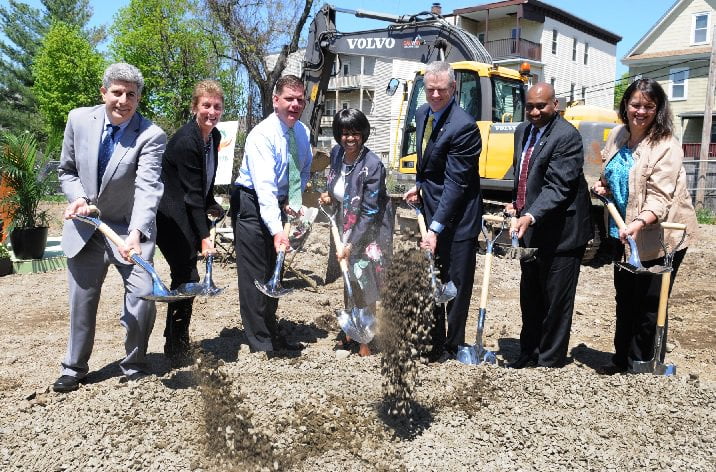
Mayor Walsh, Southwest Boston Community Development Corporation, Traggorth Companies and residents celebrate opening of the Residences at Fairmount Station

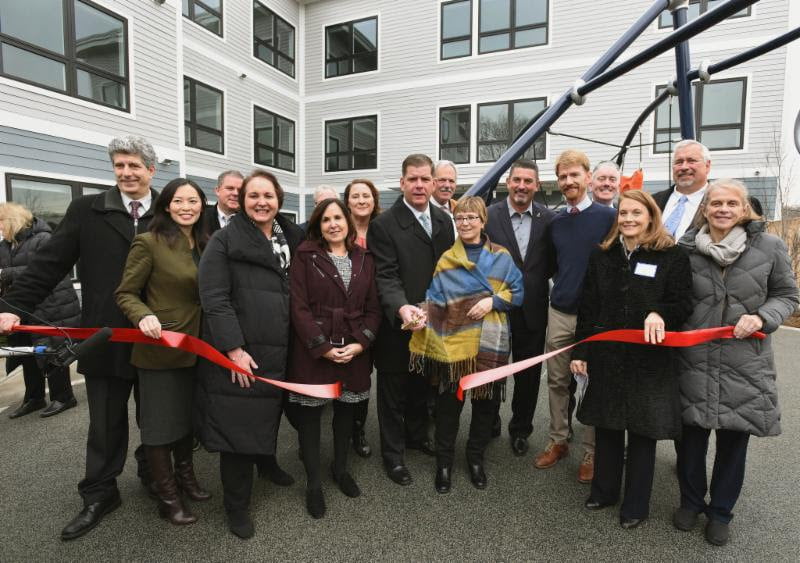
Mayor Martin J. Wash today joined Southwest Boston Community Development Corporation, Traggorth Companies, elected officials and residents to celebrate the grand opening of The Residences at Fairmount Station. This once vacant property is now a transit-oriented residential development that offers 27 rental units, including 24 affordable units. The project is part of a larger City effort to prioritize affordable development along the Fairmont Corridor, one of the action areas outlined in Imagine Boston 2030 with the goal of expanding opportunities and reducing disparities for residents in the area.

“Today we celebrate a milestone in our efforts to create more affordable housing by officially opening The Residences at Fairmount Station, which sets the standard for all transit-oriented development in the city,” said Mayor Walsh. “I’m proud that with our partners we were able to create 27 rental homes for Boston’s working families. This new development will continue to keep Hyde Park a strong and vibrant neighborhood for generations to come.”  

The $12 million four-story building features a combination of studio, one-bedroom, two-bedroom, and three-bedroom units. Out of the 27 rental units, 24 are affordable to households at or below 60 percent of Area Median Income (AMI), which is around $51,000 for a two-income household. The remaining three units are designated for households at or below 70 percent AMI, or around $60,000 for a two-income household. The development also offers 6,000 square feet of green space and play space, a public community room, and parking spaces and bike spaces.

“This lot used to be overgrown with weeds and falling down buildings,” said Hyde Park resident Nicole Wiggins. “It is wonderful to see investment in our community that creates affordable housing, playgrounds, and community spaces that will benefit current Hyde Park residents.”

The project is LEED Silver Certified and has many green features for long-term operations, sustainability, and includes several improvements such as new sidewalks, handicap accessible ramps, benches, lighting, bike racks, and a playground. The building was designed by DMS Design, constructed by Delphi Construction, and will be managed by Maloney Properties. Southwest Boston CDC will provide ongoing services to residents.

“We have long advocated for equitable investment along the Fairmount Corridor, and we could not be more thrilled that through community persistence and support from Mayor Walsh, we have succeeded,” said Mimi Turchinetz, board chair of Southwest Boston Community Development Corporation, one of the joint venture partners on the project. “By providing residents with high-quality affordable housing, safe and beautiful play spaces, and access to transit, we make Hyde Park more beautiful while also providing Hyde Park families with much needed stability.”

“It’s been a pleasure working with Southwest Boston CDC to bring a shared vision for equitable transit oriented development to life,” said Dave Traggorth, Principal of Traggorth Companies, the second partner in the joint venture to build the project. “Their tireless advocacy, along with the critical resources from the City of Boston and the Commonwealth, has created beautiful, affordable homes for Hyde Park families. We hope this project sets the standard for the neighborhood, and is just the beginning of an exciting chapter.”

The new development has been made possible in part by a City of Boston contribution of more than $1.7 million. This contribution enabled the development team to take advantage of more than $2.5 million from the Commonwealth’s Department of Housing and Community Development. The State also provided an allocation of almost $1.5 million in federal Low-Income Housing Tax Credits (LIHTC) that helped raise over $4.7 million in equity from National Equity Fund, the equity investor in the project. Webster Bank provided a construction loan with MassHousing providing long-term permanent financing. The Community Economic Development Assistance Corporation (CEDAC) and the Equitable Transit-Oriented Development Accelerator Fund (ETODAF) at LISC Boston provided critical predevelopment and acquisition funding to secure the site.

The Residences at Fairmont Station consist of affordable units to low- and middle-class families and strongly aligns with the City’s housing goals outlined in Housing a Changing City: Boston 2030. Mayor Walsh recently increased the City’s overall housing targets from 53,000 to 69,000 new units by 2030 to meet Boston’s population growth. These updated housing goals build on Mayor Walsh’s commitment to increasing access to home ownership, preventing displacement and promoting fair and equitable housing access.

Since the release of the original Housing a Changing City: Boston 2030 plan in 2014, income-restricted housing stock, designed to increase affordable housing, has grown along with overall new production: nearly 20 percent of housing units are income restricted, and 25 percent of rental units are income restricted. In total, after creating an additional 15,820 units of income-restricted housing, Boston will have nearly 70,000 units of income-restricted housing by 2030.

These income-restricted units will include purchasing 1,000 rental housing units from the speculative market and income-restricting them through an expanded Acquisition Opportunity Program. In addition, the City will soon announce awardees of an affordable housing funding round that includes more than $16 million in city affordable housing funds, and the first large scale awards of Community Preservation Act (CPA) funding for affordable housing development projects.

For more information on the City’s work to create more housing, please visit: Housing A Changing City: Boston 2030.
SourceSampan

Residences at Fairmount Station Opens With Celebration in Hyde Park

Mayor Martin J. Wash today joined Southwest Boston Community Development Corporation, Traggorth Companies, elected officials and residents to celebrate the grand opening of The Residences at Fairmount Station. This once-vacant property is now a transit-oriented residential development that offers 27 rental units, including 24 affordable units. The project is part of a larger City effort to prioritize affordable development along the Fairmont Corridor, one of the action areas outlined in Imagine Boston 2030 with the goal of expanding opportunities and reducing disparities for residents in the area.

The Residences at Fairmount Station opened

“Today we celebrate a milestone in our efforts to create more affordable housing by officially opening The Residences at Fairmount Station, which sets the standard for all transit-oriented development in the city,” said Mayor Walsh. “I’m proud that with our partners we were able to create 27 rental homes for Boston’s working families. This new development will continue to keep Hyde Park a strong and vibrant neighborhood for generations to come.”

The $12 million four-story building features a combination of studio, one-bedroom, two-bedroom, and three-bedroom units. Out of the 27 rental units, 24 are affordable to households at or below 60 percent of Area Median Income (AMI), which is around $51,000 for a two-income household. The remaining three units are designated for households at or below 70 percent AMI, or around $60,000 for a two-income household. The development also offers 6,000 square feet of green space and play space, a public community room, and parking spaces and bike spaces.

“This lot used to be overgrown with weeds and falling down buildings,” said Hyde Park resident Nicole Wiggins. “It is wonderful to see investment in our community that creates affordable housing, playgrounds, and community spaces that will benefit current Hyde Park residents.”

The project is LEED Silver Certified and has many green features for long-term operations, sustainability, and includes several improvements such as new sidewalks, handicap accessible ramps, benches, lighting, bike racks, and a playground. The building was designed by DMS Design, constructed by Delphi Construction, and will be managed by Maloney Properties. Southwest Boston CDC will provide ongoing services to residents.

“We have long advocated for equitable investment along the Fairmount Corridor, and we could not be more thrilled that through community persistence and support from Mayor Walsh, we have succeeded,” said Mimi Turchinetz, board chair of Southwest Boston Community Development Corporation, one of the joint venture partners on the project. “By providing residents with high-quality affordable housing, safe and beautiful play spaces, and access to transit, we make Hyde Park more beautiful while also providing Hyde Park families with much needed stability.”

“It’s been a pleasure working with Southwest Boston CDC to bring a shared vision for equitable transit oriented development to life,” said Dave Traggorth, Principal of Traggorth Companies, the second partner in the joint venture to build the project. “Their tireless advocacy, along with the critical resources from the City of Boston and the Commonwealth, has created beautiful, affordable homes for Hyde Park families. We hope this project sets the standard for the neighborhood, and is just the beginning of an exciting chapter.”

The new development has been made possible in part by a City of Boston contribution of more than $1.7 million. This contribution enabled the development team to take advantage of more than $2.5 million from the Commonwealth’s Department of Housing and Community Development. The State also provided an allocation of almost $1.5 million in federal Low-Income Housing Tax Credits (LIHTC) that helped raise over $4.7 million in equity from National Equity Fund, the equity investor in the project. Webster Bank provided a construction loan with MassHousing providing long-term permanent financing. The Community Economic Development Assistance Corporation (CEDAC) and the Equitable Transit-Oriented Development Accelerator Fund (ETODAF) at LISC Boston provided critical predevelopment and acquisition funding to secure the site.

The Residences at Fairmont Station consist of affordable units to low- and middle-class families and strongly aligns with the City’s housing goals outlined in Housing a Changing City: Boston 2030. Mayor Walsh recently increased the City’s overall housing targets from 53,000 to 69,000 new units by 2030 to meet Boston’s population growth. These updated housing goals build on Mayor Walsh’s commitment to increasing access to home ownership, preventing displacement and promoting fair and equitable housing access.

Since the release of the original Housing a Changing City: Boston 2030 plan in 2014, income-restricted housing stock, designed to increase affordable housing, has grown along with overall new production: nearly 20 percent of housing units are income restricted, and 25 percent of rental units are income restricted. In total, after creating an additional 15,820 units of income-restricted housing, Boston will have nearly 70,000 units of income-restricted housing by 2030.

These income-restricted units will include purchasing 1,000 rental housing units from the speculative market and income-restricting them through an expanded Acquisition Opportunity Program. In addition, the City will soon announce awardees of an affordable housing funding round that includes more than $16 million in city affordable housing funds, and the first large scale awards of Community Preservation Act (CPA) funding for affordable housing development projects.

For more information on the City’s work to create more housing, please visit: Housing A Changing City: Boston 2030.

ABOUT SOUTHWEST BOSTON COMMUNITY DEVELOPMENT CORPORATION

The Southwest Boston Community Development Corporation (SWBCDC) works to build and sustain a thriving, racially and economically equitable community in Hyde Park and Roslindale. We work to prevent displacement, create and preserve affordable housing, strengthen the commercial base of the neighborhoods, ensure access to good transit and green spaces, and develop local leaders whose voices are not otherwise heard. For more information, please visit swbcdc.org

ABOUT TRAGGORTH COMPANIES

Based in Boston, Traggorth Companies works to execute mid-sized smart growth, urban infill multifamily projects working collaboratively with communities to balance affordability, tenure, historic preservation, and economic development. For more information, please visit traggorthcompanies.com

SourceCity of Boston Neighborhood Development

Brookview House breaks ground on affordable rentals

Assembled for last Tuesday groundbreaking for Brookview III were, from left: Roger Herzog, executive director, Community Economic Development Assistance Corporation; Pamela Feingold, senior VP of Eastern Bank; Mayor Martin J. Walsh; Deborah Hughes, president & CEO of Brookview House; Governor Charlie Baker; Representative Russell E. Holmes, and City Councillor At-Large Annissa Essaibi-George.
Randy H. Goodman photo

With Gov. Charlie Baker and Mayor Martin Walsh looking on approvingly, Brookview House, a Dorchester-based provider of services to homeless women and children, broke ground on a new affordable housing building on Hansborough Street last Tuesday. The building, dubbed “Brookview III,” will include a dozen new two- and three-bedroom apartment units, bringing the total number at Brookview to 54.

“We recognize that family homelessness is a multi-faceted issue, but one of the primary causes of the high rate of family homelessness in Massachusetts is the lack of affordable housing for low-income families,” said Deborah Hughes, the president and CEO of Brookview House Hughes. “This new building will help us assist even more families each year in addressing the trauma of homelessness and set them up for long-term stability and independence.”

The need to address family homelessness has grown more urgent in recent years, with a 2017 Boston Foundation study showing that more than 60 percent of the 13,000 homeless individuals in Massachusetts are children. Family homelessness in the state has nearly doubled since 2016, with Boston ranking as the city with the fourth most homeless families nationwide. Hughes said she hopes Brookview’s new facility with help address this crisis.

Brookview III will be located off Blue Hill Avenue on Hansborough Street, just north of Mattapan Square and a block from the original 12-unit building at 2 Brookview St.

Each year, the facility provides 370 homeless women and children with a safe, supportive living environment as well as a variety of programs and services including health, education, life skills, employment training, civic engagement, and financial, emotional, and behavioral support.

Established in 1990, Brookview House has garnered nationwide acclaim for its successful model; 92 percent of mothers who have lived there maintain permanent housing after leaving and 88 percent of the children who participate in Brookview’s Youth Development Program graduate from high school, compared to the national average of only 25 percent.

In addition to commercial loans and Brookview’s own fundraising, the $5.5 million needed to finance Brookview III was secured with $1.5 million from the city of Boston’s Department of Neighborhood Development (DND) and Boston Community Development, and a $450,000 grant from the Early Education and Out of School Time (EEOST) facilities improvement fund, which is financed through the state’s capital budget and jointly administered by the Department of Early Education and Care and the Community Economic Development Assistance Corporation (CEDAC), and its affiliate, the Children’s Investment Fund (CIF).

Mayor Walsh acknowledged the importance of planning for future affordable housing. “In Boston, we are committed to making sure that every person has a place to call their home,” he said. “Providing families a roof over their heads and the wraparound services needed to build a better life is critical to tackling homelessness. I thank Brookview for their role in creating stable, affordable housing that is vital to the health and success of our neighborhoods.”

Brookview III is slated for occupancy starting next June.

SourceDorchester Reporter

Historic Boston building gets blessing for housing

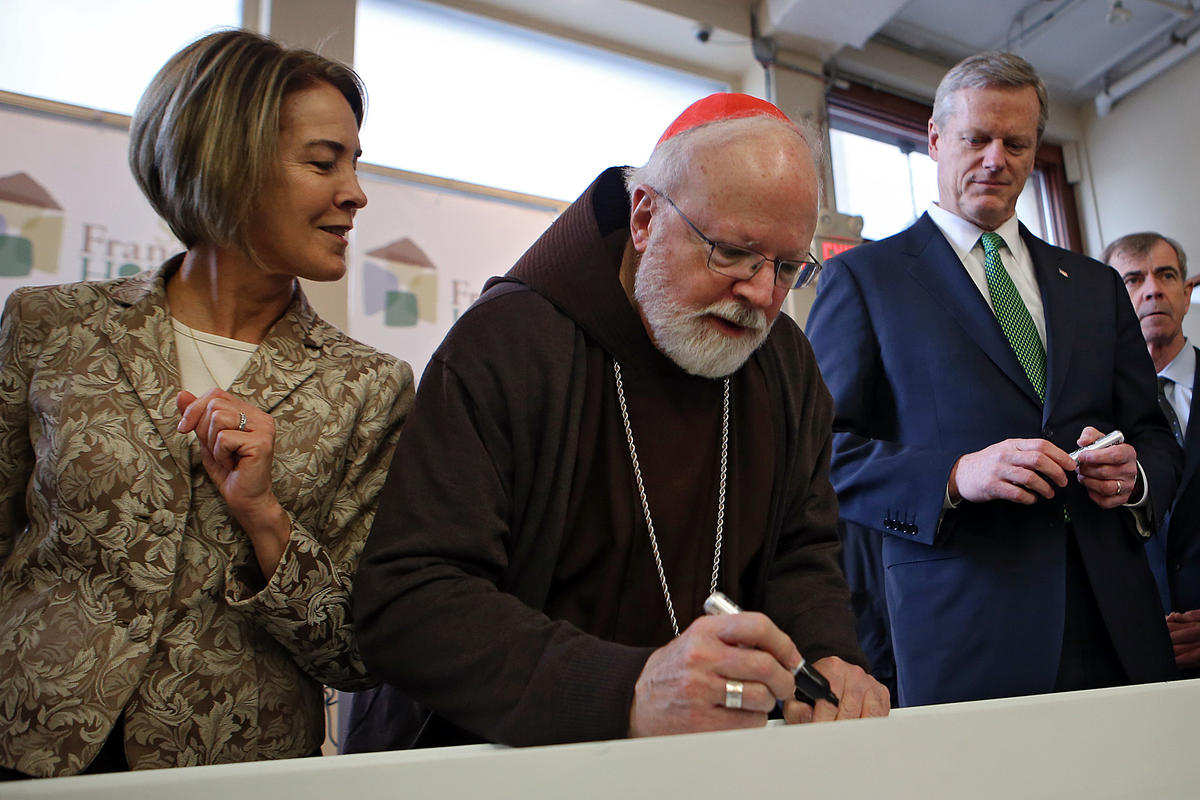
Gov. Charlie Baker, Mayor Martin J. Walsh and Cardinal Sean O’Malley were among the city and state leaders who attended a ceremony yesterday celebrating the transformation of a historic downtown building into a home for people who don’t have a place of their own.

48 Boylston St., originally built by the Boston Young Men’s Christian Union in 1875, will soon be home to 46 units of affordable housing, including 26 units designated specifically for people who are homeless or have been homeless. The remaining units will be reserved for people with incomes at or below $43,440.

Baker, Walsh and O’Malley were on hand yesterday to celebrate the start of construction and signed a steel beam that will be used in the renovation.

Construction will cost an estimated $20 million, with financing from a state bond bill, the City of Boston Incentive Development Program and Neighborhood Housing Trust funds, equity from Bank of America’s purchase of housing and historic tax credits; a grant from the Federal Home Loan Bank of Boston; and a permanent mortgage provided by Eastern Bank, according to the Planning Office for Urban Affairs of the Archdiocese.

The Massachusetts Historical Commission provided $2.5 million for the project.

http://www.bostonherald.com/business/business_markets/2018/01/historic_boston_building_gets_blessing_for_housing

SourceBoston Herald

Boston to Help Affordable Housing Developers Rethink Vacant Lots

In a market where buildable land goes quickly to private developers paying cash — or investors who sit on the property and wait for its value to rise — nonprofit builders are at a definite disadvantage. Boston Mayor Marty Walsh wants to level that building field, and his administration has announced an $8.5 million program designed to help nonprofits acquire parcels for affordable housing.

The city plans to contribute $2.5 million to the loan fund, with $6 million coming from the Community Economic Development Assistance Corporation and the Local Initiatives Support Corporation, the Boston Globe reports. The program is aimed at underutilized chunks of neighborhood around Boston close to public transportation.

“If you can buy an unused parking lot in, say, Egleston Square for $1 million and put a 40- or 50-unit building on it, that’s kind of the sweet spot,” Sheila Dillon, chief of housing for Mayor Walsh, told the Globe. “We need to take things out of the speculative market.”

The program is similar to another one that the city announced last year to help nonprofits buy apartment buildings. According to the Globe, results of that program have been mixed with some success in East Boston and Roslindale. But in other neighborhoods, the money offered hasn’t gone far enough.

Like other cities struggling with the many flip sides of a hot housing market — skyrocketing rents, displacement, homelessness — Boston has gotten creative in the last few years. In 2016, voters chose to adopt the Massachusetts state Community Preservation Act (CPA), which allows municipalities to add a small surcharge to their property taxes to fund affordable housing, open space acquisition and historic preservation. As Next City has reported, the city had previously opted out of the agreement, under which the state can match local dollars by up to 30 percent.

Walsh has also made housing a legislative priority, promising to address the city’s housing shortage by building 53,000 new homes by 2030, although questions remain about how he plans to go about doing that without causing displacement — a worry that’s especially prevalent in black communities like Dudley Square.

https://nextcity.org/daily/entry/news-boston-affordable-housing-developers-rethink-vacant-lots

SourceNext City

City, nonprofits turn focus on affordable housing

It’s no secret to agents, buyers and sellers in Boston that the city’s housing market is hot — sometimes a little too hot. With scarce inventory and increasing prices, many people find themselves sitting on the sidelines, unable to afford homes of their own.

To level the playing field, Mayor Martin J. Walsh recently announced the Vacant Site Acquisition Fund, which will help nonprofit developers acquire plots of underutilized land and buildings around the city.

Under the plan, affordable housing developers will be able to apply for loans to acquire such properties. The $8.5 million includes $2.5 million from the city and $6 million from the Community Economic Development Assistance Corporation and the Local Initiatives Support Corporation.

“Addressing rising housing costs is necessary for preserving the diversity and character that makes Boston a place where all residents can thrive; so we need to continue to think innovatively about ways to give Boston residents more affordable housing options,” Walsh said in a statement. “As our neighborhoods develop and change, it is vital that our nonprofit partners are able to compete in today’s real estate market to acquire developable sites.”
Besides acquisition of land with longer terms, the VSAF also has two other functions — it will offer short-term bridge loans to help developers put down deposits on land and loans of up to $300,000 at no interest to help developers hold properties for three to five years.
Property owners who take advantage of the program are required to maintain the tenancy of residents in good standing and to maintain affordable prices for at least 50 years.
https://bostonagentmagazine.com/2017/10/03/city-nonprofits-turn-focus-affordable-housing/

SourceBoston Agent Magazine